Rust on a solar panel stand almost never starts in the middle of a clean rail. It starts in five predictable places: cut ends, drilled holes, nuts and bolts, welds, and the feet where water collects. Catch it there early, brush it back to bare metal and protect it with a cold galvanizing spray, and the structure will keep holding your panels safely for years. Leave it, and what most people call zang creeps along the steel until a bolt or a rail is no longer strong enough to trust in a storm.
The short version
- Check: cut ends, drilled holes, bolts and clamps, welds, and the feet
- When: after every monsoon, before the next one, and more often near the coast
- Fix: wire-brush to bare metal, degrease, then two thin coats of Pintyplus Galvazinc Silver
- Safety: cover the panels and keep spray away from cables, connectors and the inverter
- Know the limit: spray protects steel; it cannot give back strength rust has already eaten
Why do solar stands rust so quickly in Pakistan?
A rooftop is a hard place for steel. In summer the frame bakes in the sun, and on cool nights and foggy winter mornings dew settles on it. The monsoon soaks it for weeks. Near the coast, in Karachi and Gwadar, the air itself carries salt.
There is also a reason specific to solar. Because of the dust, most panels in Pakistan are washed every week or two. Every wash sends water running down the frame and into the same joints and feet. Over a year, that is a lot of extra wetting that a gate or a grill never gets.
Finally, many structures are cut, drilled and welded on the roof during installation. Each of those steps exposes fresh steel, and on a galvanized frame it removes the zinc that was protecting it.
Where does rust start on a solar stand?
Cut ends and drilled holes
When an installer cuts a galvanized channel to length or drills a hole for a bolt, the cut face and the inside of the hole are bare steel. These are usually the first places to show orange streaks, often within a few months.
Nuts, bolts and clamps
Fasteners are often a cheaper grade than the frame. A rusty bolt is a bigger worry than a rusty rail, because it is small and loses strength quickly. Look closely at the clamps holding the panels and the bolts joining the legs to the rails.
Welds
Welding burns the zinc off the steel around the joint, and the weld itself is bare metal. If your stand was welded on site, check every joint. Our guide to stopping corrosion at weld seams covers welds in detail.
Feet and base plates
Water from rain and panel washing runs down the legs and sits around the base plates, especially on a flat roof with poor drainage. Dust mixes with that water and holds the damp against the steel.
Scratches from installation
Tools, ladders and panels being slid into place leave scratches that cut through paint or zinc. Each one is a small starting point.
Is your stand galvanized or painted?
It helps to know what you are dealing with.
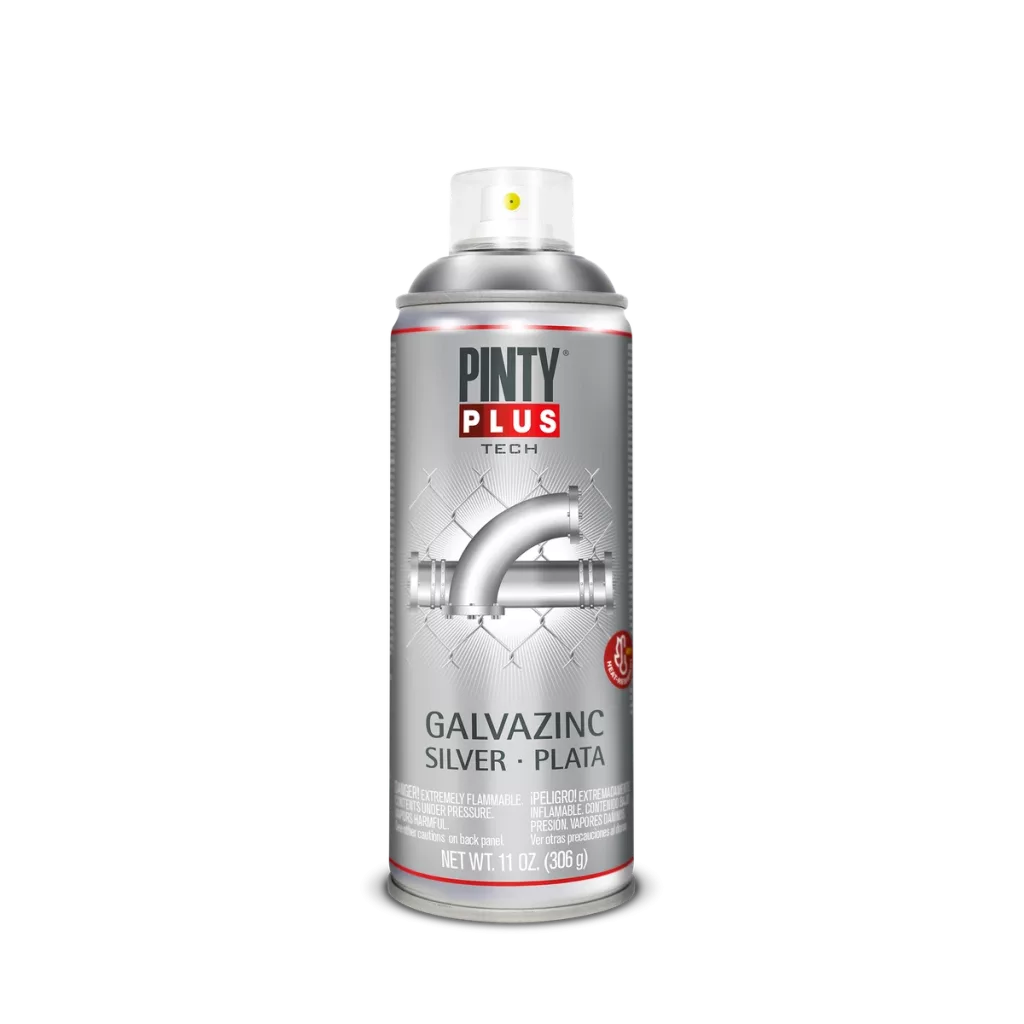
A galvanized stand is a dull grey or spangled silver all over, often with a slightly rough surface. The zinc coating protects it, and rust appears mainly where that coating has been cut, drilled, welded or scratched. Here, touching up the damaged spots is usually all that is needed, and Galvazinc Silver blends in with the grey.
A painted stand is ordinary mild steel angle or channel with a coat of paint, usually green, black or grey. Some lower-cost installations use this. Once the paint chips, rust spreads underneath it, so these stands need checking more often. Treat the rusty areas the same way. If you want to finish in a colour rather than silver, our guide to zinc primer versus cold galvanizing spray explains which product to use under a topcoat.
How do you treat rust on a solar stand?
1. Protect the panels and the wiring first
Solar panels produce electricity whenever there is daylight, and you cannot simply switch them off. Do not disconnect or touch any cables, connectors, junction boxes or the inverter. Work only on the steel.
Cover the panel glass near where you are spraying with cardboard or an old sheet, because overspray on the glass reduces how much light reaches the cells. Keep the spray well away from cables and connectors. Pintyplus warns against spraying anything connected to the electricity supply.
2. Brush back to bare metal
Use a wire brush or sandpaper to remove loose rust and flaking paint until you see clean steel. Zinc can only protect steel it is actually touching, so spraying over loose rust is wasted effort.
3. Clean off dust and grease
Wipe the area with a cloth and a little thinner, then let it dry completely. On a dusty roof, do this right before you spray.
4. Spray two thin coats
Shake the can for one minute after you hear the mixing balls. Hold it 25 to 30 cm from the steel and spray thin, quick passes, first along the part and then across it. Pintyplus recommends two thin layers rather than one thick one. Galvazinc is touch dry in about 15 minutes, and you can apply the second coat after 15 minutes.
Spray early in the morning or in the evening. Steel that has been in the midday sun can be too hot to touch, and a breeze on the roof will carry spray onto the panels.
5. Clear the nozzle
Turn the can upside down and spray until only gas comes out, so it is ready for the next touch-up.
Galvazinc can be left as the finish coat. Pintyplus describes it as an anticorrosive galvanic primer based on zinc and aluminium that can also be used as the final paint. For how zinc protects steel in more detail, see our guide on how cold galvanizing spray works.
When is rust too far gone for paint?
Spray protects steel from further rust. It cannot put back metal that rust has already eaten. Call your installer or a fabricator, and stop washing or walking near the panels until it is checked, if you see any of these:
- A bolt or nut that is visibly thinner than the others, or crumbles when brushed
- Rust that flakes off in layers, or holes rusted right through a rail or leg
- A leg or base plate that has loosened from the roof
- Panels or rails that move when you press on them
Pre-monsoon storms in Pakistan can be violent, and a loose panel on a roof is dangerous. Replace weakened parts first, then protect the new steel.
How much spray will you need?
Pintyplus rates a 400 ml can of Galvazinc at about 2 m² per coat. For touch-ups on cut ends, holes, bolts and welds, one can goes a very long way.
If you need to coat whole lengths of steel, a rough guide helps. A common 50 mm angle has about 0.2 m² of surface for every metre of length. So one can covers roughly 10 metres of angle with one coat, or about 5 metres with the two coats we recommend.
When should you check your stand?
Twice a year is a good habit for most homes: once after the monsoon, when water has had months to get into every joint, and once before it, so you go into the rains with every weak spot sealed.
Near the sea, check every three months. And whenever you or your cleaner wash the panels, take a minute to look at the feet and the lowest rails, because that is where the washing water ends up.
Common questions
Do I need to switch off my solar system to do this?
You are only working on the steel, not the electrical parts, so you don’t need to touch the system. Stay clear of all cables, connectors and junction boxes, keep the spray away from them, and never disconnect anything yourself. If rust is right next to wiring, ask your installer to handle that spot.
Will overspray on the panels reduce my electricity?
Yes, a film of paint on the glass blocks light. That is why we suggest covering the panels near your work area and spraying on a still day.
Should I treat a brand new stand?
It is worth it. As soon as installation is finished, spray every cut end, drilled hole and weld while the steel is still clean. That is the cheapest protection you will ever get.
Will the silver look odd on a green or black stand?
It will show as silver patches. If the look matters to you, use zinc primer under a matching topcoat instead. Send us a photo and we will suggest the right combination.
Where to buy in Lahore and across Pakistan
Pintyplus Galvazinc Silver Cold Galvanizing Spray is ₨ 2,890 for a 400 ml can. You can pick it up from our shop at Sohail Centre, LG 8, Dil Muhammad Road, Garhi Shahu, Lahore, Monday to Saturday from 8:30 AM to 10:00 PM, or order online for delivery anywhere in Pakistan.
Not sure what your stand needs? Send a photo on WhatsApp to 0321 999 3919 and we’ll tell you.
More on protecting steel: Metal & Corrosion Protection