Cold galvanizing spray protects steel the way hot-dip galvanizing does, with zinc, but you apply it from a can, on site, at normal temperature. Pintyplus Galvazinc is a galvanic primer based on zinc and aluminium. Sprayed onto clean, bare steel, it seals the surface and puts zinc in contact with the metal, so rust has a much harder time getting started. It comes in silver, rated to 600°C, and gold, rated to 200°C. Silver suits galvanized touch-ups and welds. Gold is for a decorative gold finish.
The short version
- What it is: a cold galvanizing spray primer that can also be left as the finish coat
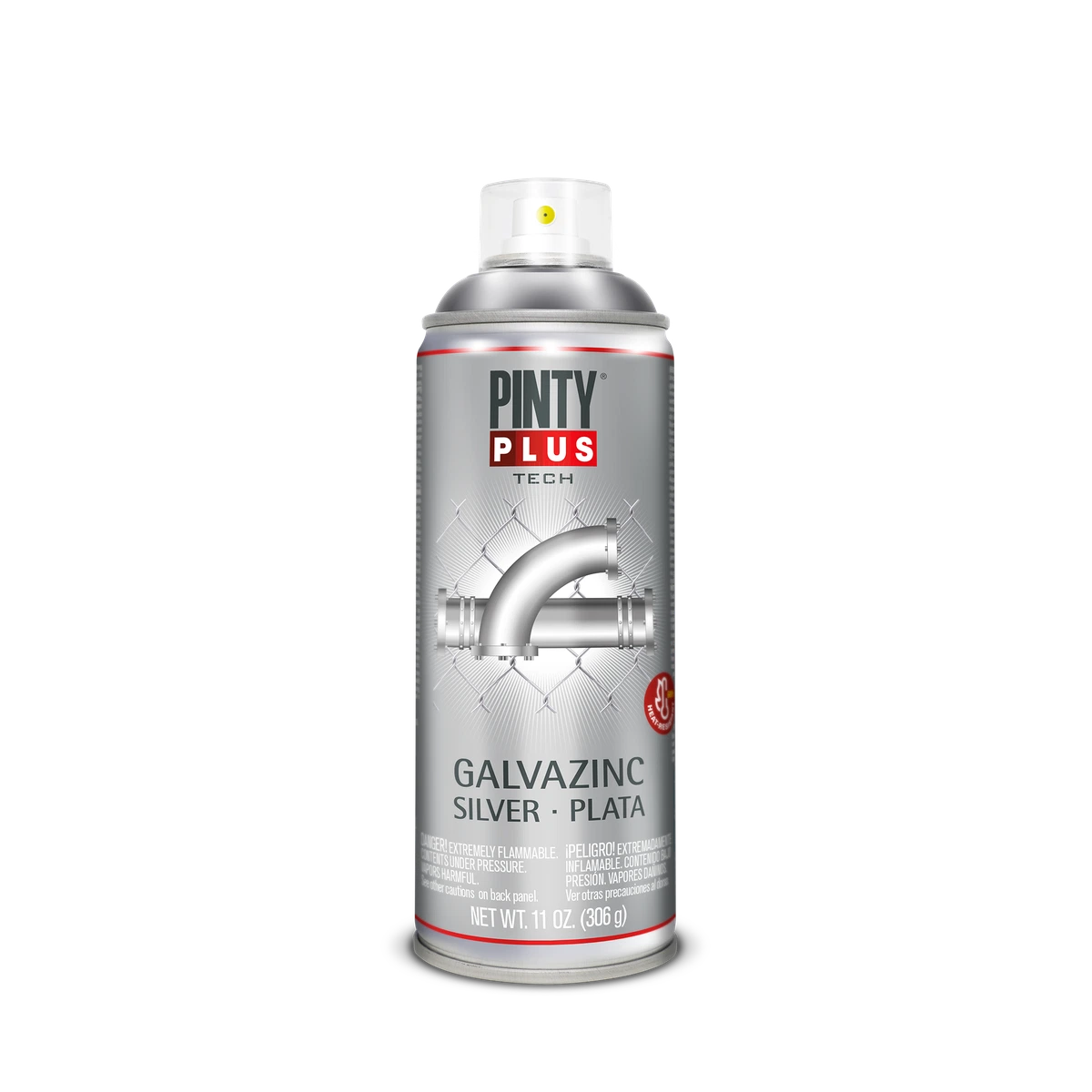
- Silver: Pintyplus Galvazinc Silver, gloss silver, heat resistant to 600°C
- Gold: Pintyplus Galvazinc Gold, gloss gold, heat resistant to 200°C
- Uses: gates, grills, fences, tanks, pipes, fasteners, farm machinery, welds and galvanized repairs
- Method: bare, clean steel, two thin coats from 25 to 30 cm, 15 minutes apart
How does zinc protect steel?
Steel rusts when water and oxygen reach bare iron. An ordinary paint only works as a barrier: once it is scratched or chipped, water gets under it and rust spreads from the damage.
Zinc works differently. When zinc and steel are in contact and exposed to moisture, the zinc corrodes first and the steel is spared. That is why galvanized steel keeps protecting itself around small scratches, and why hot-dip galvanizing is used on so much outdoor steel.
A cold galvanizing spray brings the same idea to jobs where dipping steel in a zinc bath isn’t possible: a gate that is already installed, a weld made on site, a scratch on a galvanized frame. Pintyplus describes Galvazinc as an anticorrosive galvanic primer, with a smooth, uniform gloss finish and excellent resistance to the elements.
One important point: zinc-coloured paint is not the same thing. A silver paint without zinc only looks like galvanizing. It does not protect the same way.
Silver or gold: which Galvazinc should you buy?
Both do the same protective job, and both have the same coverage and drying times. The differences are colour and heat resistance.
| Galvazinc Silver | Galvazinc Gold | |
|---|---|---|
| Finish | Gloss silver (G150), Ref. 738 | Gloss gold (G151), Ref. 739 |
| Heat resistance | 600°C | 200°C |
| Best for | Galvanized touch-ups, welds, structural steel | Decorative gold finish on metal that also needs protection |
| Coverage | 2 m² per 400 ml can | 2 m² per 400 ml can |
| Price | ₨ 2,890 | ₨ 3,150 |
For galvanized steel, choose silver. It blends with the grey of galvanizing and has the higher heat rating. Choose gold only when you want the gold look, for example on decorative railings or fittings, and the metal doesn’t get hotter than 200°C.
Where should you use cold galvanizing spray?
Pintyplus lists metal structures, fences, tanks, agricultural machinery, railway equipment, pipes and fasteners, and recommends it for welding and galvanized retouching. In Pakistan, that covers a lot of everyday steel:
- Iron gates, window grills and boundary fences, especially at the bottom where rainwater sits
- Solar panel mounting structures, at cut ends, drilled holes and welds
- Steel water tank stands and rooftop frames
- Tractor trolleys and farm machinery
- Pipes, brackets, bolts and fasteners
- Welds on galvanized steel, where the heat of welding has burnt the zinc away
Welds need extra care, because the zinc near the joint is gone and the weld itself is bare steel. Let the weld cool completely and chip off slag and spatter before you clean and spray it.
How do you apply Galvazinc properly?
1. Get down to clean, bare metal
Zinc can only protect steel it is actually touching. Remove loose rust, scale and old flaking paint with a wire brush or sandpaper, then wipe off grease and oil. The surface must be clean and dry. Paint sprayed over rust or grease will fail early, whatever is in the can.
2. Shake the can
Shake for one minute after you hear the mixing balls.
3. Spray two thin coats
Hold the can 25 to 30 cm from the surface and apply thin, quick layers, first horizontally and then vertically. Pintyplus recommends two thin layers rather than one thick one. Galvazinc is touch dry in about 15 minutes, and you can recoat after 15 minutes.
4. Clear the nozzle
Turn the can upside down and spray until only gas comes out.
Do you need a topcoat?
No. Pintyplus says Galvazinc can be used as the finish paint. It can also be overpainted if you want a colour, according to Pintyplus. Send us a photo on WhatsApp before you topcoat and we’ll help you choose.
What about Pakistani weather?
Monsoon humidity and coastal air are hard on steel. In Karachi and other coastal towns, salty, damp air attacks gates and grills much faster than in dry inland cities, so inspect and touch up bare spots more often there. Across Punjab, the monsoon is when neglected welds and scratches turn into rust streaks.
Spray on a dry day, on metal that is dry to the touch, and work in a well-ventilated place. In summer, avoid spraying steel that has been sitting in direct sun and is too hot to touch. Early morning or evening is easier. Pintyplus also warns not to spray anything connected to the electricity supply.
Is Galvazinc the same as zinc primer?
No, and our product pages say so. Pintyplus Zinc Primer Spray is a separate zinc-rich primer containing minimum 99% pure zinc, with a longer drying time of one hour. Our guide to zinc primer versus cold galvanizing spray explains which one your job needs.
Common questions
Can I spray Galvazinc over rust?
Not over loose rust. Brush it back to clean metal first. Zinc needs contact with the steel to work.
How much do I need for a gate?
One 400 ml can covers about 2 m² with a normal coat. Measure the gate, both sides, and plan for two thin coats.
Will the silver match my galvanized steel?
Galvazinc Silver is a gloss silver. It blends well with galvanized steel, although new galvanizing and weathered galvanizing look different, so check on a small area first.
Can I use it on a hot surface like a chimney pipe?
Silver is rated to 600°C and gold to 200°C. For hot pipes and exhausts where you want black or silver paint, see our High Temperature Spray Paint.
Where to buy in Lahore and across Pakistan
Pintyplus Galvazinc Silver Cold Galvanizing Spray is ₨ 2,890 for a 400 ml can, and Pintyplus Galvazinc Gold Spray is ₨ 3,150 for a 400 ml can. You can pick them up from our shop at Sohail Centre, LG 8, Dil Muhammad Road, Garhi Shahu, Lahore, Monday to Saturday from 8:30 AM to 10:00 PM, or order online for delivery anywhere in Pakistan.
Not sure which one you need? Send a photo on WhatsApp to 0321 999 3919 and we’ll tell you.
More on protecting steel: Metal & Corrosion Protection