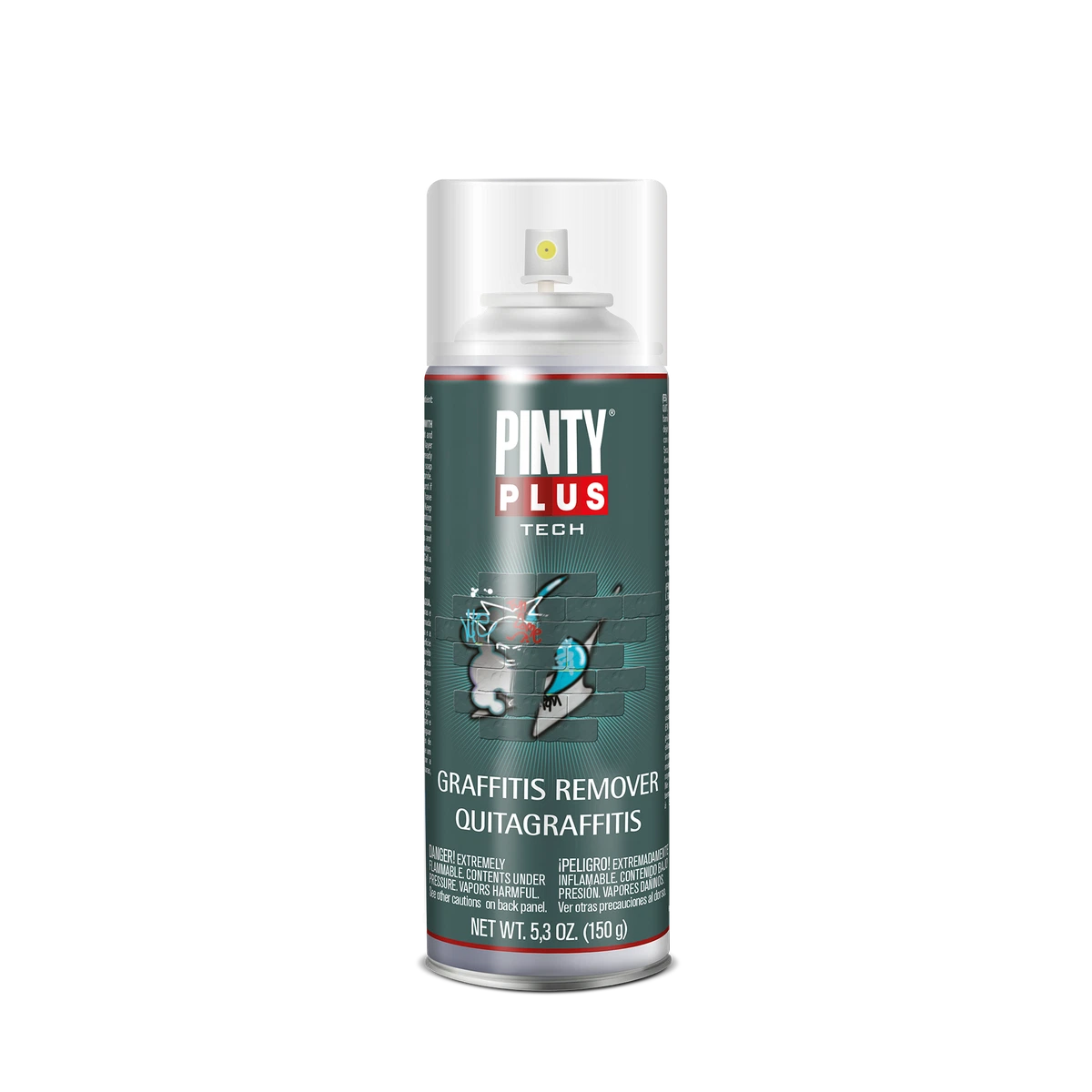
Graffiti and wall-chalking come off most easily from bare surfaces such as brick, concrete, stone, metal and glass. Pintyplus Graffiti Remover is a low-toxicity spray that softens the paint so you can wipe or scrub it away, then wash the surface with soap and water. Spray a generous layer, leave it for 1 to 15 minutes depending on the paint, then remove it. The one thing to understand before you start: it removes paint, so on a painted shutter or a painted wall it will soften the wall’s own paint too. There, test first and expect some repainting.
The short version
- Product: Pintyplus Graffiti Remover Spray, 200 ml, low toxicity
- Removes: alkyd, acrylic, cellulose, vinyl, oil, polyester and polyurethane paints and epoxy varnish
- Best on: bare brick, concrete, stone, metal and glass
- Method: spray generously, wait 1 to 15 minutes, remove, then wash with soap and water
- Painted surfaces: it softens those too, so test a hidden spot first
What does a graffiti remover actually do?
Pintyplus describes it as a spray graffiti remover suited to household use, low in toxicity, which can be washed off with water. It works on most common paint types, including alkyd, acrylic, cellulose, vinyl, oil-based, polyester and polyurethane paint and epoxy varnish. That covers aerosol graffiti and the enamel and emulsion paints used for most wall-chalking.
It works by softening the paint so it lets go of the surface. The time it needs depends on the type of paint, how thick it is and how many layers there are, which is why Pintyplus gives a range of 1 to 15 minutes.
Which surfaces can you clean without damage?
Bare brick, concrete and stone
These are the best candidates. The remover softens the paint, and you scrub it out of the texture with a stiff brush. Porous surfaces soak paint in, so older or heavier graffiti may need a second application.
Bare metal and glass
Unpainted steel, galvanized shutters, aluminium frames and glass are smooth, so the softened paint wipes off with a cloth or scraper once it lifts.
Painted shutters, gates and walls
This is where people get caught out. Because the remover removes paint, it can’t tell the graffiti from the paint underneath. On a painted shutter or an emulsion-painted boundary wall, it will soften both. Test on a small, hidden area first. On many painted surfaces the honest answer is to remove the graffiti, then touch up or repaint the patch.
Why does fast action matter?
Fresh paint is easier to remove than paint that has had weeks to harden and soak in, especially on brick and plaster. A clean wall is also less inviting for the next slogan. Deal with it as soon as you can.
In Pakistan, wall-chalking on boundary walls, school walls and bazaar shutters is common, especially around elections. For shopkeepers, a clean shutter matters every morning.
How do you remove graffiti step by step?
1. Protect yourself and the area
Wear gloves and work in a ventilated space, as Pintyplus recommends. Cover plants, the pavement and anything below the wall you don’t want the softened paint to drip onto.
2. Test a hidden spot
Spray a small area at the edge of the graffiti and check what happens to the surface underneath.
3. Shake and spray generously
Shake the can for one minute after you hear the mixing balls, then spray a generous, even layer over the graffiti. Don’t mist it on too thinly.
4. Wait 1 to 15 minutes
Thin, fresh aerosol paint may soften in a minute or two. Thick, old or layered paint needs longer. Check by scraping a small corner.
5. Remove the softened paint
Wipe it off smooth surfaces with a cloth, lift it with a plastic scraper, or scrub rough surfaces with a stiff brush.
6. Wash with soap and water
Pintyplus says to wash the surface with soap and water afterwards. Rinse well so no remover or softened paint is left behind.
7. Repeat where needed
For tougher paint, apply a second layer and repeat.
What should you avoid?
- Petrol, kerosene and general thinners. They smear paint deeper into porous walls and create a fire risk.
- Painting straight over graffiti without removing it. Many paints bleed through a new coat.
- Working in direct midday sun on a hot wall. The remover works best when it stays wet for its full action time. Early morning or shade is easier.
- Spraying near anything connected to the electricity supply, such as shop signs and lights.
Common questions
Will it damage my shop shutter?
On a bare metal shutter it removes the graffiti cleanly. On a painted shutter it will soften the shutter’s paint too, so test first and be ready to touch up.
How much graffiti will one can remove?
It depends on the paint and the surface. It is a 200 ml can, so for a long wall of chalking, buy more than one.
Is it safe to use at home?
Pintyplus describes it as low toxicity and suitable for household use. Use gloves and ventilation as with any paint remover.
Can I use it to strip a door or furniture?
For stripping whole surfaces, our Pintyplus Paint Stripper Spray comes in a bigger 400 ml can. Our guide to stripping old paint from wood and metal covers that job.
Where to buy in Lahore and across Pakistan
Pintyplus Graffiti Remover Spray is ₨ 2,530 for a 200 ml can. You can pick it up from our shop at Sohail Centre, LG 8, Dil Muhammad Road, Garhi Shahu, Lahore, Monday to Saturday from 8:30 AM to 10:00 PM, or order online for delivery anywhere in Pakistan.
Not sure which one you need? Send a photo on WhatsApp to 0321 999 3919 and we’ll tell you.