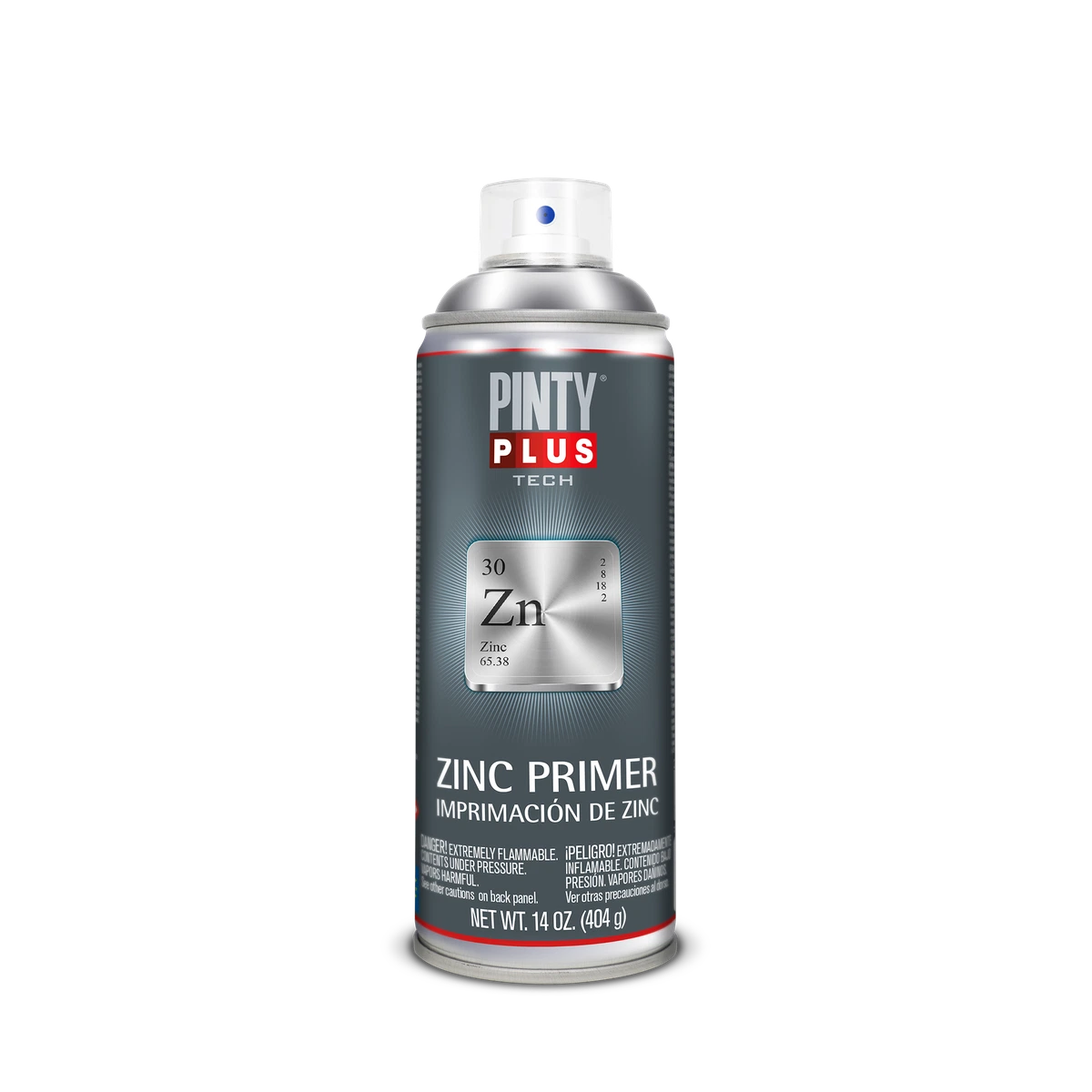
Zinc primer and cold galvanizing spray both use zinc to protect steel, but they are not the same product and they suit different jobs. Pintyplus Zinc Primer is a zinc-rich primer containing minimum 99% pure zinc, meant as a long-lasting base on prepared steel in demanding conditions. Pintyplus Galvazinc is a fast-drying galvanic primer based on zinc and aluminium, mainly for galvanized touch-ups and welds, and it can be left as the finish. If you are building up protection on bare steel that will get a colour coat, start with Zinc Primer. For quick repairs to galvanized steel, choose Galvazinc.
At a glance
- Zinc Primer: Pintyplus Zinc Primer Spray, minimum 99% pure zinc, dries in 1 hour, 1.4 m² per can
- Galvazinc: galvanic primer with zinc and aluminium, dries in 15 minutes, 2 m² per can, silver or gold
- Heat: Zinc Primer and Galvazinc Silver are rated to 600°C, Galvazinc Gold to 200°C
- Topcoat: Pintyplus says both can be overpainted for a coloured finish
- Prep: both need clean, bare, degreased steel
What is the difference between zinc primer and cold galvanizing spray?
On our product pages we make a point of saying: don’t confuse them. Here is how they compare, using the Pintyplus figures.
| Zinc Primer | Galvazinc (silver or gold) | |
|---|---|---|
| What it is | Anti-corrosive primer based on zinc powder and resins | Galvanic primer based on zinc and aluminium |
| Zinc content stated | Minimum 99% pure zinc | Not published |
| Finish | Silver primer | Smooth gloss silver or gold, can be the final coat |
| Drying and recoat | 1 hour and 1 hour | 15 minutes and 15 minutes |
| Coverage per 400 ml | 1.4 m² | 2 m² |
| Heat resistance | 600°C | 600°C silver, 200°C gold |
| Price at spraypaint.pk | ₨ 3,570 | ₨ 2,890 silver, ₨ 3,150 gold |
Both are applied the same way: bare, clean steel, two thin coats from 25 to 30 cm.
When should you use zinc primer?
Pintyplus describes its Zinc Primer as a long-lasting anti-corrosive primer, and our product page lists metal structures, fences, tanks, welding joints and repairs to compatible galvanized surfaces as its best uses. Choose it when:
- You are protecting bare steel that will then get a colour coat, such as a new gate or grill before painting.
- The steel sits in harsher conditions: near the sea in Karachi, around water tanks and pumps, or in a workshop with damp and chemicals.
- You want the zinc-rich layer with the stated minimum 99% pure zinc under your finish.
In Pakistan, a lot of steel is still primed with a basic red oxide before painting. That works as a barrier, but once it is scratched, rust creeps under it. A zinc-based primer keeps protecting the steel around small scratches, which is why it is worth using on steel that matters.
The trade-off is time and coverage. Zinc Primer needs an hour between coats and covers 1.4 m² per can, so plan the job and buy enough.
When is Galvazinc the better choice?
Choose Galvazinc Silver when you are repairing galvanized steel: welds, cut ends, drilled holes and scratches on galvanized gates, fences and solar frames. It dries in 15 minutes, has a gloss silver finish that sits well next to galvanizing, and can be left as it is. Galvazinc Gold does the same job with a gold finish, for decorative metal that stays below 200°C.
Our guide to cold galvanizing spray covers Galvazinc in more detail.
Can you paint over zinc primer or Galvazinc?
Yes. Pintyplus says both can be overpainted with its own colour spray paints if you want a coloured finish. Galvazinc can also be used as the finish paint on its own.
Three rules keep the topcoat from failing:
- Wait for the recoat time first: one hour for Zinc Primer, 15 minutes for Galvazinc, longer in cold or humid weather.
- Keep the primed surface clean. Don’t touch it with oily hands or let dust settle on it before the topcoat.
- If you plan to use a paint from another range on top, test it on a small area first and check that it sticks and doesn’t wrinkle. Send us a photo on WhatsApp and we’ll advise.
How do you apply zinc primer properly?
1. Remove rust and scale
Wire-brush off loose rust and scale until you reach clean metal. Pay attention to edges, corners and joints, because that is where rust usually starts.
2. Degrease and dry
Wipe off oil and grease with a degreaser and let the surface dry. Correct surface preparation is essential with zinc primer, as our product page says.
3. Shake and spray two thin coats
Shake the can vigorously for one minute after you hear the mixing balls. Spray from 25 to 30 cm in thin, quick passes, first horizontally and then vertically. Two thin coats are better than one thick coat. Leave one hour between coats.
4. Check for missed spots
Once it is dry, look over the piece in good light, especially edges and the inside corners of grills, and touch up any gaps.
5. Clear the nozzle
Turn the can upside down and spray until only gas comes out. Work in a well-ventilated place and don’t spray anything connected to the electricity supply.
Common questions
Is zinc primer the same as galvanizing?
No. Hot-dip galvanizing is done in a factory zinc bath. Zinc primer is a zinc-rich paint you apply yourself. It is the practical option for steel that can’t be sent for galvanizing.
Can I use zinc primer on galvanized steel?
Our product page lists repairs to compatible galvanized surfaces among its uses. For quick touch-ups on galvanized steel, Galvazinc Silver is usually more convenient because it dries faster.
How many cans do I need for a gate?
Measure both sides of the gate. One can of Zinc Primer covers 1.4 m², and the job needs two thin coats, so divide the area accordingly and round up.
Does zinc primer resist heat?
Pintyplus rates it heat resistant to 600°C.
Where to buy in Lahore and across Pakistan
Pintyplus Zinc Primer Spray is ₨ 3,570 for a 400 ml can. You can pick it up from our shop at Sohail Centre, LG 8, Dil Muhammad Road, Garhi Shahu, Lahore, Monday to Saturday from 8:30 AM to 10:00 PM, or order online for delivery anywhere in Pakistan.
Not sure which one you need? Send a photo on WhatsApp to 0321 999 3919 and we’ll tell you.
More on protecting steel: Metal & Corrosion Protection