Welds are usually the first place a galvanized gate, grill or solar frame starts to rust. The heat of welding burns off the zinc coating around the joint, and the weld bead itself is bare steel with no zinc at all. The fix is simple but it has to be done properly: let the weld cool, chip off slag and spatter, clean it back to bright metal, then spray two thin coats of a zinc-based coating such as Pintyplus Galvazinc Silver over the weld and a little way onto the sound galvanizing around it.
The short version
- Why welds rust: welding heat burns away the zinc, leaving bare steel at the joint
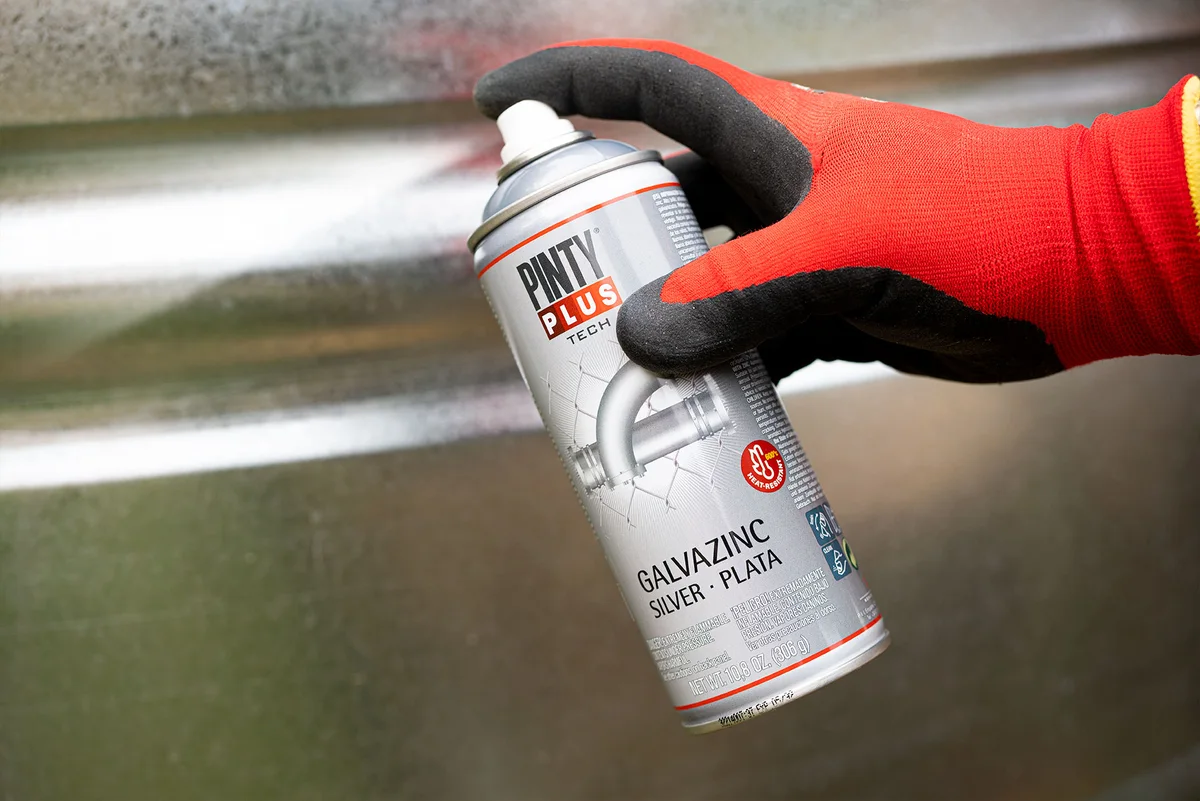
- Best product for most welds: Pintyplus Galvazinc Silver, gloss silver, recoat in 15 minutes
- Prep: cool, chip slag and spatter, wire-brush to bright metal, degrease
- Spray: two thin coats from 25 to 30 cm, covering the weld and the burnt area around it
- Check: look at welds before and after every monsoon and touch up bare spots
Why do welds rust before the rest of the steel?
Galvanized steel is protected by a layer of zinc. When you weld it, the heat burns that zinc off on both sides of the joint, often leaving a dark or discoloured band. The weld bead is new steel with no zinc on it. Then there is slag and spatter: little lumps and crusts that trap water and hide bare metal underneath.
So a gate that was fully galvanized when it left the shop can have a line of unprotected steel along every joint. Ordinary paint over that line only acts as a barrier, and once it chips, rust runs down from the weld in brown streaks.
Which product should you use on a weld?
We stock three zinc-based sprays that suit weld repairs. Pintyplus lists welding and galvanized retouching among the uses for all of them.
| Product | When to choose it |
|---|---|
| Galvazinc Silver | Most welds on galvanized gates, grills, fences and solar frames. Gloss silver finish, touch dry in 15 minutes, heat resistant to 600°C. It can be left as the finish. |
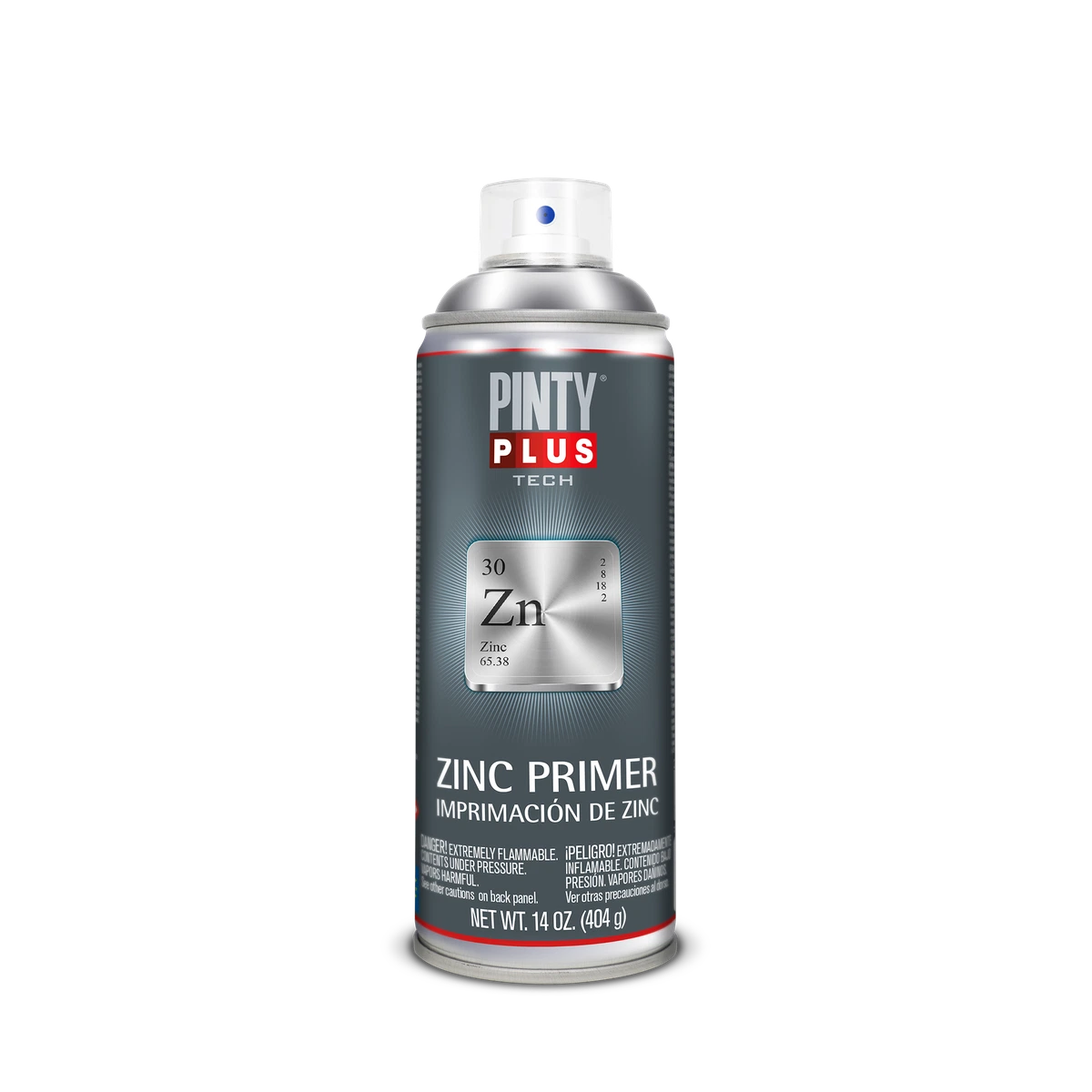
| Zinc Primer | Welds on steel in harsher conditions. A zinc-rich primer containing minimum 99% pure zinc, dries in one hour. |
| Galvazinc Gold | Welds on decorative gold railings or fittings, where the metal stays below 200°C. |
If you are unsure which suits your job, our guide on how cold galvanizing spray protects steel explains the difference between silver and gold, and when zinc primer is the better fit.
How do you repair a weld on galvanized steel, step by step?
1. Let the weld cool completely
Never spray onto a weld that is still warm. Wait until you can hold your hand on it.
2. Chip off slag and spatter
Use a chipping hammer on the slag, then knock off spatter balls around the joint. Anything left behind will hold moisture under the coating.
3. Clean back to bright metal
Wire-brush the weld and the discoloured band on each side until you see clean, bright steel. Remove loose rust and scale completely. Zinc can only protect steel it is actually touching.
4. Degrease and dry
Wipe the area with a degreaser or thinner on a clean cloth to remove oil and fingerprints. Let it dry. The surface must be clean and dry before you spray.
5. Mask around the repair
Tape off glass, walls, hinges and anything you don’t want coated. On a solar frame, cover the panels and cables.
6. Shake and spray two thin coats
Shake the can for one minute. Hold it 25 to 30 cm from the steel and apply thin, quick passes, first horizontally and then vertically. Cover the weld, the burnt band and a small margin onto the sound galvanizing beyond it. With Galvazinc you can recoat after 15 minutes. With Zinc Primer, wait one hour between coats.
7. Clear the nozzle
Turn the can upside down and spray until only gas comes out.
What should you check on gates, grills and solar structures?
Gates and grills
Look at the bottom rail, the hinge welds and any joint where rainwater collects. The bottom of a gate stays wet longest after rain and is usually where rust starts. Check fresh welds from repair jobs too, since a welder fixing a hinge often leaves the joint untreated.
Solar panel structures
Solar mounting frames are often galvanized, then cut, drilled and welded on the roof during installation. Every cut end, drilled hole and site weld is bare steel. Treat them straight after installation, before the first monsoon, rather than waiting for rust to show.
Coastal and monsoon conditions
In Karachi and other coastal areas, salty, humid air attacks bare steel much faster, so check welds more often there. Across Punjab, the monsoon is when untreated welds start to streak. Do repairs on dry days, on steel that is dry to the touch, in a well-ventilated place. Don’t spray anything connected to the electricity supply.
How often should you touch up welds?
Look at your welds before the monsoon and again after it. A small spot of rust caught early needs a quick brush and a touch-up spray. Left for a season, it lifts the coating around it and the repair gets bigger.
Common questions
Can I spray straight over a rusty weld?
No. Brush the rust off first. Zinc needs contact with clean steel to protect it.
Can I paint over Galvazinc afterwards?
You don’t need to, because Pintyplus says it can be used as the finish paint. It can be overpainted if you want a colour. Send us a photo before you do.
How much do I need for a few welds?
Very little. A 400 ml can of Galvazinc covers about 2 m², so one can treats a lot of weld joints.
Is silver paint the same as cold galvanizing?
No. A silver paint without zinc only looks like galvanizing. It does not give the same protection.
Where to buy in Lahore and across Pakistan
Pintyplus Galvazinc Silver Cold Galvanizing Spray is ₨ 2,890 for a 400 ml can. You can pick it up from our shop at Sohail Centre, LG 8, Dil Muhammad Road, Garhi Shahu, Lahore, Monday to Saturday from 8:30 AM to 10:00 PM, or order online for delivery anywhere in Pakistan.
Not sure which one you need? Send a photo on WhatsApp to 0321 999 3919 and we’ll tell you.
More on protecting steel: Metal & Corrosion Protection