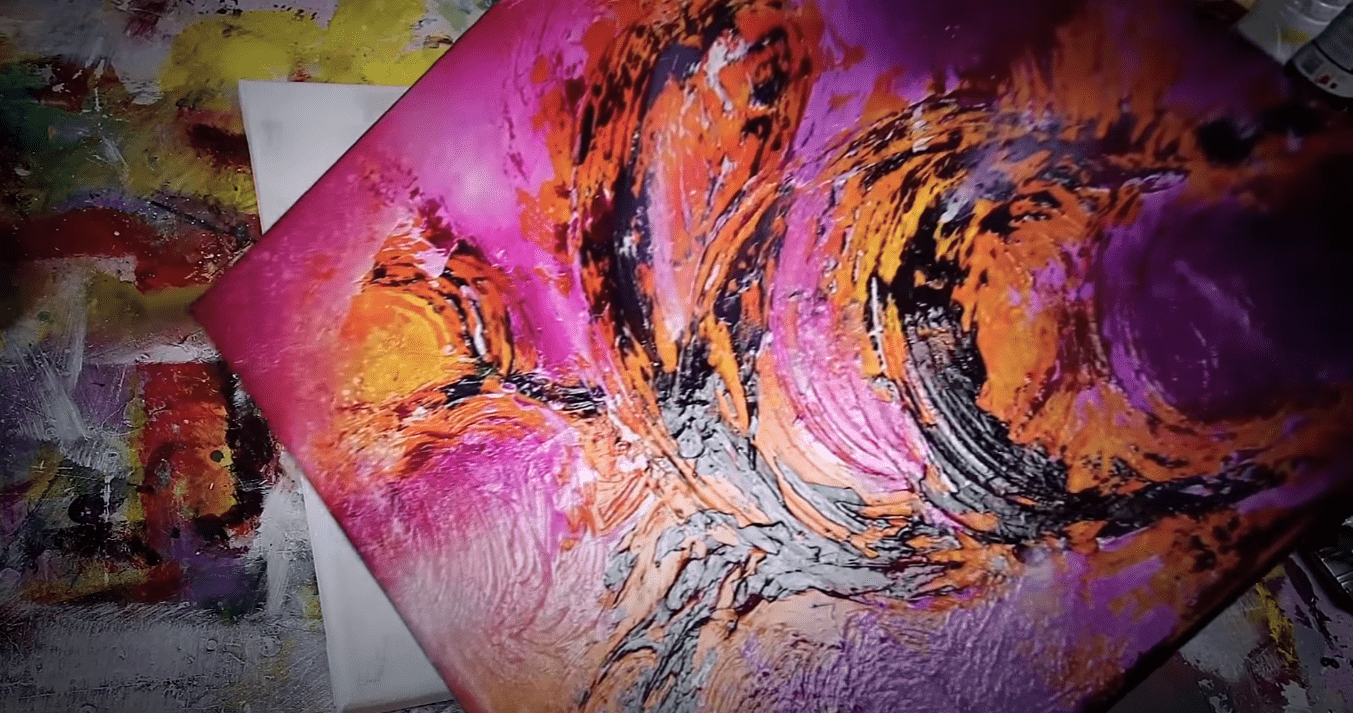
There is a moment every canvas painter knows — when the final brushstroke is down and the painting is technically complete but somehow does not yet feel finished. Part of that feeling is psychological, but a large part is also physical. An unvarnished canvas surface looks slightly raw, uneven in its sheen, and can appear patchy where thick paint areas look different from thin ones. Applying a canvas varnish spray is the step that resolves all of this. It unifies the surface, enhances the colours, and signals — visually and materially — that the work is complete.
The Problem of Uneven Sheen
One issue specific to canvas painting is known as sinking. This happens when oil or binding medium in a paint area is absorbed into the canvas or underlying layers, leaving some areas looking matte and dull compared to others. It is particularly common in darker pigments like burnt umber, raw sienna, and lamp black.
When a canvas varnish spray is applied evenly over the entire surface, it fills in these absorption differences and creates a consistent optical depth across the whole painting. The matte, sunk areas come back to life and match the rest of the work. The effect, especially on oil paintings, is often dramatic.
What Makes a Good Canvas Varnish Spray?
Not all varnishes are formulated specifically for canvas. The best canvas varnish spray products share certain characteristics:
- They remain flexible rather than brittle after drying — important because canvas moves slightly with humidity
- They do not change the colour of the pigments beneath
- They bond well to both oil and acrylic paint surfaces
- They can be removed with appropriate solvents for future conservation
- They include UV protection to guard against fading
- They produce no brush marks or application texture
The spray format is particularly well suited to canvas because it eliminates the risk of disturbing soft or semi-dry paint areas that a brush might drag across.

Timing: When Is a Canvas Ready to Varnish?
Timing is one of the most important factors when using any art varnish spray on canvas. For acrylic paintings, the rule is to wait a minimum of 24 hours, and ideally 48 to 72 hours for thick layers. For oil paintings, the wait is considerably longer — most conservators recommend at least six months to ensure the oil paint has fully cured and hardened throughout its thickness. Varnishing oil paint before it has fully cured traps the drying process and can eventually cause cracking.
Varnishing Technique Specific to Canvas
Canvas has a surface texture (tooth) that requires slightly more care than a smooth surface. Here is the recommended approach:
- Lay the canvas flat rather than propped upright — this prevents runs on textured surfaces
- Apply in slow, even horizontal passes starting from the top of the canvas
- The first coat should be extremely light — barely a mist — to act as an anchor for subsequent coats
- Between coats, check for any areas where varnish has pooled in the canvas texture
- Two to three thin coats are ideal for most canvas paintings
- For very heavily textured work (impasto), four coats may be needed for uniform coverage
Always step back and view the canvas from a low angle under raking light between coats. This reveals any uneven patches, runs, or missed areas that need attention before the next coat goes on.
Hanging and Display After Varnishing
Once varnished, a canvas can typically be handled within two to four hours and hung within 24 hours. However, full hardness takes longer. Avoid resting anything against the varnished surface or exposing it to very high humidity for the first week. After that, the surface should be stable and ready for long-term display.
Conclusion
Canvas varnish spray is not just a protective measure — it is an aesthetic one. The way it unifies surface sheen, deepens colours, and gives the painting that final sense of completion is genuinely satisfying. Whether you paint as a hobby, as a student, or professionally, this is a finishing step worth taking seriously. Your canvases deserve it.