Most spray paint jobs that peel, bubble or look patchy fail before the first coat goes on. The usual causes are grease or dust on the surface, moisture, shiny old paint that gives nothing to grip, rust or flaking paint underneath, and a missing or wrong primer. Good preparation is three steps: clean, sand where needed, and prime. Pintyplus says the surface must be clean, dry and free of any contaminants, and Pintyplus Universal Primer gives a white matte base with high adhesion on wood, metal, rigid plastics, melamine, Formica, plaster and tile. Here is how to prepare each surface.
The short version
- Clean: remove grease, dust and dirt, then let it dry completely
- Sand: scuff gloss, remove flaking paint and rust, wipe off the dust
- Prime: Pintyplus Universal Primer on wood, metal, rigid plastics, melamine, plaster and tile
- Recoat window: before 1 hour or after 24 hours
- Topcoat: after 24 hours for the best finish
Why do most spray paint jobs fail before the first coat?
Spray paint goes on in thin coats, and a thin coat can only be as good as what it sits on. If the surface is greasy, the paint beads or peels. If it is dusty, the paint sticks to the dust instead of the surface. If it is damp, the paint can blister. If it is glossy, the paint has nothing to grip and chips off with a fingernail. And if there is rust or loose paint underneath, the new coat comes away with it.
None of these show on the day you paint. They show a week or a month later, which is why preparation feels optional when it is the step that decides the result.
How do you clean a surface properly?
- Wash with water and a detergent or degreaser. Kitchen items, bike parts, machinery and anything handled often carry grease you can’t see.
- Rinse with clean water, so no detergent film is left behind.
- Let it dry completely. Wood, plaster and clay hold water inside after washing, so give them longer, especially in humid weather.
- Just before spraying, wipe off dust with a clean, dry, lint-free cloth.
When and how should you sand?
Glossy paint, varnish and laminate
Scuff the shine off with fine sandpaper until the whole surface looks dull. You are not removing the old finish, only giving the new coat something to grip.
Flaking or peeling paint
Scrape and sand off anything loose, and feather the edges so they don’t show through. If the old paint is failing all over, strip it. We stock Pintyplus Paint Stripper for that.
Rust
Wire-brush or sand rust back to sound, bright metal. Paint over rust fails from underneath.
Always finish by removing the dust
Sanding dust is as bad as dirt. Wipe it off thoroughly before priming.
Do you need a primer, and which one?
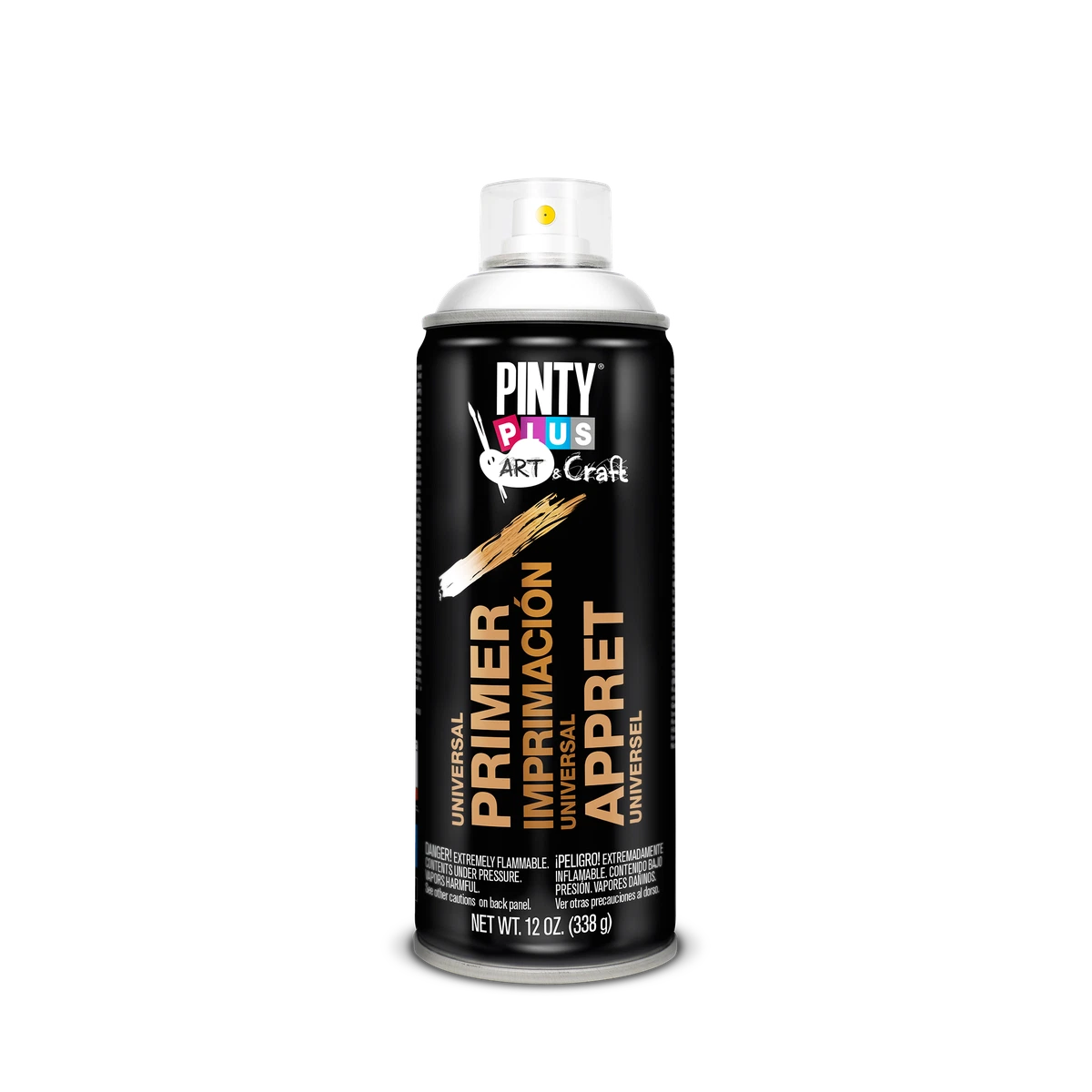
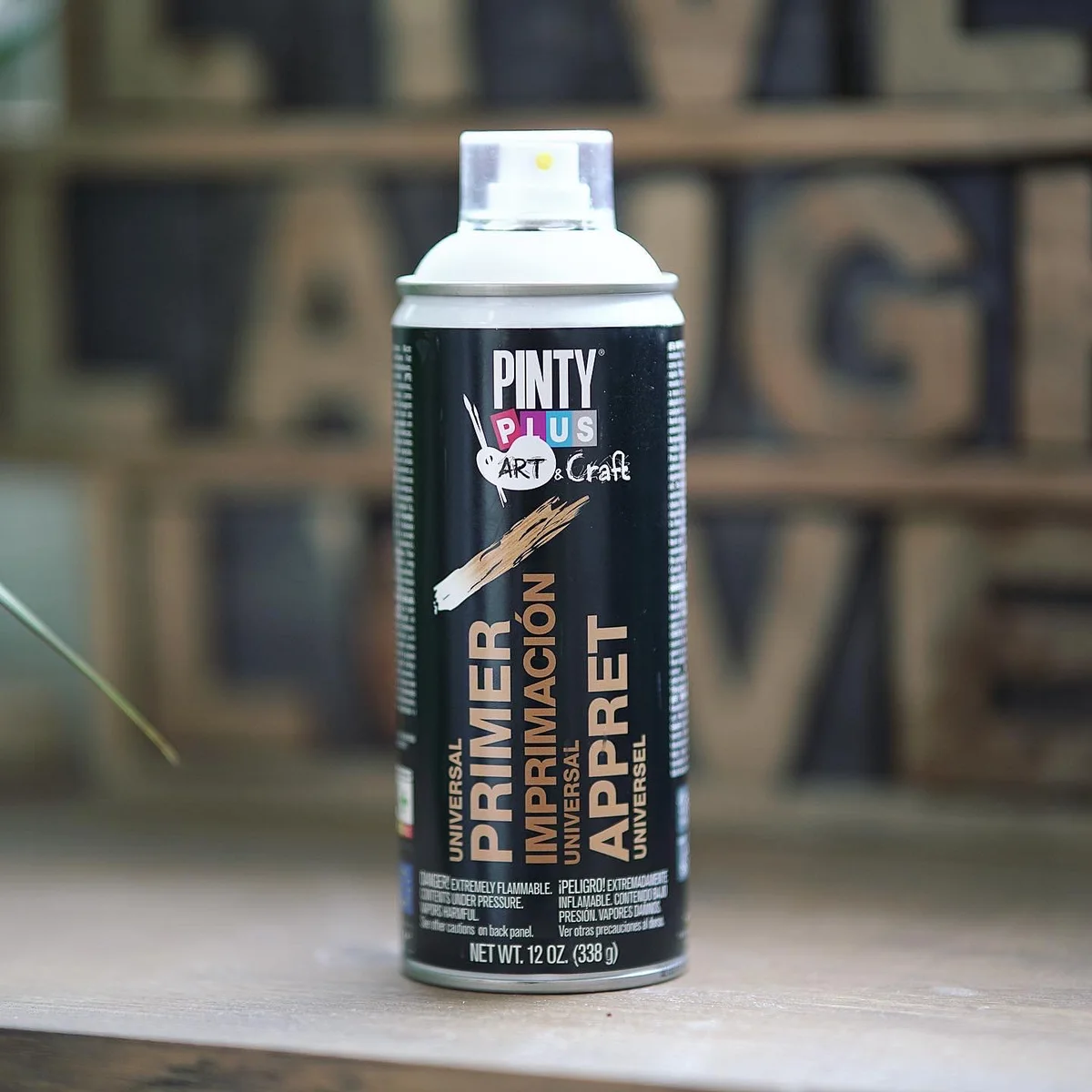
A primer does two jobs. It grips the surface better than a colour coat can, and it gives an even base, so the colour covers in fewer coats. Pintyplus describes Universal Primer as a quick-drying white matte primer with high hiding power and high adhesion, which also fills pores on porous surfaces like bare wood and plaster.
- Wood, MDF, melamine, Formica, rigid plastics, plaster and tile: Universal Primer.
- Steel that has to resist rust: our product page notes that this is the Art & Craft primer, not an anti-corrosive one. Use Pintyplus Zinc Primer Spray on steel instead.
- Flexible and hard-to-paint plastics such as bumpers and bike fairings: Pintyplus Plastic Primer.
- Glass, and anything not on these lists: ask us before you start.
How do you apply Universal Primer?
1. Shake
Shake the can vigorously for one minute after you hear the mixing balls.
2. Spray thin coats
Hold the can 25 to 30 cm away and apply thin, fast layers, first horizontally and then vertically, leaving a few minutes between layers. Two thin coats are better than one thick one. One can covers about 1.4 to 1.6 m², depending on the surface.
3. Respect the recoat window
It dries in 1 hour. Pintyplus says it can be recoated before 1 hour or after 24 hours, so either finish your coats within the hour or wait until the next day.
4. Wait before the colour
For the best finish, Pintyplus recommends applying the topcoat 24 hours after the primer.
5. Clear the nozzle
Turn the can upside down and spray until only gas comes out. Work in a well-ventilated area, and never spray anything connected to the mains.
What changes in Pakistani conditions?
Moisture is the big one. In the monsoon, washed wood and plaster take longer to dry out, and a surface that looks dry can still hold damp. Give it an extra day. Steel gates and grills start rusting quickly after rain, so sand and prime them the same day you clean them. In summer, metal left in the sun gets too hot to paint. Prepare it in the morning and paint when it is cool to the touch. And dust settles on a clean surface within minutes, so wipe it down just before you spray, not an hour earlier. Our guide to how to spray aerosols properly covers the spraying itself.
Common questions
Can I skip primer on bare wood?
You can, but bare wood soaks up the first coat unevenly. Universal Primer seals the pores and gives an even base.
Does Universal Primer stop rust?
It isn’t sold as an anti-corrosive primer. For steel, use Zinc Primer.
Can I prime over old paint?
Yes, if the old paint is sound. Clean it and scuff any gloss first. Remove anything flaking.
Can I use it outdoors?
Pintyplus lists it for indoor and outdoor use.
Where to buy in Lahore and across Pakistan
Pintyplus Universal Primer Spray for Art & Craft is ₨ 3,990 for a 400 ml can. You can pick it up from our shop at Sohail Centre, LG 8, Dil Muhammad Road, Garhi Shahu, Lahore, Monday to Saturday from 8:30 AM to 10:00 PM, or order online for delivery anywhere in Pakistan.
Not sure which one you need? Send a photo on WhatsApp to 0321 999 3919 and we’ll tell you.
More on primers: Primers & Surface Preparation