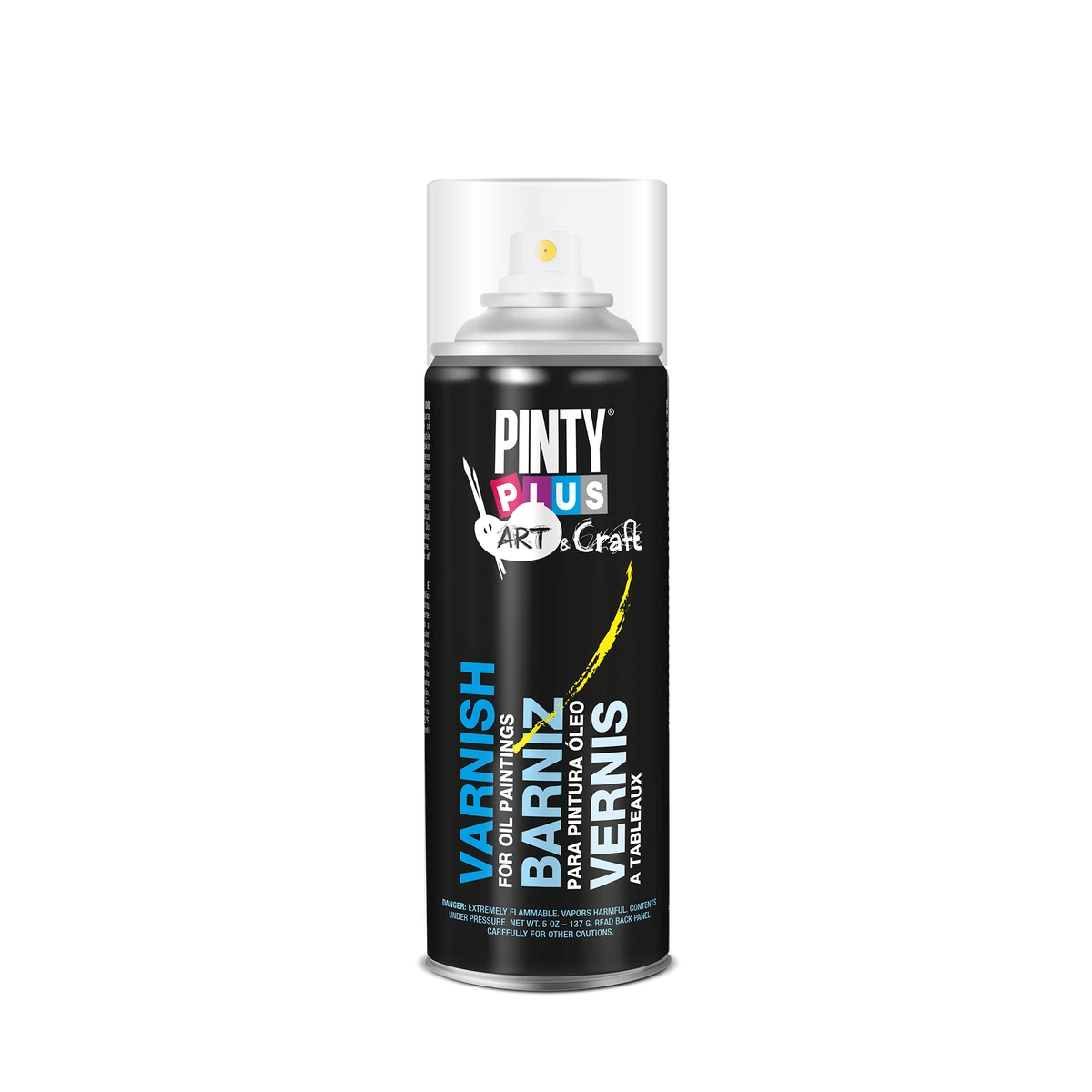
An oil painting is ready to varnish only when the paint is dry right through, which takes far longer than acrylic. Once it is, a clear varnish protects it from dust, moisture and pollution and evens out the sheen. Pintyplus Varnish Spray for Oil Paintings is a clear, glossy acrylic varnish made to protect and restore oil paintings. Pintyplus says it dries quickly and doesn’t alter the painting’s natural colours. Spray two thin coats from 25 to 30 cm on a clean, dry painting, in a ventilated, dust-free room, after testing on the edge first.
The short version
- Product: Pintyplus Varnish Spray for Oil Paintings, 200 ml, gloss
- Protects from: dust, moisture damage, pollution and the passage of time
- When: only when the paint is dry right through
- How: shake about 30 seconds, 25 to 30 cm, two thin coats
- Drying: about 30 minutes, covers about 1 m²
Why does an oil painting need varnish?
An unvarnished oil painting collects dust and grime in its surface texture, and it is exposed to moisture and air pollution. Pintyplus describes its oil painting varnish as protecting the painting from dust settling into it, from the passage of time and from deterioration caused by moisture, and as permanent protection against pollution in general.
Varnish also evens out the surface. Some colours in an oil painting dry glossy and others dull, and a single varnish coat gives the whole painting one even sheen and brings back the depth of the darker colours.
When is an oil painting ready to varnish?
Pintyplus only says the painting must be clean, dry and free of any contaminants. The catch is what dry means for oil paint. Acrylic dries as its water evaporates. Oil paint hardens slowly as it reacts with the air, and thick paint stays soft underneath long after the surface feels dry. Varnishing too early can trap that softness and cause problems later.
The traditional practice among painters is to wait several months before the final varnish, and longer for thick, textured paint. A painting that still smells strongly of oil, or has areas that dent under a fingernail on a hidden edge, isn’t ready.
Why does Pakistani weather make varnishing matter more?
Paintings here face the three things this varnish is made to protect against. Monsoon humidity and damp walls bring moisture. Winter smog in Lahore and other cities brings pollution. Dust settles on everything for most of the year. A varnished painting can be dusted gently with a soft, dry cloth, while an unvarnished one holds the grime in its texture.
Varnishing itself should wait for the right day: dry, calm and not too hot. Avoid sticky monsoon days and the heat of a summer afternoon.
How do you varnish an oil painting, step by step?
1. Clean the surface
Remove dust with a soft, dry, lint-free cloth. The surface must be clean and dry.
2. Set up the room
Choose a well-ventilated room, out of wind and direct sun. Switch off the ceiling fan and keep the room still. Pintyplus says to apply it in ventilated areas and not on anything connected to the mains.
3. Lay the painting flat
A flat painting is less likely to get runs than one standing upright.
4. Shake and test
Shake the can for about 30 seconds. Pintyplus advises testing on a sample first, so spray a painted scrap or a small area on the edge of the canvas.
5. Spray thin coats
Hold the can 25 to 30 cm from the painting and apply thin, quick layers, first horizontally and then vertically. Start and finish each pass off the edge of the canvas. Two thin coats are better than one thick one.
6. Let each coat dry
It dries in about 30 minutes. Check for missed or dull areas by looking across the surface towards a window, then apply the second coat.
7. Clear the nozzle
Turn the can upside down and spray until only gas comes out.
What should you know before you start?
- It is gloss only. There is no matte or satin version of the oil painting varnish.
- Pintyplus describes it as permanent protection. It isn’t described as a removable varnish, so decide before you spray.
- One 200 ml can covers about 1 m², enough for two coats on one or two medium paintings.
- For acrylic paintings, use Pintyplus Acrylic Varnish Spray, which comes in gloss, satin and matte. Our guide to varnishing an acrylic painting covers that method.
Common questions
Will the varnish change the colours?
Pintyplus says it doesn’t alter the natural colours. Darker colours often look deeper once varnished.
Does it turn yellow?
The Pintyplus catalogue describes it as waterproof and non-yellowing.
Can I varnish a painting that is only a few weeks old?
Thin oil paint may feel dry, but it usually isn’t dry through. Waiting longer is the safer choice.
Is it suitable for framed work behind glass?
Yes. Varnish protects the paint surface either way, and glass adds protection from dust.
Where to buy in Lahore and across Pakistan
Pintyplus Varnish Spray for Oil Paintings is ₨ 2,190 for a 200 ml can. You can pick it up from our shop at Sohail Centre, LG 8, Dil Muhammad Road, Garhi Shahu, Lahore, Monday to Saturday from 8:30 AM to 10:00 PM, or order online for delivery anywhere in Pakistan.
Not sure which one you need? Send a photo on WhatsApp to 0321 999 3919 and we’ll tell you.
More on varnishes: Varnishes & Protective Finishes