Seepage marks, drink splashes and ink come back through new paint because ordinary water-based emulsion re-wets the stain as it dries and carries the colour up to the surface. Grease does something similar: it stops the new paint bonding properly. Pintyplus Anti-Stains is a matt white spray made to cover and seal stains so they don’t bleed through. It works on a dry, clean wall once the cause of the stain has been fixed. It is not a damp-proofing product, so a wall that is still wet from seepage will stain again whatever you put on it.
The short version
- Product: Pintyplus Anti-Stains Water-Based Spray Paint, matt pure white (RAL 9016), 400 ml
- Covers: damp and seepage marks, tannin, drink, pencil and ink stains, and treated, dry mould marks
- First: fix the leak or seepage and let the wall dry out completely
- Spray: shake 2 minutes, 20 to 25 cm away, 2 to 3 light coats
- Drying: touch dry in 10 minutes, dry in 20. You can paint over it at any time.
Why do stains come back through new paint?
Many stains are soluble. Water marks from seepage, tea and coffee splashes, tannin from wood, and ink all contain colour that dissolves in water. When you paint a water-based emulsion over them, the wet paint dissolves some of that colour and it moves up through the paint as it dries. A day later the brown ring is back.
Grease and oil work differently. They leave a film that new paint can’t grip properly, so the paint stays patchy or peels, and the mark shows through.
The answer is a coat that seals the stain in before the finish paint goes on.
What does the Anti-Stains spray do?
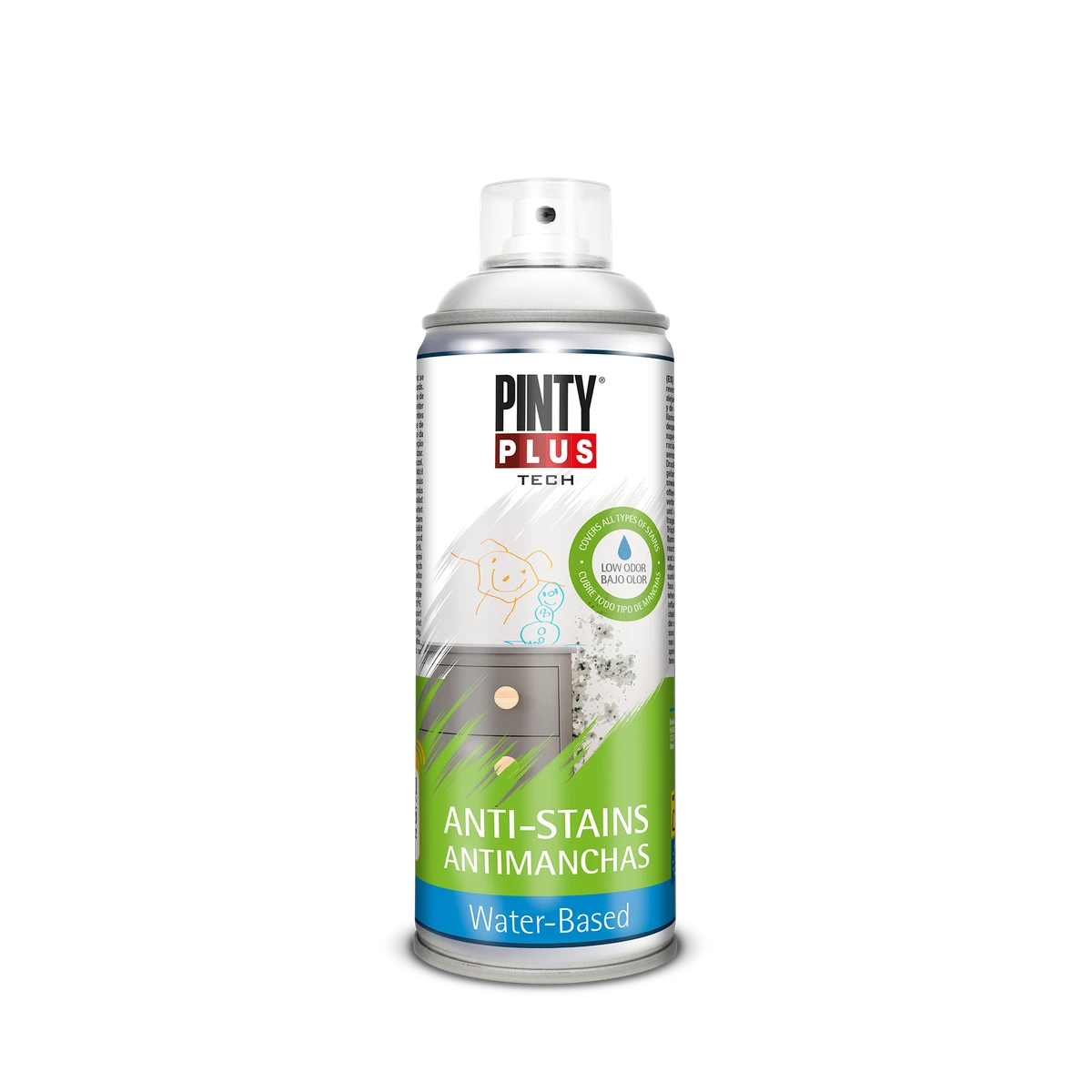
Pintyplus describes it as a white paint that covers all kinds of wall stains: tannins, beverages, pencil, ink, dampness and more. On our product page it is described as a water and alcohol based acrylic matt coating made to cover common interior stains. It is pure white (RAL 9016) and matt, so on a white ceiling or wall it can be the final coat.
Because it is water based, it has barely any smell, which matters when you are working inside a lived-in house. It dries fast: touch dry in about 10 minutes and dry in about 20.
Which stains can it cover?
Seepage and damp marks
This is a familiar job in Pakistani homes: brown rings on a ceiling under a roof that leaked in the monsoon, or tide marks on a wall behind a bathroom. Pintyplus lists dampness stains among the marks it covers, once the wall is dry.
Tea, drinks, tannin, pencil and ink
Splashes on kitchen and dining walls, children’s pencil and pen drawings, and stains from wood are all on the Pintyplus list.
Mould marks
Pintyplus says it can cover mould stains that are already dry and treated. It doesn’t kill mould. Clean and treat the mould first and fix the damp that caused it.
Smoke and kitchen grease
Smoke and grease aren’t named on the Pintyplus list, so treat these carefully. Wash the wall thoroughly with a degreasing cleaner, let it dry, then spray a small test area. If the mark stays covered after the coat has dried, carry on.
Why must you fix the seepage first?
Our product page is clear that this is not an anti-damp or waterproofing product. If water is still coming through the roof or a pipe, the wall stays wet and the stain comes back, however many coats you apply.
Before the monsoon, check the roof, parapets and the joints around pipes for cracks. Small cracks on the outside can be sealed with Pintyplus Waterproof Sealer Spray. Our guide to sealing cracks before the monsoon explains where that works. Leaking pipes and bigger roof problems need a plumber or builder. Once the leak is fixed, give the wall time to dry out completely, which after heavy seepage can take weeks.
How do you cover a stain, step by step?
1. Make sure the wall is dry and sound
Scrape off any flaking or bubbling paint. The surface must be clean and dry.
2. Clean the area
Dust the wall, then wash off dirt and grease. Let it dry.
3. Mask around the area
Cover the floor, furniture, switches and anything nearby. Spray drifts, especially on a ceiling.
4. Shake for two minutes
This product needs a longer shake than most: two minutes.
5. Spray 2 to 3 light coats
Hold the can 20 to 25 cm from the wall and spray light, even passes. Treat the stain as part of a wider area rather than blasting one spot, so you don’t end up with a thick patch that shows under the finish. Build up two or three light coats.
6. Paint over it if needed
On a white wall or ceiling you may not need anything else. If the rest of the wall is a colour, you can paint over the Anti-Stains coat at any time once it is dry.
Common questions
Will it stop damp?
No. It covers damp stains, but it does not stop damp. Fix the source of the water first.
Can I use it on a ceiling?
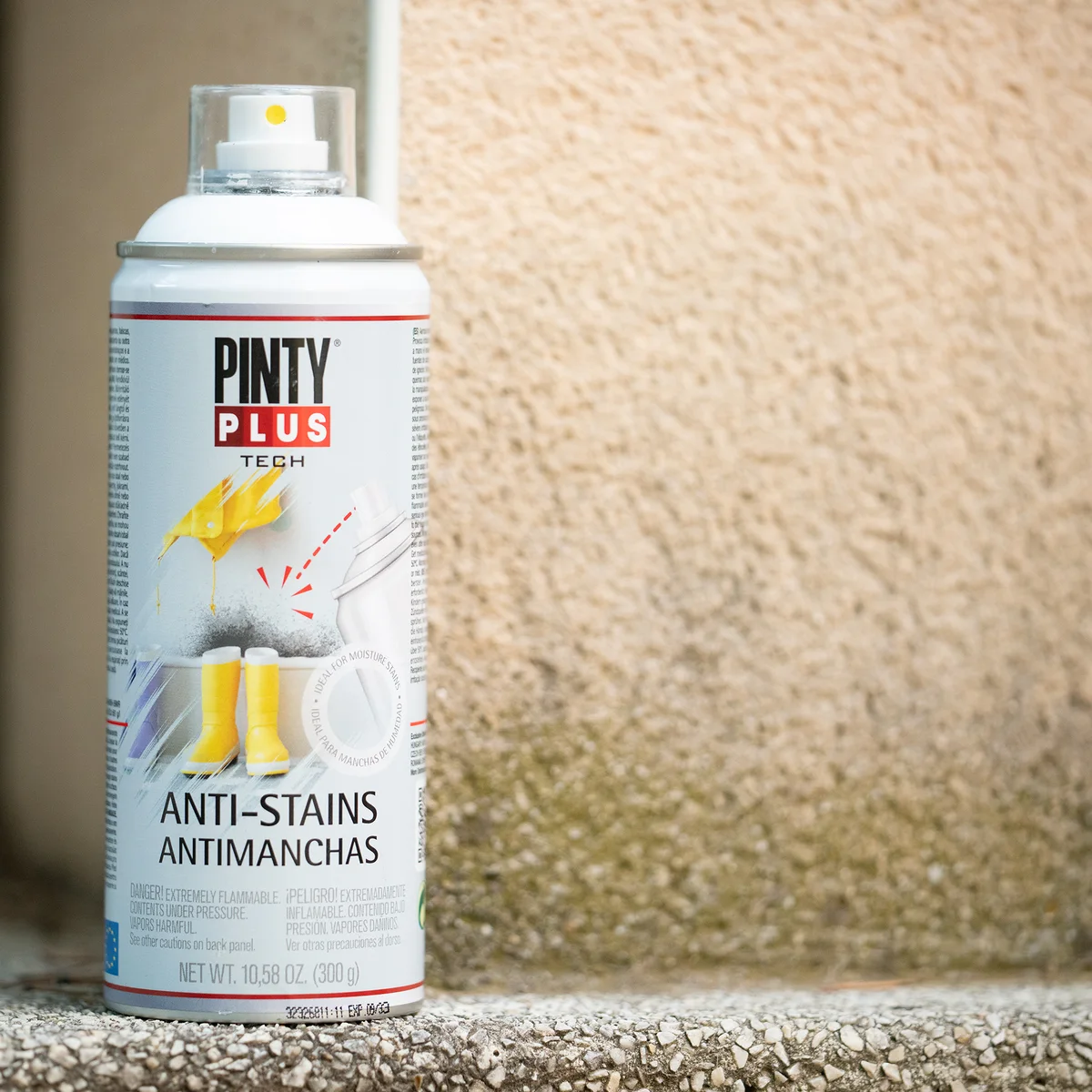
Yes. Pintyplus lists walls and ceilings. Mask the room well, because overspray falls.
How much wall does one can cover?
Our product page gives up to 3 m² per 400 ml can. That is plenty for most individual stains.
Does it smell?
Very little. It is water based, which Pintyplus says makes it ideal for indoor use. Keep windows open while you work anyway.
Where to buy in Lahore and across Pakistan
Pintyplus Anti-Stains Water-Based Spray Paint is ₨ 3,450 for a 400 ml can. You can pick it up from our shop at Sohail Centre, LG 8, Dil Muhammad Road, Garhi Shahu, Lahore, Monday to Saturday from 8:30 AM to 10:00 PM, or order online for delivery anywhere in Pakistan.
Not sure which one you need? Send a photo on WhatsApp to 0321 999 3919 and we’ll tell you.
More on preparation products: Primers & Surface Preparation