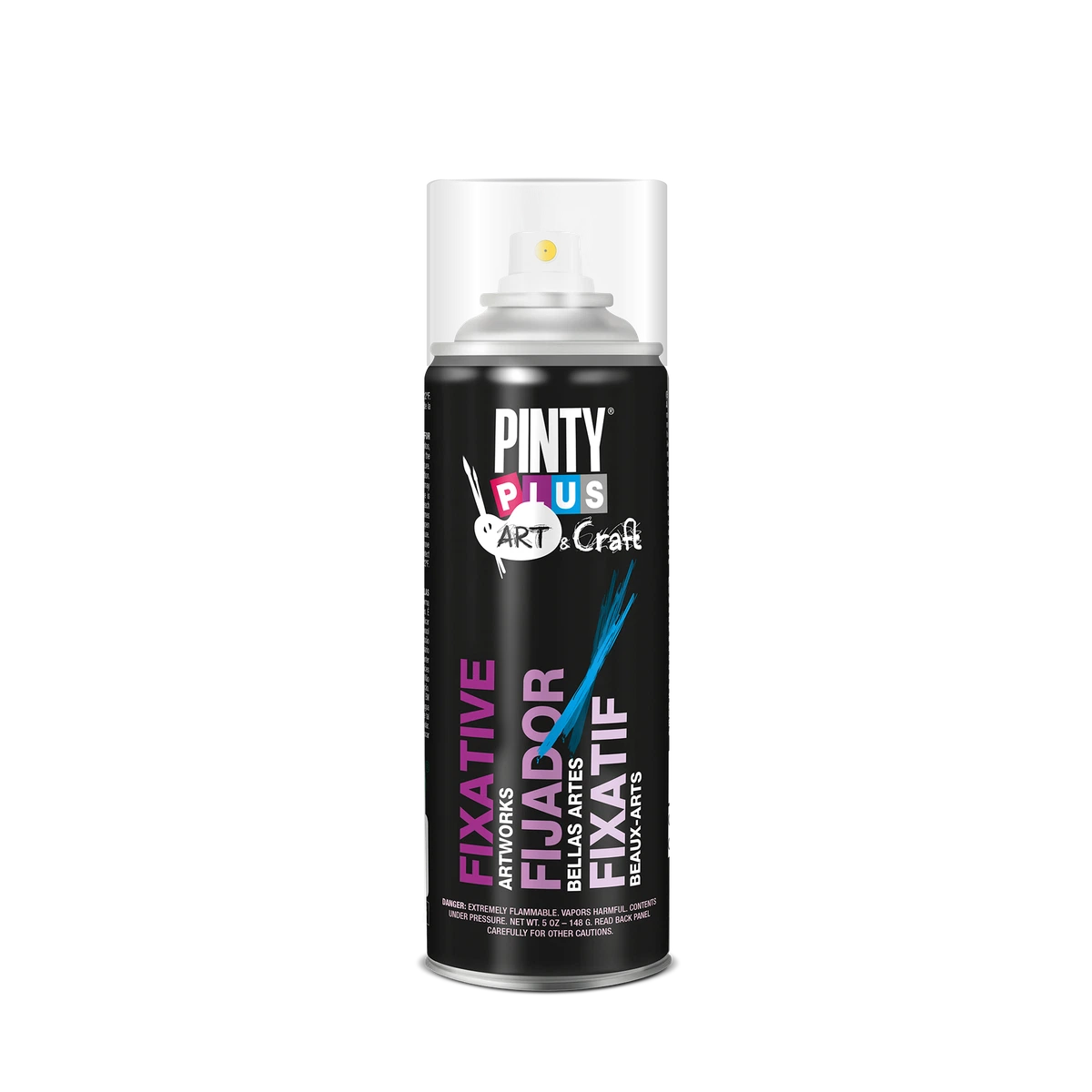
Fixative spray holds pastel and charcoal on the paper so a drawing doesn’t smudge when it is touched, stacked or carried. The way to fix it without dulling the colours is to use very little: two thin coats, sprayed from 25 to 30 cm in quick passes, rather than one heavy coat. Pintyplus Fixative Spray for Charcoal & Pastel is clear and colourless, dries in about 10 minutes, and according to Pintyplus doesn’t yellow. Test it on a scrap of the same paper and medium first, so you know how your colours react before you spray the finished drawing.
The short version
- Product: Pintyplus Fixative Spray for Charcoal & Pastel, 200 ml
- For: charcoal, pastel, pencil, crayon, ink and watercolour
- Method: 25 to 30 cm, thin quick passes, two thin coats
- Drying: about 10 minutes, covers about 1 m²
- Avoid dulling: test first, spray light, never soak the drawing
What does fixative do to pastel and charcoal?
Soft pastel and charcoal are loose particles sitting in the grain of the paper. There is no binder holding them, which is why a brushed sleeve or a finger smears them. A fixative lays down a very thin, clear film that binds those particles to the paper.
Pintyplus describes its fixative as clear and colourless, fast drying, waterproof and non-yellowing, and lists it for watercolours, pencils, pastels, crayons, charcoal, ink and adhesive letters. It is also listed for protecting photographs, maps and photocopies.
Why do colours sometimes darken, and how do you avoid it?
With any fixative, a heavy coat wets the pastel particles and can make them look darker or less bright, especially pale colours and white highlights. Charcoal can look slightly deeper too. The film itself is clear, but too much of it changes how the pigment reflects light.
- Spray thin, quick coats and never let the drawing look wet.
- Keep the can at 25 to 30 cm. Closer puts too much fixative in one place.
- Keep the can moving and start each pass off the paper.
- Test on a scrap with the same colours on the same paper.
- If you are worried about your brightest highlights, fix the drawing, then add those last touches on top.
How do you fix a pastel or charcoal drawing, step by step?
1. Finish blending
Fix only when the blending in that area is done. Once fixed, the particles are held and won’t blend in the same way.
2. Choose the place
Spray in a well-ventilated place, ideally outdoors in the shade or by an open window, with no wind. Switch off the ceiling fan, which lifts loose pastel dust and blows spray around. Pintyplus says to apply it in ventilated areas and not near devices connected to the mains.
3. Prop the drawing up
Tape the drawing to a board and prop it upright or at a slight angle. Loose dust then falls away rather than being pressed into the surface.
4. Shake the can
Our product page says to shake it for about 30 seconds, and Pintyplus says one minute. Shaking for the full minute does no harm.
5. Spray the first thin coat
Hold the can 25 to 30 cm away and spray thin, quick passes, first horizontally and then vertically, starting and ending off the edge of the paper.
6. Let it dry, then add a second coat
It dries in about 10 minutes. Check that the drawing no longer smudges on a corner, then add a second thin coat. Pintyplus advises two thin layers instead of one thick one.
7. Clear the nozzle
Turn the can upside down and press until only gas comes out.
How should art students protect coursework and portfolios?
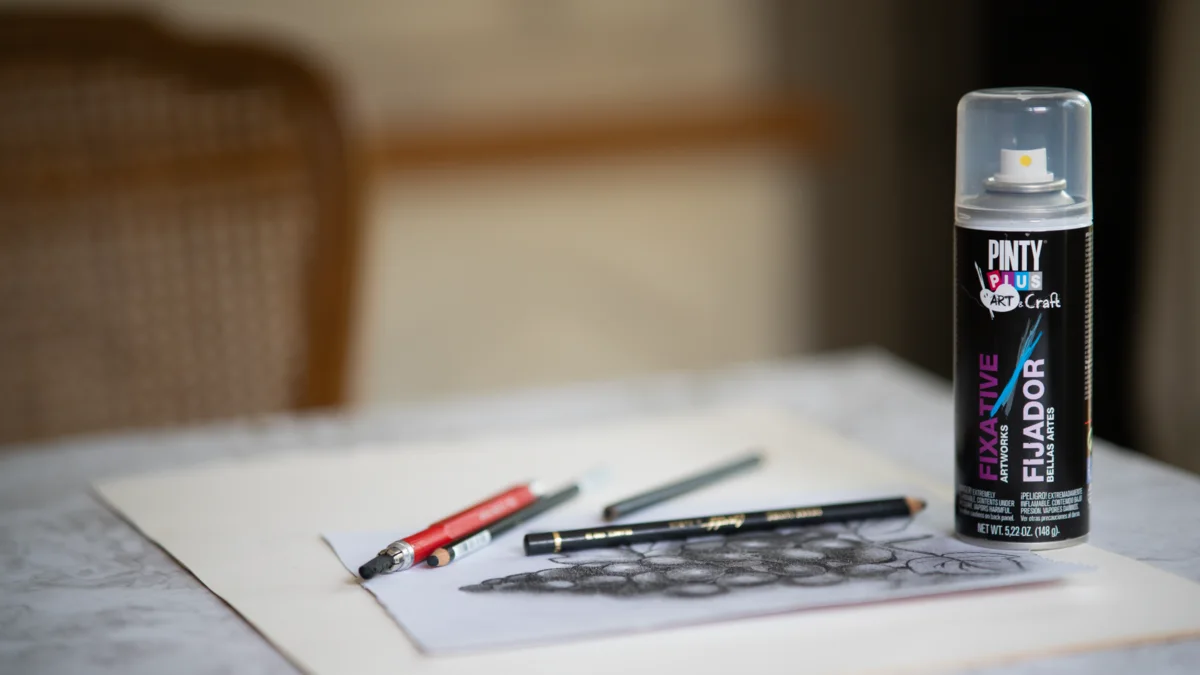
Pastel and charcoal work for school coursework, college assignments and admission portfolios gets handled, stacked and carried a lot, often in rickshaws, buses and car boots. Fix each piece as soon as it is finished. Put a sheet of plain, smooth paper between drawings, don’t stack them face to face under weight, and carry them flat in a folder.
In the monsoon, keep finished work out of damp rooms and away from walls that sweat. Before an exhibition or submission, leave time to fix and dry every piece, rather than spraying on the morning it is due.
What isn’t it for?
- Oil pastels. Pintyplus lists pastels and crayons but doesn’t mention oil pastels, so test on a scrap first.
- Paintings. For acrylic paintings, use a varnish such as Pintyplus Acrylic Varnish Spray.
- A drawing you still want to blend heavily. Fix it only when that stage is done.
For using fixative between stages of a drawing, see our guide to workable and final fixing.
Common questions
Is hairspray a good substitute?
We don’t recommend it. It isn’t made for artwork, so there is no telling how it will behave on your paper over time.
How many coats does a pastel drawing need?
Two thin coats, as Pintyplus advises. More coats mean more risk of darkening.
Can I frame it after fixing?
Yes, once it is dry. Frame pastel and charcoal behind glass with a mount so the drawing doesn’t touch the glass.
Will it stop my drawing smudging completely?
It holds the medium in place, but soft pastel stays delicate. Handle fixed work carefully and keep it behind glass or interleaved.
Where to buy in Lahore and across Pakistan
Pintyplus Fixative Spray for Charcoal & Pastel is ₨ 2,295 for a 200 ml can. You can pick it up from our shop at Sohail Centre, LG 8, Dil Muhammad Road, Garhi Shahu, Lahore, Monday to Saturday from 8:30 AM to 10:00 PM, or order online for delivery anywhere in Pakistan.
Not sure which one you need? Send a photo on WhatsApp to 0321 999 3919 and we’ll tell you.