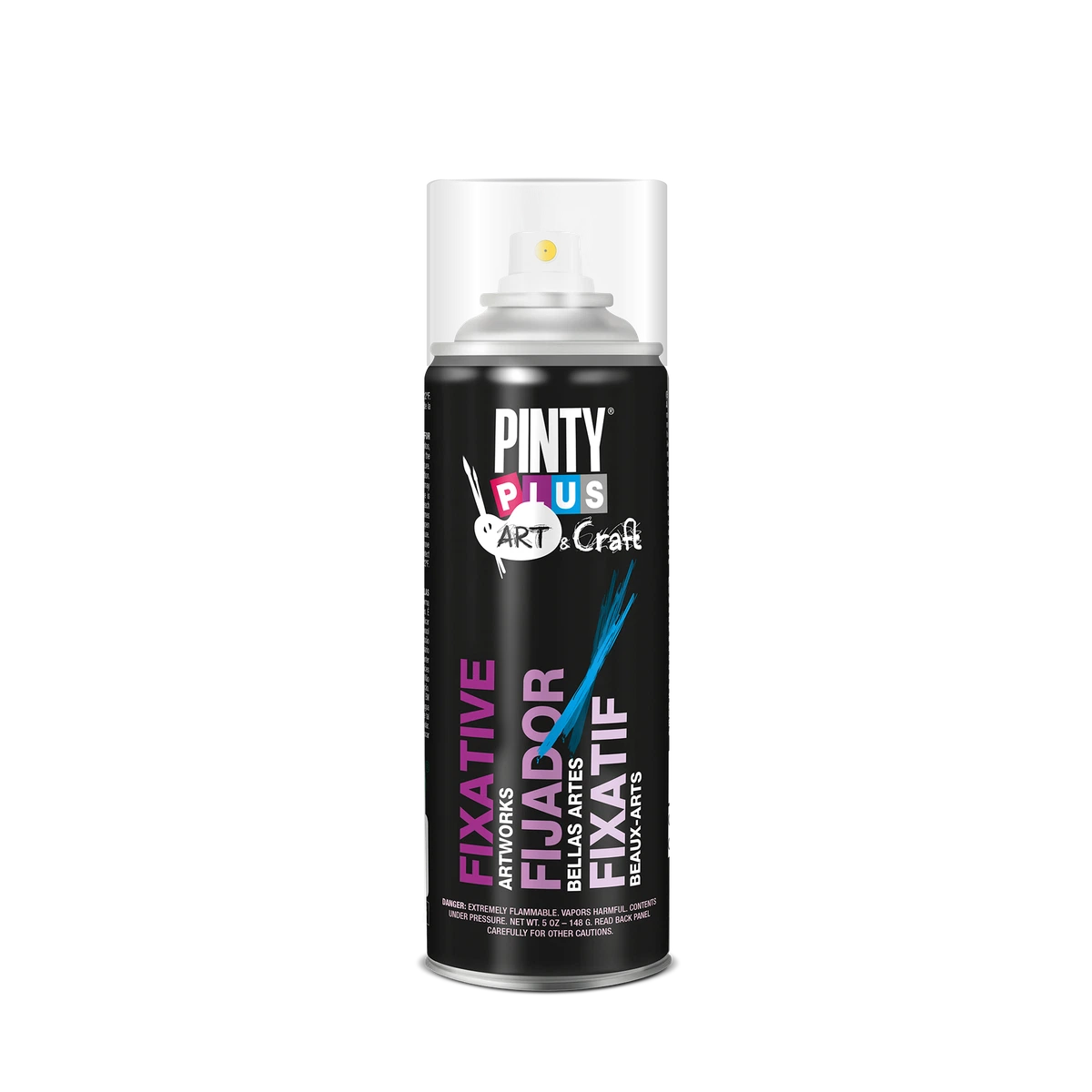
Pencil drawings smudge more than people expect, especially soft graphite in the B grades, and sketchbook pages rub against each other every time the book is opened. A fixative spray holds the graphite in place. Pintyplus Fixative Spray for Charcoal & Pastel is listed for pencils as well as charcoal and pastel. It is clear and colourless, dries in about 10 minutes and doesn’t yellow, according to Pintyplus. For graphite, use a light hand: two thin coats from 25 to 30 cm, tested first on a scrap of the same paper, so dark areas don’t take on an uneven sheen.
The short version
- Product: Pintyplus Fixative Spray for Charcoal & Pastel, listed for pencils
- Most at risk: soft grades like 4B to 8B, and dark shaded areas
- Method: 25 to 30 cm, thin quick passes, two thin coats
- Sketchbooks: fix each page and let it dry open before closing
- Test: spray a swatch of your grades first and judge it dry
Does a pencil drawing really need fixative?
Hard pencils, from HB up through the H grades, leave a thin, fairly stable line. Soft pencils, from 2B to 8B and beyond, leave more graphite sitting loosely on the paper, and heavy shading with them smears at the lightest touch. If your drawing uses soft grades, has large dark areas, or will be handled, stacked, carried or kept in a sketchbook, fixing it is worth doing.
Pintyplus lists pencils among the media its fixative is made for, along with watercolours, pastels, crayons, charcoal and ink.
Can fixative change how graphite looks?
Graphite has a natural metallic sheen. A heavy coat of any fixative can change that sheen unevenly, so dark shaded areas look slightly different from light ones. Thin coats keep this to a minimum.
Test first. On a scrap of the paper you drew on, shade a small patch with each grade you used, from light to dark. Spray it the way you plan to spray the drawing, let it dry fully, and compare. Always judge when dry, because the surface looks different while wet.
How do you fix a pencil drawing, step by step?
1. Clean up first
Erase stray marks and blow off eraser crumbs before you fix. Once fixed, graphite is much harder to erase.
2. Set up
Work in a ventilated place, outdoors in the shade or by an open window, with no wind and the ceiling fan off. Pintyplus says to apply it in ventilated areas and not near devices connected to the mains. Tape the drawing to a board and prop it up.
3. Shake
Shake the can well. Our product page gives about 30 seconds and Pintyplus gives one minute, so a full minute is safe.
4. Spray light coats
Hold the can 25 to 30 cm away and spray thin, quick passes, first horizontally and then vertically, starting and ending off the paper. Don’t hold the can closer to fine detail. Close, heavy spraying is what softens crisp lines.
5. Let it dry, then repeat
It dries in about 10 minutes. Add a second thin coat. Pintyplus recommends two thin layers instead of one thick one.
6. Clear the nozzle
Turn the can upside down and press until only gas comes out.
How do you protect a sketchbook?
In a sketchbook, soft graphite and charcoal transfer onto the facing page every time the book closes. There are two ways to stop it:
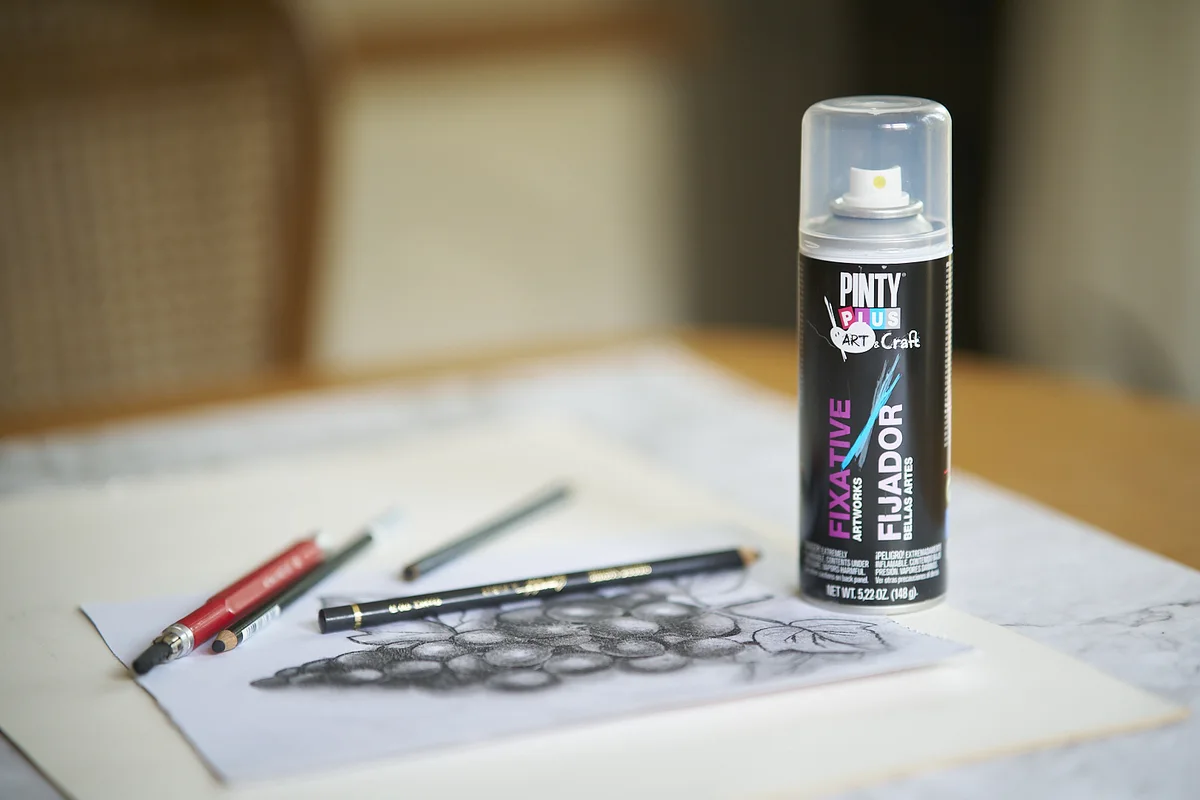
- Fix each finished page, and leave the book open until the fixative is dry before closing it. Spray outdoors or by an open window, with a sheet of scrap paper behind the page to protect the rest of the book.
- Put a loose sheet of smooth paper between facing pages that have heavy shading.
Doing both is best for sketchbooks that travel in a school or college bag.
How do you keep drawings safe in humidity and dust?
Paper takes in moisture in the monsoon, and it can ripple or go soft at the edges. Store sketchbooks and loose drawings flat, in a folder or box, away from damp walls and bathrooms. Dust settles on everything in dry months, so keep finished work covered rather than on an open shelf. For art students carrying portfolios on rickshaws and buses, fixed and interleaved drawings arrive in much better condition. Pintyplus also lists the fixative for protecting photographs, maps and photocopies, which is handy for reference sheets and printed coursework.
For pastel and charcoal work, our guide to fixative spray for pastel and charcoal covers how to avoid dulling colours.
Common questions
Can I erase after fixing?
Not easily. Fixative holds the graphite in place, so erase everything you need to before spraying.
Can I keep drawing over a fixed area?
Usually yes, but the surface takes pencil a little differently. Test on your scrap first.
Does it work on coloured pencil?
Pintyplus lists pencils. Test on a scrap with your colours before spraying the finished piece.
Will it make the paper yellow?
Pintyplus states that its fixative doesn’t yellow.
Where to buy in Lahore and across Pakistan
Pintyplus Fixative Spray for Charcoal & Pastel is ₨ 2,295 for a 200 ml can. You can pick it up from our shop at Sohail Centre, LG 8, Dil Muhammad Road, Garhi Shahu, Lahore, Monday to Saturday from 8:30 AM to 10:00 PM, or order online for delivery anywhere in Pakistan.
Not sure which one you need? Send a photo on WhatsApp to 0321 999 3919 and we’ll tell you.