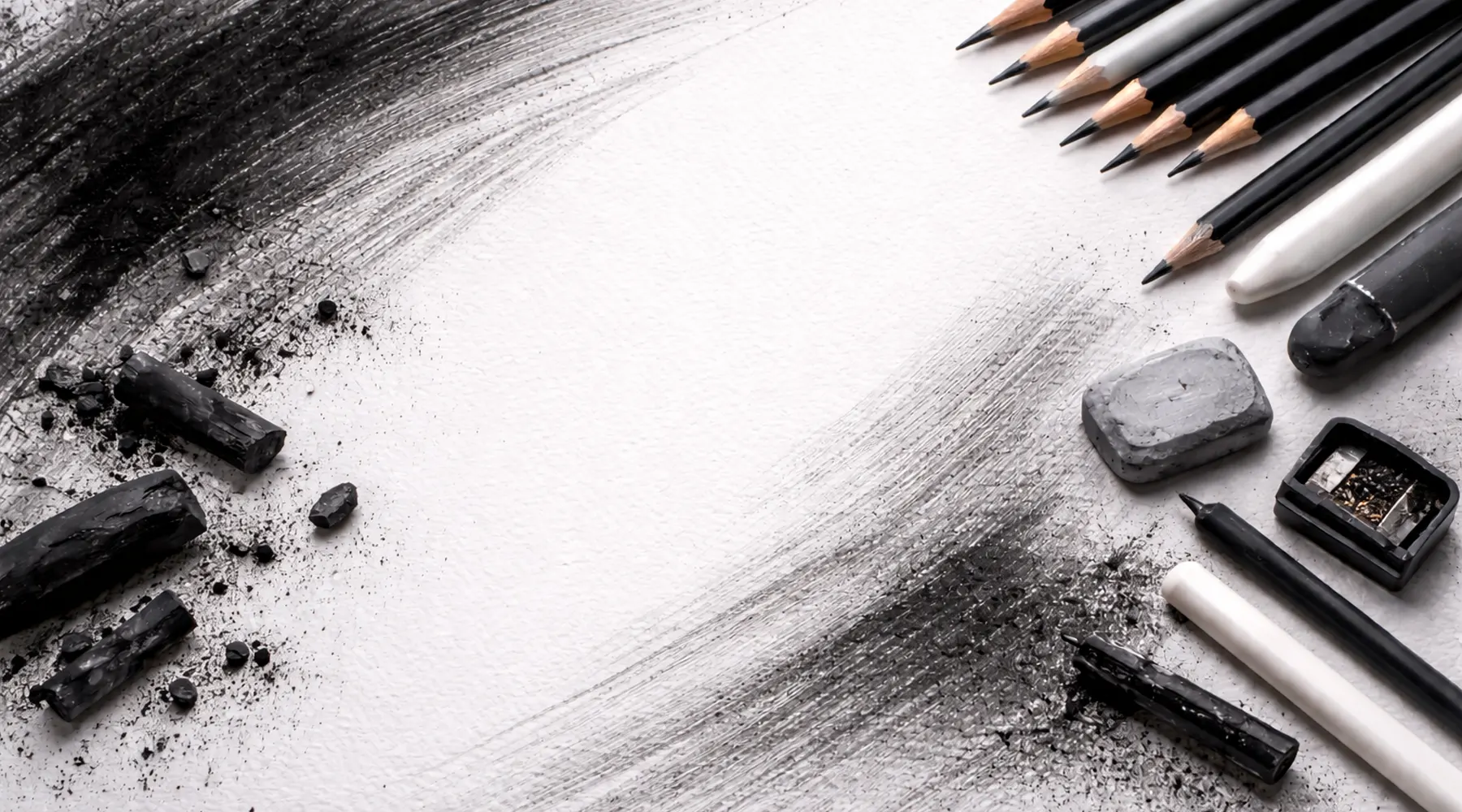
There is something deeply satisfying about a charcoal drawing. The soft gradients, the rich blacks, the organic feel of each stroke — charcoal has an energy that almost no other medium can match. But charcoal is also one of the most delicate mediums in an artist’s toolkit. A stray finger, a gust of wind, or even the gentle pressure of a sketchbook cover can smear weeks of careful work in seconds.
That is where a fixative spray for charcoal becomes absolutely essential. It is not just an optional add-on for serious artists — it is a protective layer that stands between your finished artwork and the real world.
What Is a Fixative Spray and How Does It Work?
A fixative spray is a clear, fast-drying aerosol that binds loose pigment particles — like charcoal dust — to the surface of your paper or canvas. When you apply it correctly, the spray penetrates the upper layers of your drawing and essentially glues each particle in place without altering the visual character of the work.
Most quality fixative sprays are made with a resin dissolved in a solvent. Once sprayed, the solvent evaporates quickly and leaves behind a thin, transparent film. For charcoal specifically, this film captures the powdery carbon particles and keeps them exactly where you placed them.
There are two broad types to understand: workable fixative spray, which allows you to continue drawing on top after application, and permanent fixative spray, which creates a final seal and is designed for finished work. Knowing which type you need depends entirely on your workflow.
The Unique Challenge of Working With Charcoal
Charcoal — whether vine, compressed, or powdered — sits on the surface of paper rather than soaking into it the way watercolour or ink does. This is both its strength and its weakness. You can blend it effortlessly, lift it with an eraser, and build up tonal values in ways that pencil simply cannot replicate. But that same loose adhesion means a completed charcoal piece is vulnerable every single moment after you set down the stick.
Professional artists know that transporting or framing a charcoal drawing without protection is asking for trouble. Even inside a portfolio sleeve, the drawing can transfer to the opposite page. Fixative spray solves this problem at every stage — both during the drawing process and at completion.
How to Apply a Fixative Spray for Charcoal Correctly
Application technique matters just as much as the product itself. Follow these steps for the best result:
- Work in a well-ventilated area, preferably outdoors or near an open window. Fixative sprays contain solvents and should never be used in enclosed spaces.
- Hold the can approximately 25 to 35 centimetres from the surface of your artwork. Too close and you risk saturating the paper, which can cause the charcoal to bleed or shift. Too far and the coverage becomes uneven.
- Use smooth, sweeping horizontal or vertical passes across the drawing. Avoid circular motions or holding the spray in one spot.
- Apply 2 to 3 thin, even coats rather than one thick coat. Allow each layer to dry fully — usually 3 to 5 minutes — before applying the next.
- If you are using a workable fixative spray between layers, wait for it to dry completely before adding more charcoal on top.
- For a finished piece, a permanent fixative spray as the final layer will give you the most durable long-term protection.
Common Mistakes Artists Make With Charcoal Fixative
Even experienced artists make errors when using fixative. One of the most common is applying the spray too heavily on a single pass, which can cause the charcoal to shift, darken unevenly, or bead up in a way that disrupts the drawing surface. Another mistake is using fixative as the very first step before any blending is done — this locks in marks that might otherwise be reworked.
Some artists also forget to shake the can before use. Most aerosol fixatives require thorough mixing of the contents to spray evenly. A quick shake of 30 to 60 seconds before every use makes a real difference in the quality of application.
It is also worth checking the nozzle before directing the spray at your artwork. Press the nozzle briefly onto scrap paper first to ensure it is spraying cleanly and not sputtering.
Workable vs Permanent: Choosing the Right Type for Your Project
As mentioned earlier, understanding the difference between workable and permanent fixative is key to using either correctly.
A workable fixative spray is designed for use mid-drawing. After applying it, you can continue adding charcoal, blending, erasing, and building up layers. Artists who work in stages often apply a workable fixative at the end of each session to lock in progress, then continue the following day without losing what they have already built. This is particularly useful for large pieces that take many hours or multiple sittings to complete.
A permanent fixative spray, by contrast, is the finishing touch. It creates a harder, more durable surface that is not meant to be drawn over. Think of it as varnish for your charcoal — it protects the final image and prevents any future smudging or dust accumulation. Once a permanent fixative is applied and cured, the drawing is ready for framing, display, or storage.
Tips for Storing and Displaying Fixed Charcoal Artwork
Even after applying an art fixative spray, it is good practice to store charcoal drawings in archival-quality sleeves or between sheets of acid-free glassine paper. For display, framing behind glass adds an extra layer of protection from dust, humidity, and UV light.
When stacking multiple charcoal drawings, always place a sheet of glassine or tissue between them even if they have been fixed. Fixed charcoal is stable but can still transfer under pressure, especially in warm or humid conditions.
Proper storage makes the difference between artwork that lasts decades and artwork that deteriorates within months. Combined with a quality fixative spray application, these habits will keep your charcoal drawings looking their best for years.
Final Thoughts
Charcoal is one of the oldest and most expressive drawing mediums in the history of art. Protecting it should be as natural as picking up the stick itself. A reliable fixative spray for charcoal is not an afterthought — it is a fundamental part of the creative process that every serious artist should understand and master.
Whether you are a student sketching portraits in class, a hobbyist working through landscapes on weekends, or a professional preparing pieces for exhibition, the right fixative spray will protect your investment of time, creativity, and skill.