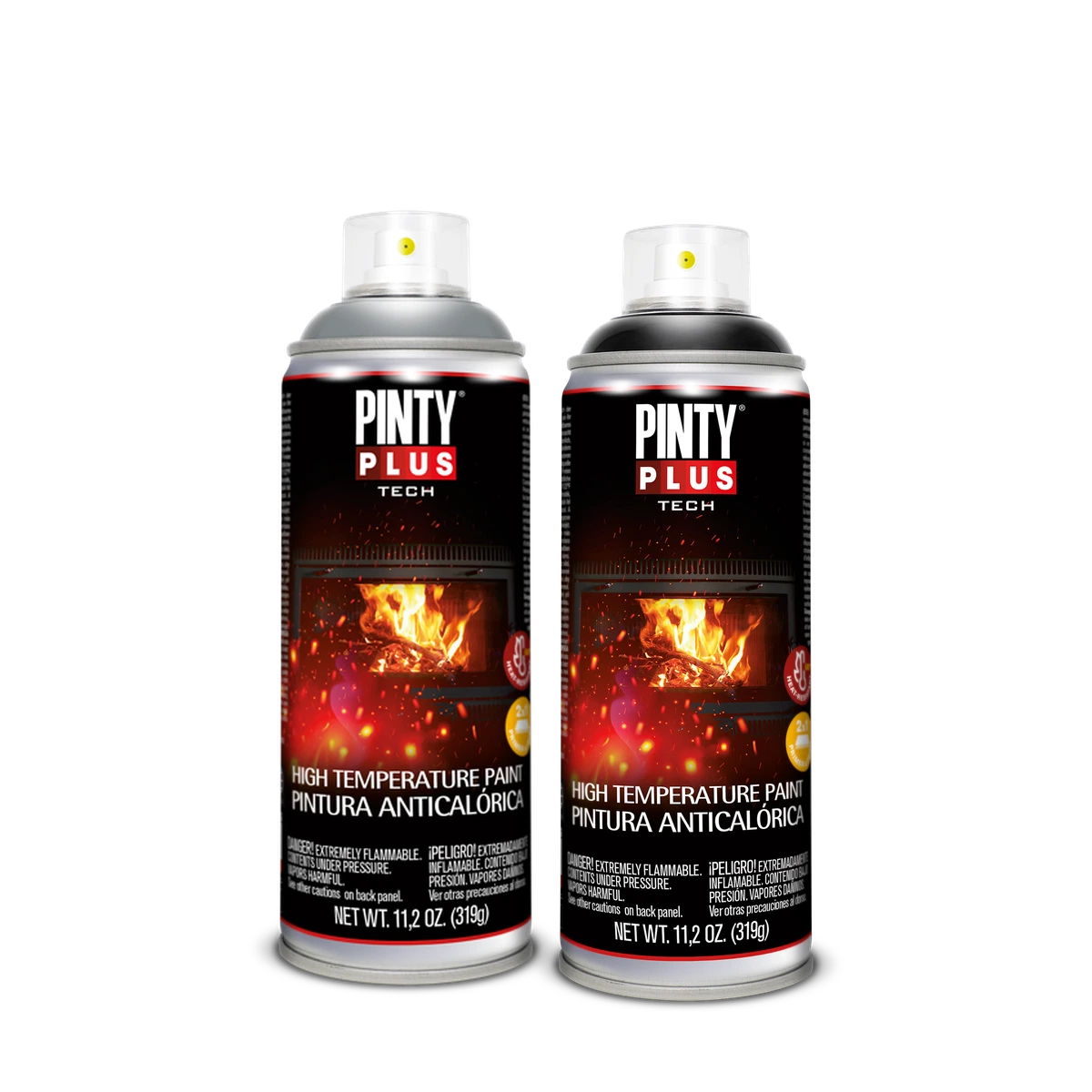
Heat-resistant spray paint is made for bare metal that gets hot: exhaust pipes, gas heater bodies, stove and flue pipes, the outside of BBQ grills and generator exhausts. Pintyplus High Temperature spray is rated to 600°C. It is not for cooking surfaces, anything that touches food, or anything that isn’t metal. And like every heat paint, it only reaches full strength after you heat it up gradually once it’s dry.
At a glance
| Good for | Not for |
|---|---|
| Motorbike silencers and exhaust pipes | Grill grates, tawas and anything that touches food |
| Gas heater bodies and back panels | The inside of a BBQ or oven |
| Stove, chimney and flue pipes | Clay tandoors, brick, wood or plastic |
| The outside of BBQ grills | Metal that gets hotter than 600°C or glows red |
| Generator exhausts and mufflers | Electrical appliances that are still plugged in |
Where heat-resistant spray works
Motorbike silencers and exhaust pipes
Exhaust pipes are the job this paint was designed around. Ordinary paint burns off a bike exhaust within weeks, while heat paint that is applied and cured properly stays put. We have a separate step-by-step for it: how to paint a motorbike silencer so the paint doesn’t burn off.
Gas heaters
Metal gas heaters take a beating over a Pakistani winter, and the painted body often discolours or starts to rust by the next season. The outer casing and back panel can be repainted with heat-resistant spray. Do it before winter starts, with the gas turned off and the heater completely cold. Paint only the metal body. Leave the burner, the ceramic plates and any glass alone.
Stove, chimney and flue pipes
Flue pipes on wood stoves, heaters and bakery ovens rust quickly from heat and moisture. Stove and fireplace parts are listed among this paint’s uses. Clean off the soot and loose rust first, because paint won’t hold on a sooty surface.
The outside of BBQ grills
The body and lid of a metal BBQ can be refreshed with heat-resistant black. Paint the outside only. The grate, the inside of the bowl and anything food sits on should stay unpainted.
Generator exhausts
With generators running for hours during load-shedding, their exhaust pipes and mufflers rust and lose their paint. Paint them only when the generator has been off long enough to be completely cold, and keep the spray away from the engine’s air intake.
Where it doesn’t belong
This paint isn’t made for food contact, so keep it off grill grates, tawas, the inside of ovens and BBQs, and anything else food touches. It is made for metal, so it is the wrong product for clay tandoors, brick, wood or plastic. It also shouldn’t go on metal that runs hotter than 600°C. And Pintyplus warns against using it on devices connected to the electricity supply, so unplug anything electrical and let it cool before you start.
How to apply it
- Make sure the item is cold, then clean off soot, grease and dirt. Remove loose rust and scale with a wire brush, and wipe with solvent to degrease.
- If old paint is flaking, strip it with a paint stripper spray. If it is firmly stuck, sand it lightly.
- Shake the can for one minute after the mixing balls start to rattle.
- Spray from 25 to 30 cm in quick, thin passes, first horizontally and then vertically. Two thin coats give a better result than one heavy one, and they don’t sag.
- Leave 30 minutes between coats. The paint is touch-dry in 30 minutes and fully dry in an hour at 20°C.
- When you finish, turn the can upside down and spray until only gas comes out, so the nozzle doesn’t clog.
Cure it with gradual heat
Pintyplus is clear on this: once the paint is dry, the surface temperature has to be raised gradually so the paint can fully cure. Skipping this step is a common reason heat paint fails early.
How that looks in practice:
- Gas heater: run it on the lowest setting for 10 to 15 minutes, switch off and let it cool. Next time use a medium setting, then use it normally.
- BBQ: light a small fire first and let it burn out and cool before your first full cook.
- Exhausts: short engine runs with full cool-downs in between, as described in our silencer guide.
Expect some smoke and a smell the first time the paint heats up. Keep the room ventilated and children away until it stops.
Black or silver?
The paint comes in matte black (Ref. 204) and satin silver (Ref. 201). Black hides soot and suits heaters, BBQs and stove pipes. Silver gives a bare-metal look. Both are rated to 600°C.
How much paint do you need?
One 400 ml can covers about 2 m² per coat, so roughly 1 m² of metal with two coats. A motorbike exhaust needs one can. A large heater body or a BBQ with a lid can be more than 1 m², so for those plan on two cans.
Common questions
Can I use it inside my BBQ or on the grill?
No. Only the outside of the body and lid. Anything food touches should stay unpainted.
Do I need a primer?
Not on clean bare metal. On old paint that is still firmly stuck, a light sanding is enough. If the old paint is flaking, strip it first.
Can I paint a clay tandoor with it?
No. It is made for metal surfaces.
Why does it smoke the first time?
That happens while the paint cures under heat. It is normal and stops after the first one or two heat cycles. Ventilate well.
Where to buy in Lahore and across Pakistan
Pintyplus High Temperature Spray Paint 600°C is ₨ 4,460 for a 400 ml can, in black or silver. You can pick it up from our shop at Sohail Centre, LG 8, Dil Muhammad Road, Garhi Shahu, Lahore, Monday to Saturday from 8:30 AM to 10:00 PM, or order online for delivery anywhere in Pakistan.
Not sure whether your heater, BBQ or pipe is a good fit? Send a photo on WhatsApp to 0321 999 3919 and we’ll tell you.
More on heat-resistant coatings: High Temperature Coatings