Paint a motorbike silencer with ordinary spray paint and it will bubble, turn brown and flake off, usually within a few weeks of riding. A different brand of normal paint won’t fix that. You need a paint made for high heat, a pipe that is properly cleaned, and one step most people skip: warming the new paint up slowly so it cures. Get those three right and the silencer stays black or silver long after a normal paint job would have peeled.
The short version
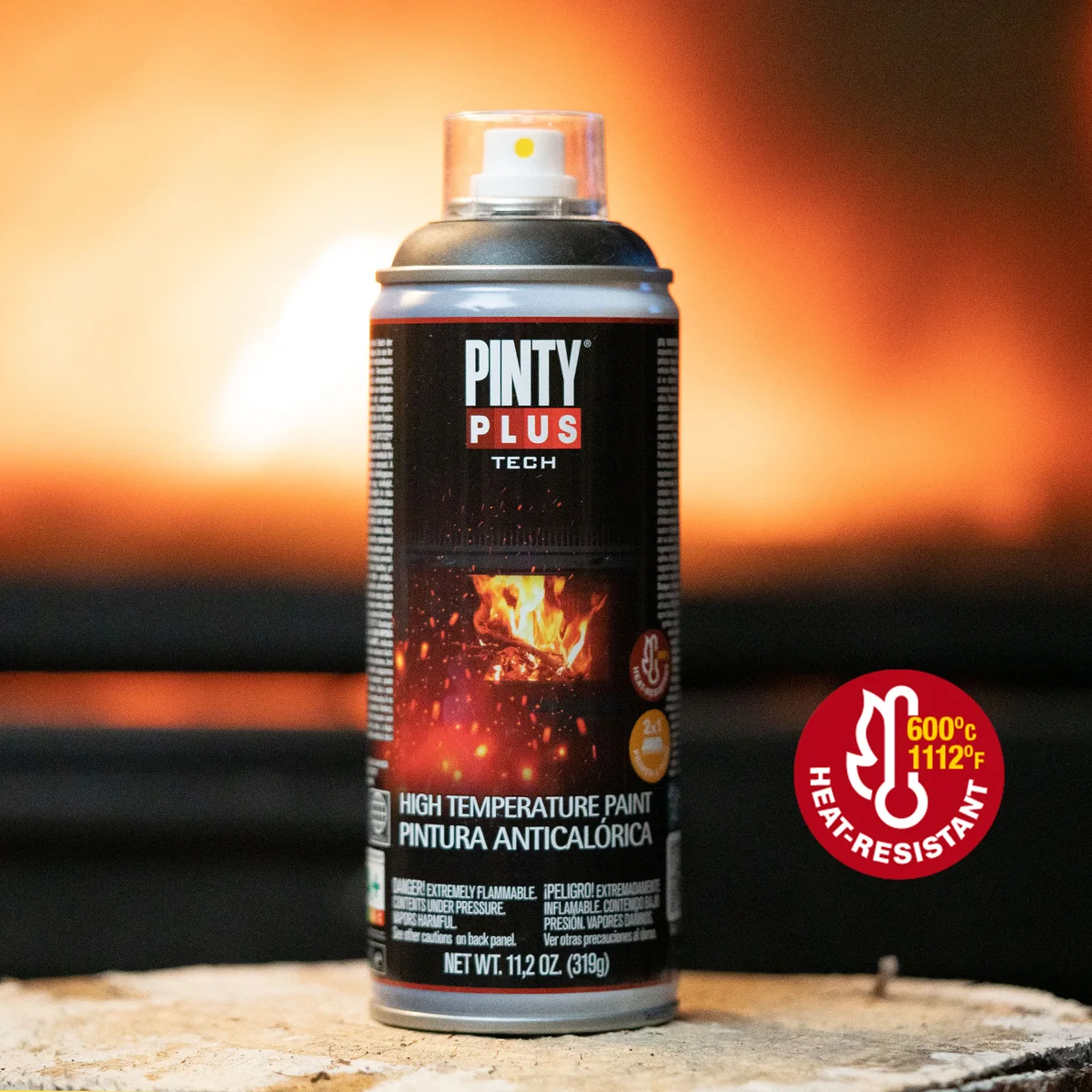
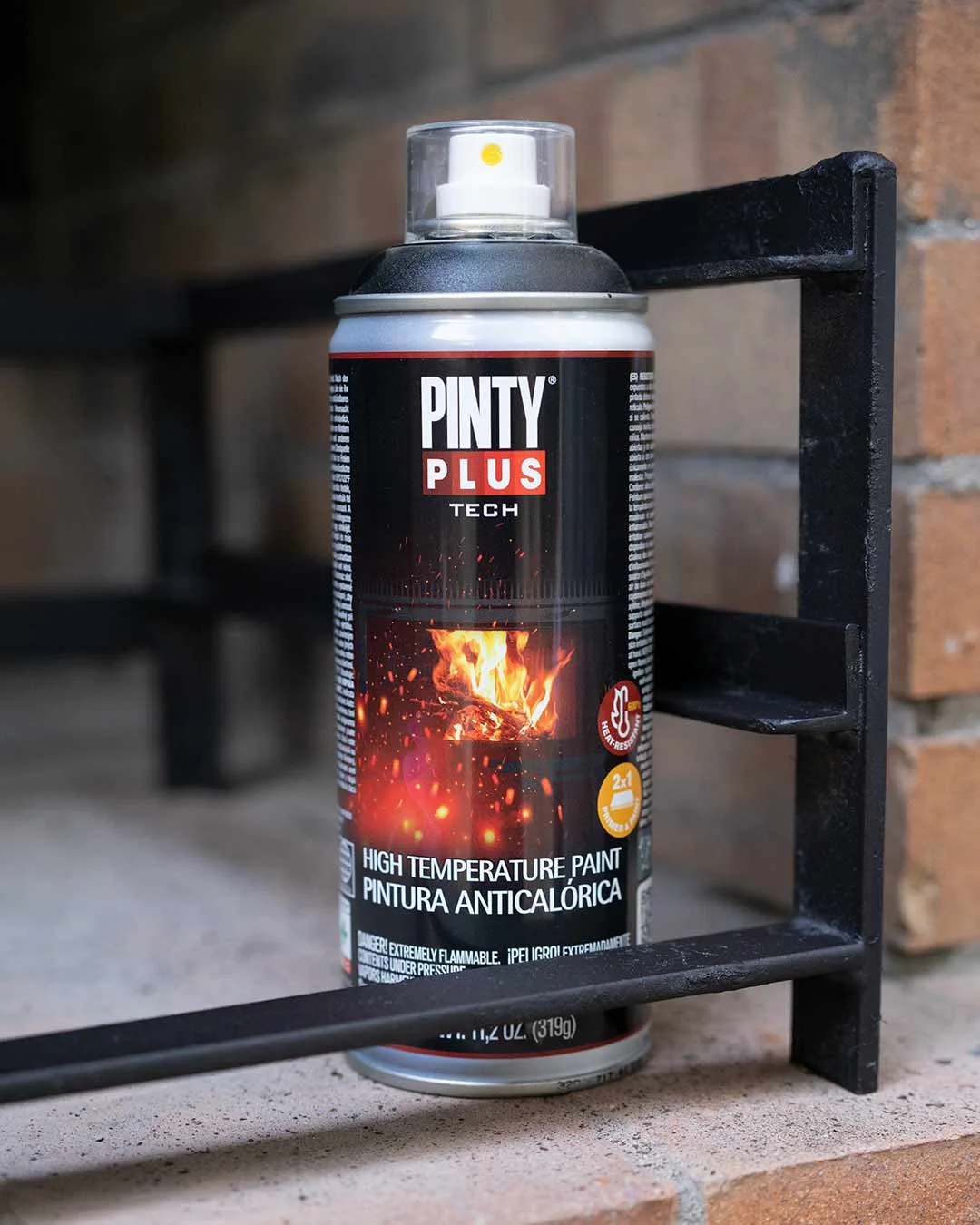
- Paint: Pintyplus High Temperature Spray Paint, rated to 600°C, in matte black or satin silver
- Prep: wire-brush the rust, strip or sand old paint, degrease
- Spray: 25 to 30 cm from the pipe, thin coats, 30 minutes apart
- Cure: let it dry, then heat it up gradually with short engine runs
- Paint needed: one 400 ml can covers a typical 70cc or 125cc silencer and header pipe with two coats
Why normal paint fails on a silencer
Most spray paints are made with acrylic or alkyd resins. They are fine on a gate or a chair, but they start breaking down once metal gets properly hot, and a silencer on a running bike gets far hotter than that. The resin burns, the paint loses its grip, and what was glossy black turns into dull brown flakes.
Heat-resistant paint uses resins built to stay stable at much higher temperatures. Pintyplus rates its version to 600°C and lists exhaust pipes as one of its main uses.
The hottest part is the header pipe where it leaves the engine, especially the bend. That is almost always where failed paint starts peeling first.
People often blame Pakistani summers when silencer paint fails. A 45°C day in Lahore or Multan adds very little compared to the heat coming out of the engine. When the paint comes off early, it is nearly always one of three things: the wrong paint, a greasy or rusty surface, or no gradual heat-up after painting.
What you need
- A can of Pintyplus High Temperature Spray Paint 600°C, black or silver (₨ 4,460 for 400 ml)
- A wire brush, or a wire wheel on a drill or grinder
- Medium and fine sandpaper
- Degreaser, thinner or acetone, and a clean cotton cloth
- Masking tape and old newspaper
- Gloves and a mask. Spray outdoors or in a well-ventilated workshop.
Step by step
1. Take the silencer off if you can
Most silencers come off with a couple of bolts and the header clamp. Painting it off the bike means no overspray on the tyre, chain or engine, and you can reach the underside. If you have to paint it in place, work on a cold engine and mask everything around the pipe.
2. Remove rust and loose paint
Go over the whole pipe with the wire brush until there is no loose rust or scale left. If the old paint is flaking, take it off completely. A paint stripper spray saves a lot of scraping on curved pipes. If the old paint is still firmly stuck, a light sanding is enough to give the new coat something to grip.
3. Scuff chrome before you paint it
Many older CD 70 and CG 125 silencers are chrome plated. Chrome is so smooth that paint has almost nothing to hold on to. Sand it with fine sandpaper until the mirror shine has gone dull all over. If the chrome is already peeling or pitted, sand those areas back to bare metal.
4. Degrease properly
Wipe the whole pipe with degreaser or thinner on a clean cloth, then let it dry. Engine oil, chain lube and even the oil from your fingers will stop the paint from bonding, and heat makes that weakness show very quickly. Once it is clean, handle it only with gloves.
5. Spray thin coats
Shake the can for a full minute after you hear the mixing balls rattle. Hold it 25 to 30 cm from the pipe and spray in quick, light passes, first along the pipe and then across it. Start with a thin, almost see-through coat. Wait 30 minutes, then add a second thin coat, and a third if you can still see bare metal.
Thin coats matter more here than on almost any other job. On a round pipe a heavy coat runs, and runs crack once they get hot.
When you finish, turn the can upside down and press the nozzle until only gas comes out. That keeps the nozzle clear for next time.
6. Let it dry
Pintyplus rates the paint touch-dry in 30 minutes and fully dry in an hour at 20°C. In cold or humid weather give it longer. If you can, leave it overnight before the first heat-up.
7. Heat it up gradually
This is the step that decides whether the paint lasts. Pintyplus specifies that after painting, the temperature of the surface has to be raised gradually so the paint can fully cure. Going straight to a long, hard ride is how fresh heat paint gets ruined.
On a bike, a practical way to do that:
- Refit the silencer, start the engine and let it idle for about five minutes. Switch off and let the pipe cool completely.
- Repeat with a longer idle, around ten to fifteen minutes, and let it cool again.
- Take a short, easy ride, then let it cool once more.
- After that, ride normally.
Expect some smoke and a paint smell during the first run. That is normal and it stops after the first cycle or two. Do the first run outdoors, not in a closed garage.
Black or silver?
Matte black (Ref. 204) is the classic choice. It hides soot and heat marks and looks close to a new factory pipe. Satin silver (Ref. 201) suits bikes where you want the pipe to look like bare metal rather than painted. Both carry the same 600°C rating, so choose on looks.
How much paint do you need?
Pintyplus rates a 400 ml can at about 2 m² for a single coat. The silencer and header pipe of a typical 70cc or 125cc bike add up to roughly 0.2 m² of metal. Even allowing for the paint you lose spraying round pipes, one can gives two or three coats on one bike, and often has enough left for a second.
Common questions
Can I paint the silencer without taking it off?
Yes, if the engine is completely cold and you mask the tyre, rim, chain and engine casing carefully. Taking it off gives a better finish on the underside.
How soon can I ride normally?
Once the paint has dried and you have done the gradual heat-up runs. On most jobs that means riding normally the next day.
Will it survive rain and washing?
Once it has been heat-cured, normal rain and washing shouldn’t harm it. Don’t pour cold water over a hot silencer. Sudden temperature shocks are hard on any coating.
Can I use the same paint on a gas heater or generator exhaust?
Yes, on metal parts that stay within 600°C, such as heater bodies and exhaust pipes. Don’t use it on anything that touches food. Our guide to heat resistant spray paint covers other uses.
Where to buy in Lahore and across Pakistan
Pintyplus High Temperature Spray Paint 600°C is ₨ 4,460 for a 400 ml can, in black or silver. You can pick it up from our shop at Sohail Centre, LG 8, Dil Muhammad Road, Garhi Shahu, Lahore, Monday to Saturday from 8:30 AM to 10:00 PM, or order online for delivery anywhere in Pakistan.
Not sure which colour to pick, or whether your silencer needs stripping first? Send a photo on WhatsApp to 0321 999 3919 and we’ll tell you.
More on heat-resistant coatings: High Temperature Coatings