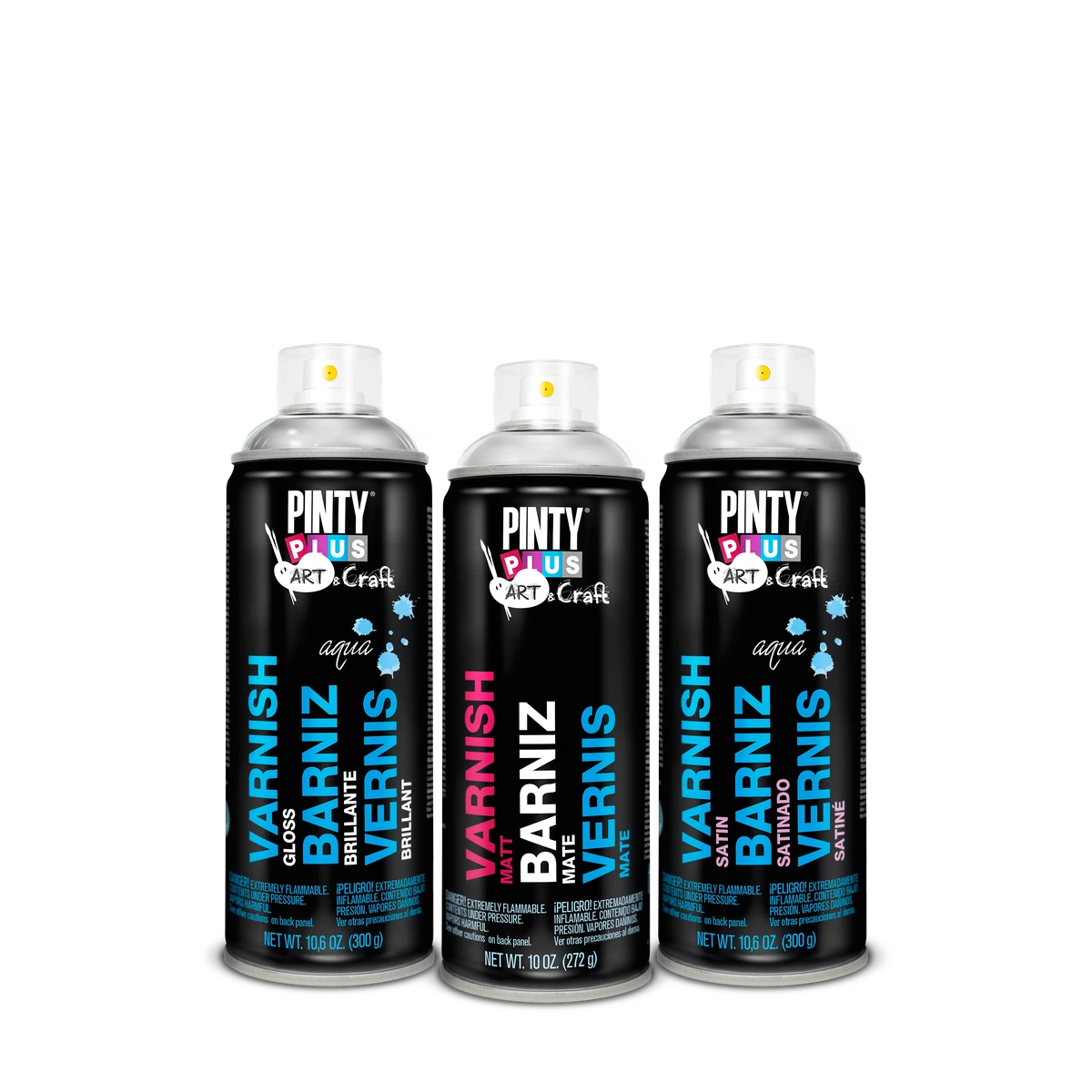
Choose a water-based varnish spray for wood when you are working indoors, want low odour, and are finishing decorative or light-use pieces such as shelves, frames, boxes, stools and bedside tables. Pintyplus Water-Based Varnish Spray is clear, does not yellow, comes in gloss, satin and matte, and cleans up with soap and water if you catch it within 15 minutes. It is sold as an indoor arts and crafts varnish, and one can covers about 1.4 m², so it suits small furniture rather than floors or a full dining set. Our solvent-based Acrylic Varnish dries faster.
The short version
- Product: Pintyplus Water-Based Varnish Spray, 400 ml, gloss, satin or matte
- Best for: indoor decorative wood and light-use furniture
- Drying: 1 hour on the surface, 24 hours in total
- Coverage: about 1.4 m² per can
- Why water-based: low odour, does not yellow, soap-and-water clean-up
What is the difference between water-based and solvent-based varnish?
Both leave a clear protective film. The difference is what carries the resin. A water-based varnish uses water, so it smells much less and cleans up with soap and water. A solvent-based varnish dries faster but has a stronger smell and needs more ventilation.
| Water-Based Varnish | Acrylic Varnish | |
|---|---|---|
| Base | Water-based | Solvent-based |
| Finishes | Gloss, satin, matte | Gloss, satin, matte |
| Drying | 1 hour surface, 24 hours total | About 30 minutes |
| Coverage per 400 ml can | About 1.4 m² | About 2 m² |
| Yellowing | Does not yellow | Does not yellow |
| Use | Indoor arts and crafts, low odour | Arts and crafts, work in ventilated areas |
| Price | ₨ 3,695 | ₨ 3,090 |
When should you choose water-based for wood?
- You are working inside a flat or a closed room and want low odour. Pintyplus describes it as low odour and non-toxic, though you should still ventilate the room.
- The wood is painted white or a pale colour and you don’t want it to turn yellow.
- The piece is decorative or used lightly: a shelf, a frame, a box, a plant stand, a stool or a bedside table.
- Your project mixes wood with papier mâché, plaster or polystyrene, which Pintyplus lists for this varnish.
Choose Pintyplus Acrylic Varnish Spray instead when you want quicker drying between coats and more coverage per can, and you can spray in a well-ventilated place.
What can’t it do?
Pintyplus makes it for indoor arts and crafts, so we don’t recommend it for outdoor furniture, wooden floors, or table tops that take hot dishes and heavy daily wear. It is also an aerosol that covers about 1.4 m² per coat, so a large wardrobe or dining set would need several cans. For chalk-painted furniture, use Pintyplus Chalk Varnish Spray, which is made to go over chalk paint.
How do you prepare wooden furniture?
1. Clean and sand
Remove handles and fittings. Sand bare wood smooth, finishing with fine sandpaper, and fill cracks and dents. On old polished furniture, sand until the shine has gone.
2. Remove every bit of dust
Wipe with a soft, dry cloth. Dust left on the wood will be trapped under the varnish. Pintyplus says the surface must be clean, dry and free of any contaminants.
3. Test
Spray a hidden area or an offcut of the same wood to check the look and the sheen. Our guide to choosing gloss, satin or matte varnish helps with the choice.
How do you spray it?
1. Shake well
Shake the can vigorously for one minute after you hear the mixing balls.
2. Spray thin coats
Hold the can 25 to 30 cm from the wood and apply thin, quick layers, first horizontally and then vertically. Two thin layers give a more uniform finish and avoid sags.
3. Let it dry and smooth it
It is dry on the surface in 1 hour and fully dry in 24 hours. Water-based finishes can raise the grain slightly on bare wood, so once the first coat is dry, a very light rub with fine sandpaper before the second coat gives a smoother result. Wipe off the dust before spraying again.
4. Clean up and clear the nozzle
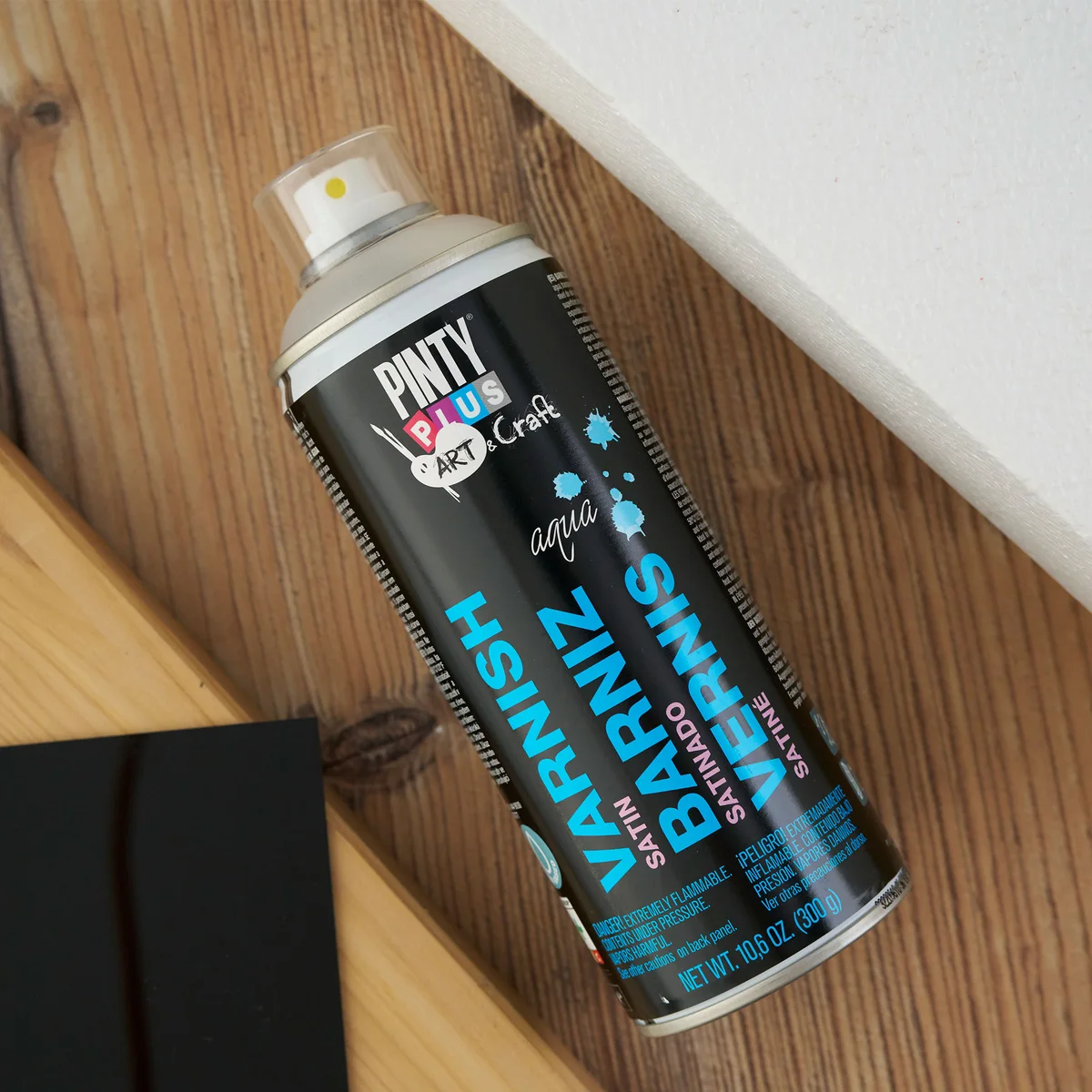
Wash overspray off tools and surfaces with soap and water within the first 15 minutes. Turn the can upside down and spray until only gas comes out.
Does Pakistani weather affect water-based varnish?
Yes, mostly humidity. Water evaporates slowly in sticky monsoon air, so each coat takes longer than usual to dry. Wait for a dry spell and give the full 24 hours before using the piece. In summer, spray early or late in the day and never onto wood that has been standing in the sun. In winter, work in the warmest part of the day.
Common questions
Can I use it on MDF furniture?
Painted MDF, yes, as long as the paint is fully dry. Raw MDF edges soak up finish and may need an extra coat.
Will it darken my wood?
Any clear finish makes bare wood look slightly richer. Test on a hidden spot first.
Is it safe to use in a flat?
It is low odour, but always spray with windows open and never near anything plugged into the mains.
Where to buy in Lahore and across Pakistan
Pintyplus Water-Based Varnish Spray is ₨ 3,695 for a 400 ml can, in gloss, satin or matte. You can pick it up from our shop at Sohail Centre, LG 8, Dil Muhammad Road, Garhi Shahu, Lahore, Monday to Saturday from 8:30 AM to 10:00 PM, or order online for delivery anywhere in Pakistan.
Not sure which one you need? Send a photo on WhatsApp to 0321 999 3919 and we’ll tell you.
More on varnishes: Varnishes & Protective Finishes