You can chalk-paint MDF and laminate kitchen cabinets and wardrobes with spray, and get a finish that stands up to daily use, if you do three things properly: degrease every surface, prime laminate and raw MDF with Chalk Primer, and seal the paint with Chalk Varnish. Skip any of those and doors that are opened many times a day will chip, mark and collect grease. The job takes about four days, mostly waiting time, because the primer, the colour and the varnish each need a full day before the next step. Here is the whole process.
The short version
- Paint: Pintyplus Chalk Finish Spray Paint, 2 m² per can per coat
- Primer: Chalk Primer on laminate, melamine, Formica and raw MDF edges
- Seal: Chalk Varnish, clear matte, at least 24 hours after the last colour coat
- Prep: doors off, hardware off, thorough degreasing, light scuff sanding
- Timeline: about four days from bare doors to rehanging
Why are kitchen cabinets harder than other furniture?
Because of grease and handling. Daily frying and tarka leave a thin, sticky film on cabinet doors, even ones that look clean, and paint doesn’t hold on grease. Doors and drawer fronts are also touched, knocked and wiped every day. That is why cabinets need more preparation and a harder seal than a decorative side table.
Most kitchen and wardrobe cabinets here are MDF, often with a laminate or melamine face. Pintyplus lists melamine for Chalk Finish, and Pintyplus Chalk Primer Spray lists melamine and Formica and improves anchoring. For surfaces that work this hard, prime them.
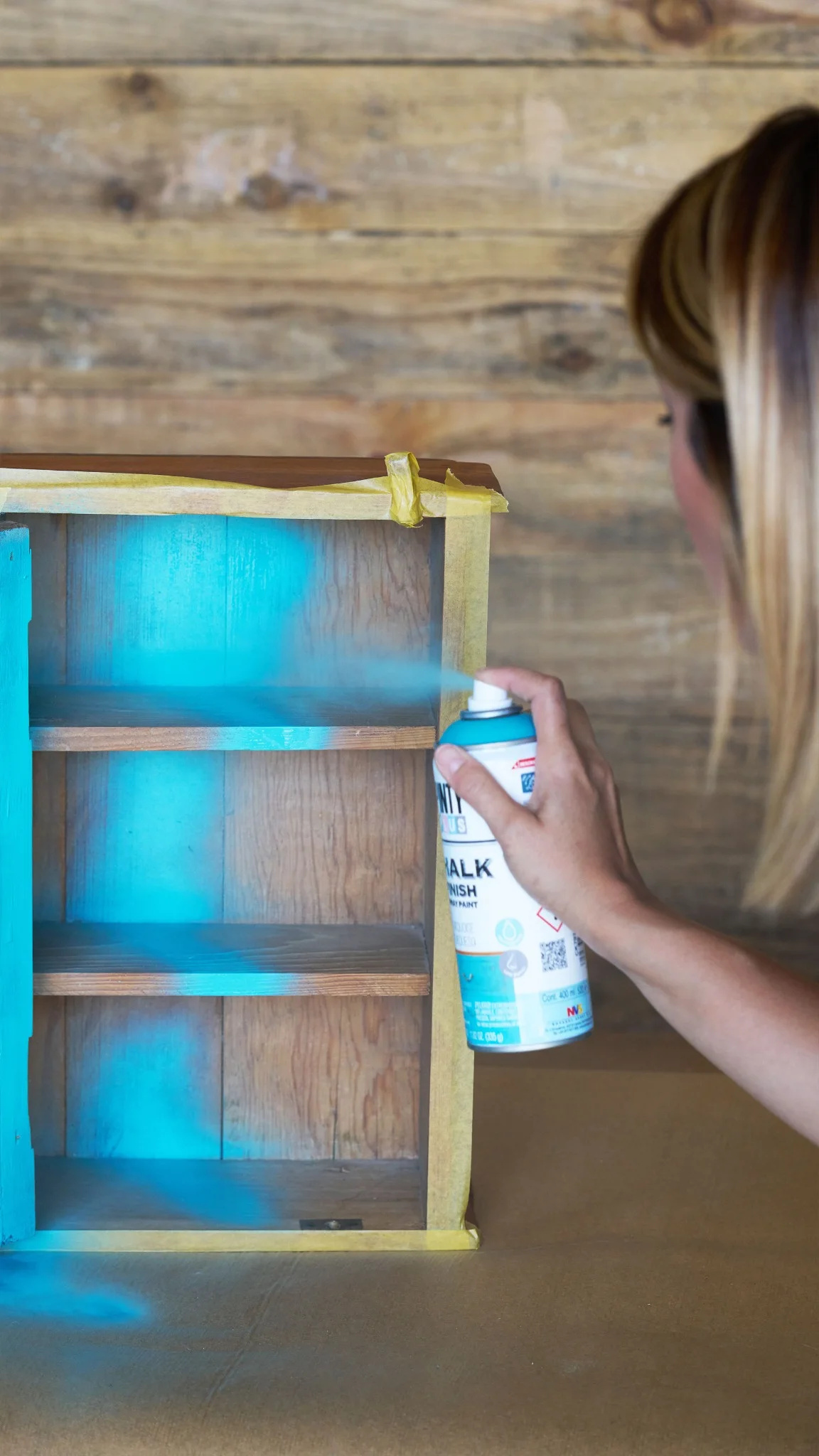
How do you prepare the cabinets?
1. Take everything apart
Remove doors and drawer fronts, then all handles, knobs and hinges. Number each door and its opening with a piece of masking tape so they go back in the same place, and keep screws in labelled bags.
2. Degrease thoroughly
Wash every surface with a kitchen degreaser or strong detergent, paying attention to the areas around handles and the doors nearest the stove. Rinse with clean water and let everything dry completely. Pintyplus says the surface must be clean, dry and free of dirt.
3. Scuff the surface
Lightly sand glossy laminate and polished wood with fine sandpaper until the shine is gone. Fill chips and old handle holes you won’t reuse. Wipe away all the dust.
4. Mask and set up
Mask the cabinet carcass, walls, counters and appliances if you are painting frames in place. Lay doors flat on supports in a ventilated, sheltered spot, away from dust and wind.
How do you prime, paint and seal them?
Day 1: primer
Shake the Chalk Primer can for one minute and spray thin coats from 25 to 30 cm, first horizontally and then vertically. It dries in 1 hour. A second coat goes on within the hour or after 24 hours. One can covers about 1.4 to 1.6 m².
Day 2: colour
Chalk Finish should go over a different paint after 24 hours. Shake for one minute and spray thin, fast coats from 25 to 30 cm. Do the backs of the doors first, and the fronts once the backs are dry. Leave 1 hour between coats, and plan on at least two coats. Wipe off loose chalk dust once dry.
Day 3: varnish
At least 24 hours after the last colour coat, shake the Chalk Varnish can for one minute and spray thin, even coats from 25 to 30 cm. It is a clear matte, water-based varnish that protects the paint from dirt and helps waterproof it, so the doors can be wiped. It is touch dry in 1 hour and fully dry in 24 hours.

Day 4: rehang
Once the varnish has had its full 24 hours, fit the new handles and hinges and rehang the doors in their numbered places.
How many cans will you need?
Measure the width and height of each door and drawer front, add them up for the total area of one side, and add the backs and cabinet frames if you are painting them. Then divide by the coverage and multiply by the number of coats:
- Chalk Finish covers about 2 m² per can per coat
- Chalk Primer covers about 1.4 to 1.6 m² per can
- Chalk Varnish covers about 1.4 m² per can
For example, door fronts adding up to 2 m² need about two cans of Chalk Finish for two coats, before the backs. Send us your measurements on WhatsApp and we’ll help you work it out.
Why varnish and not wax for a kitchen?
Wax is a soft maintenance finish that needs renewing after some months. It suits decorative pieces, not doors that face oil, steam and constant wiping. Chalk Varnish protects against dirt and helps waterproof the paint, which is what a kitchen and a busy wardrobe need. Our comparison of wax and varnish over chalk paint explains the difference in detail.
What colours and handles work for kitchens and wardrobes?
Choose the handles before the colour, because they set the style. Matte black handles suit greys and whites, while brass tones suit Blue Indigo, Oliva Vintage and Cream. For kitchens, Broken White, Ash Grey and London Grey keep the room bright. A two-tone kitchen with Blue Indigo lower cabinets and Broken White upper cabinets is a popular choice. For bedroom wardrobes, Cream, Stone and Light Lavender are calm and easy to live with.
Common questions
Can I paint laminate cabinets without primer?
For cabinets that are used every day, we wouldn’t. Prime them with Chalk Primer for better anchoring.
Can I paint the cabinet next to the stove?
Yes, but none of the chalk products is sold as heat resistant, so keep painted surfaces away from direct flame and clean off grease regularly.
How do I clean the painted doors?
Once the varnish is fully dry, wipe them with a damp cloth. Avoid scouring pads.
Can I paint cabinets without taking the doors off?
You can, but spray drifts onto everything nearby and the edges and hinges are hard to reach. Doors off gives a much better result.
Where to buy in Lahore and across Pakistan
Pintyplus Chalk Finish Spray Paint is ₨ 3,340 for a 400 ml can, in 19 colours. You can pick it up from our shop at Sohail Centre, LG 8, Dil Muhammad Road, Garhi Shahu, Lahore, Monday to Saturday from 8:30 AM to 10:00 PM, or order online for delivery anywhere in Pakistan.
Not sure which one you need? Send a photo on WhatsApp to 0321 999 3919 and we’ll tell you.
More on chalk finishes: Furniture & Chalk Finishes