Acrylic varnish spray is a clear, colourless coat that protects finished art and craft work and brings up the colour underneath. Pintyplus Acrylic Varnish Spray comes in gloss, satin and matte, dries in about 30 minutes and, according to Pintyplus, does not yellow. It protects, enhances and waterproofs surfaces such as plaster, wood, resin, ceramic, stone, cork, wicker and cardboard. One thing many guides get wrong: Pintyplus lists this varnish as solvent-based, not water-based, so spray it in a ventilated place. Here is what it does, how long it takes and how to use it.
The short version
- Product: Pintyplus Acrylic Varnish Spray, 400 ml
- Finishes: gloss, satin or matte, all clear and colourless
- Base: solvent-based, fast drying, does not yellow
- Drying: about 30 minutes, coverage about 2 m² per can
- Method: shake about 30 seconds, spray from 25 to 30 cm, two thin coats
What is acrylic varnish spray?
It is a clear varnish made with acrylic resin, packed in an aerosol so it goes on as a fine, even mist with no brush marks. On art and craft work it does three jobs: it protects the surface from dust, handling and moisture, it evens out the sheen, and it makes colours look richer.
The word acrylic describes the resin, not the carrier. Pintyplus describes this product as a solvent-based varnish for arts and crafts. If you need a water-based, low-odour option for indoor work, we also stock Pintyplus Water-Based Varnish Spray.
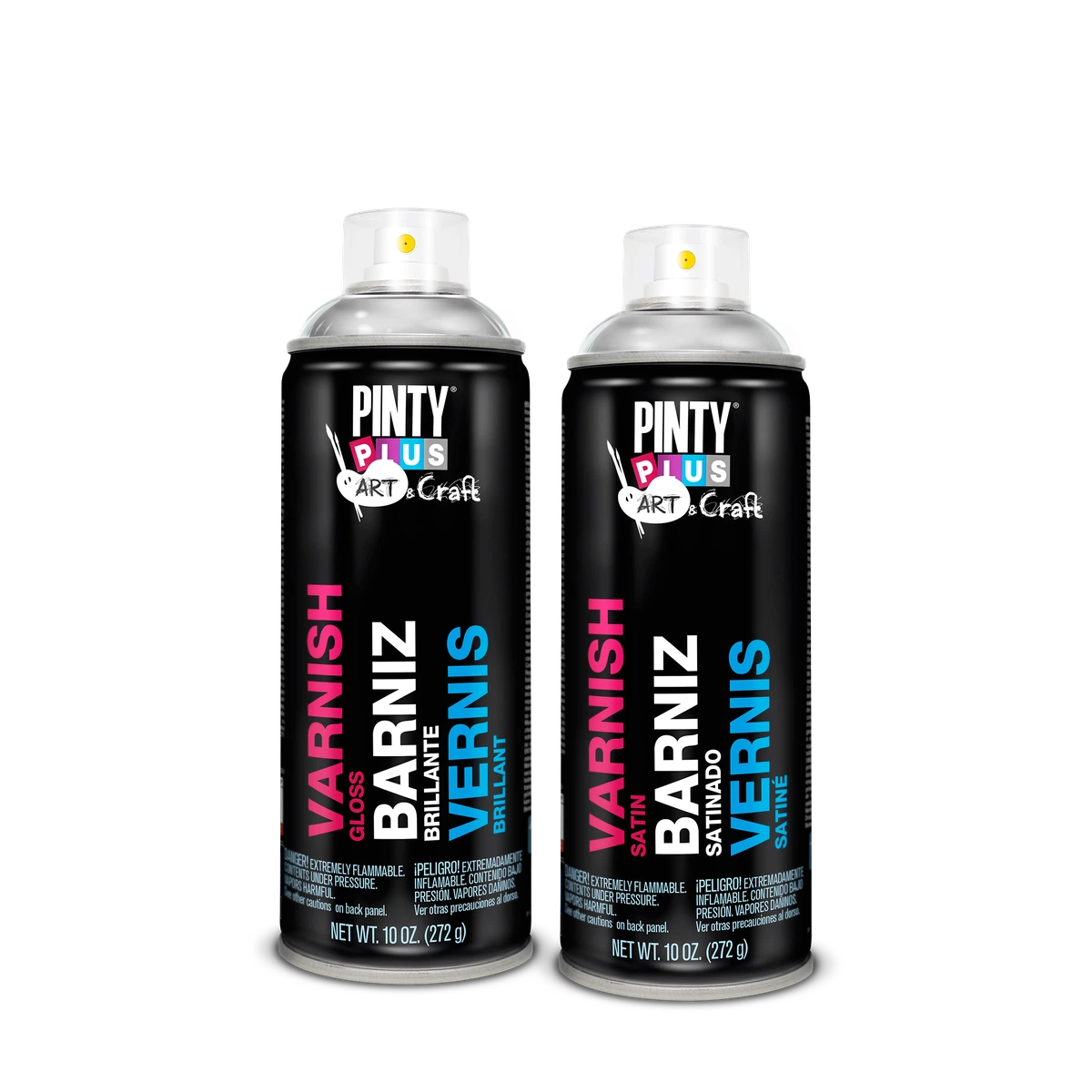
Gloss, satin or matte: which should you pick?
- Gloss gives the most shine and the deepest, richest colour. It also reflects the most light.
- Satin is a soft sheen in between, and a safe choice when you are unsure.
- Matte gives a flat finish with almost no reflection, which suits drawings, vintage-style crafts and work that will be photographed.
All three are the same price. Our guide to choosing gloss, satin or matte varnish goes into more detail.
What can you use it on?
Pintyplus lists plaster, marble, wood, resin, wicker, cork, ceramic, stone, cardboard and bread-dough crafts. In practice, that covers:
- Painted plaster and resin figures, and plaster of Paris decor
- Wooden boxes, frames, trays and small furniture pieces
- Painted pottery and ceramic decor that is not used for food
- Wicker baskets and cork boards
- Cardboard models and school or college craft projects
Canvas is not named on the list, so if you want to varnish a painting, test on a painted scrap or the edge first. For oil paintings, use Pintyplus Varnish Spray for Oil Paintings, which is made for them. For papier mâché and polystyrene, Pintyplus lists the water-based varnish.
How long does it take to dry?
Pintyplus gives a drying time of about 30 minutes. It doesn’t publish a separate recoat time, so let each coat dry before you spray the next. In humid monsoon weather or on a cold winter morning, give it longer. Before you varnish, make sure the paint underneath is completely dry. Varnish over paint that is still soft can trap it and spoil the finish.
Does acrylic varnish turn yellow?
Pintyplus states that it does not yellow, which is why it suits white and pale work. It makes no claim about UV protection, so keep finished pieces out of strong direct sun, as you would with any artwork. Strong sun through a window in a Pakistani summer can fade many paints over time, varnished or not.
How do you apply it?
1. Prepare the work
The surface must be clean, dry and free of dust. Wipe off dust with a soft, dry, lint-free cloth.
2. Choose the right place
Spray in a well-ventilated place, out of wind and direct sun. Switch off the ceiling fan, which blows dust onto wet varnish. Don’t spray near anything connected to the mains.
3. Shake and test
Shake the can for about 30 seconds, then test the spray on a piece of scrap card.
4. Spray two thin coats
Hold the can 25 to 30 cm from the work and apply thin, quick layers, first horizontally and then vertically. Two thin coats are better than one thick coat, which can run.
5. Clear the nozzle
Turn the can upside down and spray until only gas comes out, so the nozzle stays clear for next time.
Common questions
Is acrylic varnish waterproof?
Pintyplus says it protects, enhances and waterproofs the surfaces it lists. It is a craft varnish, not a coating for things that stand in water.
Can I use it on food plates or cups?
No. Use it only on decorative pieces.
How many items can one can do?
One can covers about 2 m², which is a lot of small crafts or a few larger pieces.
Can I varnish over acrylic paint?
Yes, once the paint is fully dry. Test on a scrap first.
Where to buy in Lahore and across Pakistan
Pintyplus Acrylic Varnish Spray is ₨ 3,090 for a 400 ml can, in gloss, satin or matte. You can pick it up from our shop at Sohail Centre, LG 8, Dil Muhammad Road, Garhi Shahu, Lahore, Monday to Saturday from 8:30 AM to 10:00 PM, or order online for delivery anywhere in Pakistan.
Not sure which one you need? Send a photo on WhatsApp to 0321 999 3919 and we’ll tell you.
More on varnishes: Varnishes & Protective Finishes