A waterproof sealer spray is a quick way to close small cracks, gaps and crevices where rainwater gets in, on roofs, terraces, parapet walls, brickwork and pipes. Pintyplus Waterproof Sealer is a thick, rubber-based coating that you build up in several thin layers until the crack is sealed. It works well on small fissures in sound surfaces. It is not a structural repair, and it won’t stop a major leak, a crack that keeps moving, or plaster that is already crumbling. The best time to use it is before the monsoon, on a dry day.
The short version
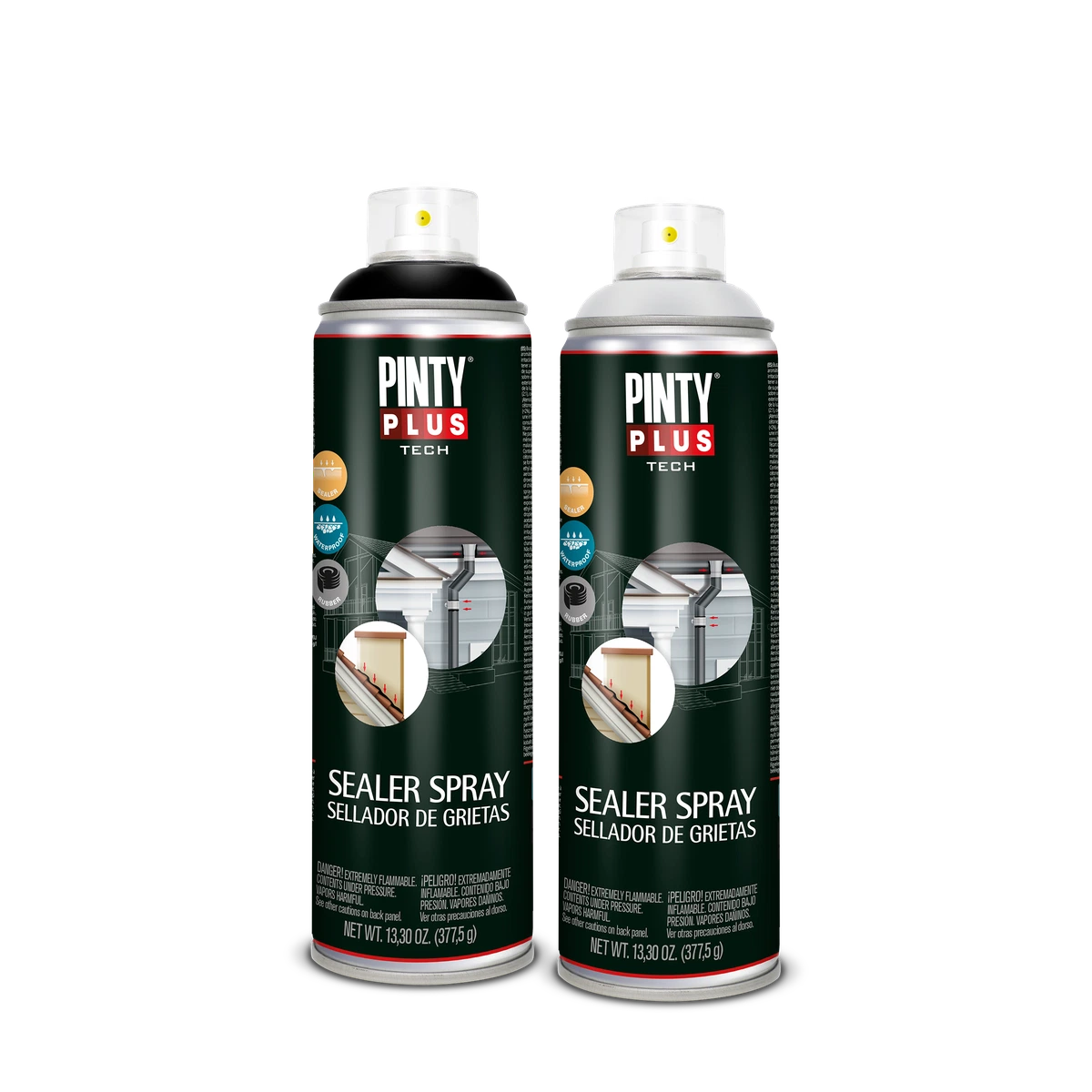
- Product: Pintyplus Waterproof Sealer Spray, 500 ml, black or grey, matte
- Good for: small cracks and crevices on terraces, roofs, walls, brickwork, pipes and outdoor structures
- Not for: structural cracks, moving cracks, major leaks or crumbling surfaces
- Method: clean and dry, then several thin coats about 5 minutes apart until sealed
- Drying: 2 hours for small cracks, 5 hours for large ones. Paint over it after 72 hours.
What is a waterproof sealer spray?
Pintyplus describes it as a paint designed to cover cracks, crevices or fissures caused by the passage of time, especially on outdoor structures, to stop water getting through. It is rubber based, waterproof and dries to a matte finish. On our product page it is described as a thick rubber-based sealant coating applied in multiple layers.
The advantage of a spray is reach. You can get into a hairline crack along a parapet, the joint around a pipe or the gap at the edge of a terrace without mixing anything or carrying tools up to the roof.
Where does it work well?
Our product page lists small fissures, cracks and crevices in compatible outdoor surfaces: terraces, roofs, walls, brickwork, pipes and outdoor structures. Around Pakistani homes, that means jobs like:
- Hairline cracks on a flat roof or terrace before the monsoon
- Cracks along parapet walls and at the joint where the roof meets the wall
- Gaps around pipes where they pass through a wall or roof
- Small cracks in outdoor brickwork and boundary walls
- Joints on outdoor metal pipes and fittings, once loose rust is removed
It comes in black and grey. Choose the one closer to the surface, because the sealer stays visible unless you paint over it later.
Where won’t it work?
Our product page is clear: this is not a structural repair, and not a solution for active movement, major leaks or failed substrates. In practice:
- A wide crack that keeps opening, or a crack across a beam or column, needs a builder, not a spray.
- A roof that pours water in during rain has a bigger problem than a hairline crack.
- Plaster that is crumbling, hollow or peeling needs repairing first. The sealer can only hold on to a sound surface.
- Surfaces that stay wet can’t be sealed. The surface has to be dry.
- Pintyplus gives its heat resistance as 100°C, so keep it off hot pipes and flues.
If the problem inside the house is a brown seepage stain on the wall or ceiling, seal the source of the water first. Once the wall has dried out, our guide to covering seepage and damp stains explains how to stop the mark showing through new paint.
How do you seal a crack before the monsoon?
1. Pick a dry spell
Do the job after several dry days, not the morning after rain. The crack and the surface around it must be completely dry.
2. Clean the crack
Brush out dust, loose bits of plaster and dirt from the crack. On metal, remove loose rust and scale with a wire brush and wipe off grease with a solvent. The surface must be clean, dry and free of contaminants.
3. Shake the can
Shake for one minute after you hear the mixing balls.
4. Build up thin coats
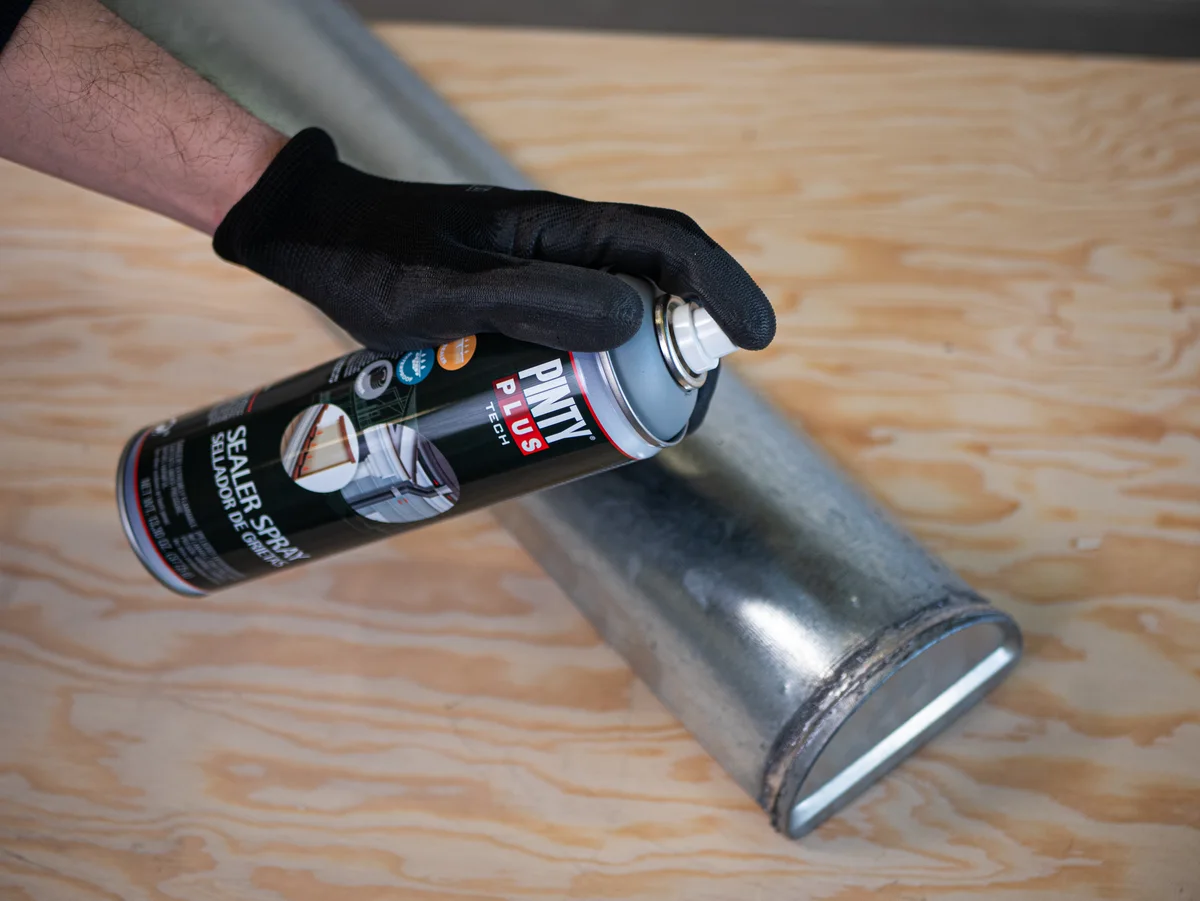
Hold the can 25 to 30 cm from the surface and spray across the crack, first horizontally and then vertically. Pintyplus recommends several thin coats rather than one thick one, with about 5 minutes between coats. Keep adding coats until the crack is completely covered and sealed, and carry each coat a little way beyond the edges of the crack.
5. Clear the nozzle
Turn the can upside down and spray until only gas comes out.
How long before rain, and before painting over it?
Pintyplus gives a drying time of 2 hours for small cracks and 5 hours for large ones. Our product page adds: allow full curing before water exposure. So don’t seal a roof crack an hour before the clouds arrive. Aim for a day with no rain forecast.
If you want to paint over the sealer to match the wall, Pintyplus says to wait 72 hours before repainting.
Work in a ventilated area, as Pintyplus recommends, and don’t spray anything connected to the electricity supply.
Common questions
How much will one can seal?
Pintyplus rates a can at about 3 m². Hairline cracks use very little. Wide gaps need more coats, so they use more.
Can I use it on a water tank?
It is listed for outdoor structures and pipes, not for the inside of containers. We would not use it inside a tank that holds drinking water.
Does it come in white?
Pintyplus makes a white version, but we stock black and grey. Both can be painted over after 72 hours.
Will it fix a leaking roof?
It will seal small cracks and crevices that let water in. It is not a fix for major leaks or a failed roof surface.
Where to buy in Lahore and across Pakistan
Pintyplus Waterproof Sealer Spray is ₨ 4,450 for a 500 ml can. You can pick it up from our shop at Sohail Centre, LG 8, Dil Muhammad Road, Garhi Shahu, Lahore, Monday to Saturday from 8:30 AM to 10:00 PM, or order online for delivery anywhere in Pakistan.
Not sure which one you need? Send a photo on WhatsApp to 0321 999 3919 and we’ll tell you.