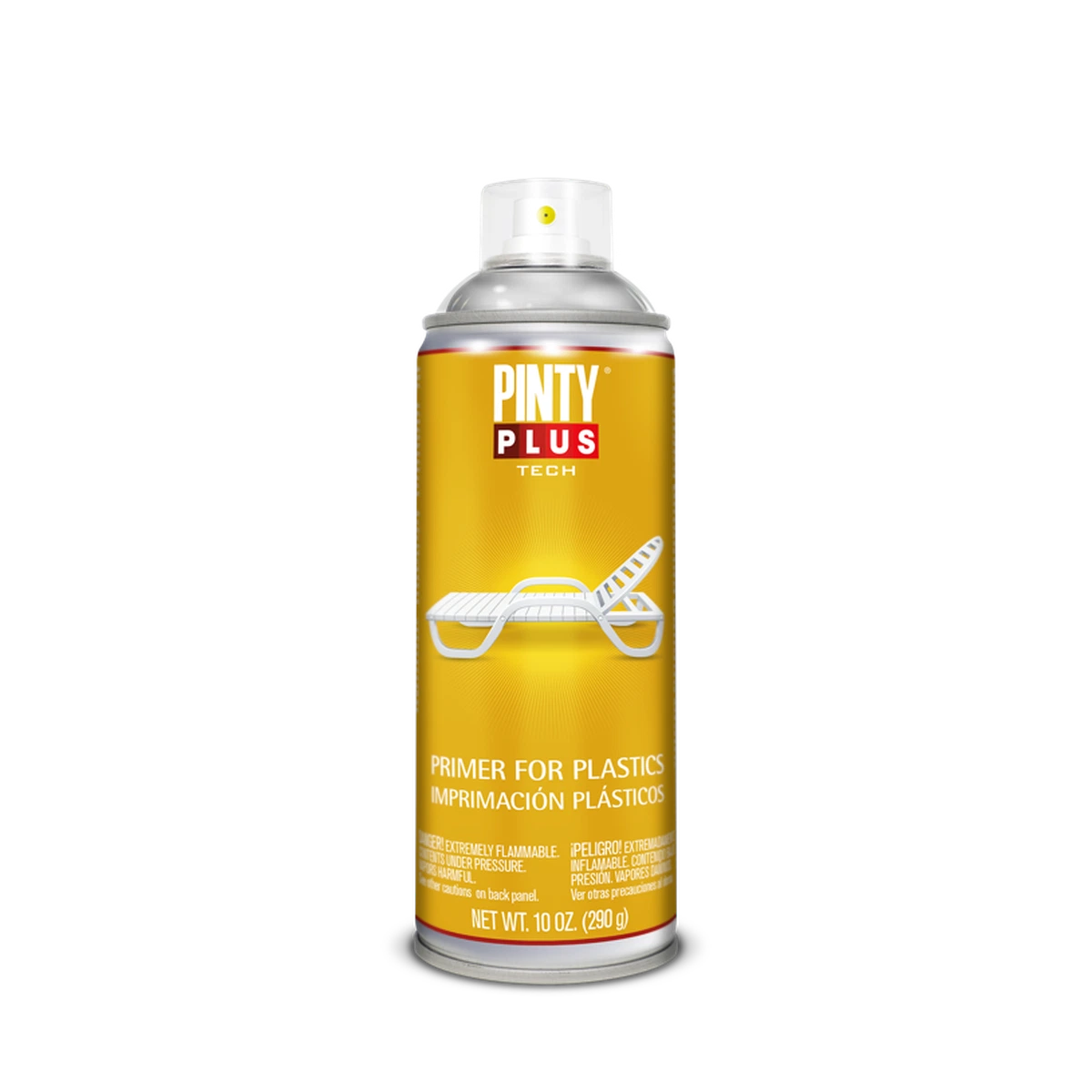
Paint peels off plastic because plastic is smooth, slightly waxy and flexible, so ordinary paint has almost nothing to grip. It may look fine for a few days, then it lifts at the edges, flakes where the part bends, or scratches off with a fingernail. A clear plastic primer fixes that. Pintyplus Plastic Primer is a transparent primer for hard, rigid and flexible plastics that improves paint adhesion. Clean the plastic, give it a light sand, spray one thin, even coat of primer, wait 15 minutes, then paint.
The short version
- Product: Pintyplus Plastic Primer Spray, clear, 400 ml
- Works on: hard, rigid and flexible plastics, such as bike panels, bumpers, chairs, suitcases, toys and models
- Prep: clean, degrease, remove any silicone, then lightly sand where the plastic allows it
- Spray: one thin, even coat from 25 to 30 cm
- Paint over it: after about 15 minutes
- Coverage: 3 to 4 m² per can
Why does paint peel off plastic?
There are three reasons, and they add up.
- It is too smooth. Metal and wood have tiny pores and scratches that paint can hold on to. Moulded plastic is very smooth.
- Paint doesn’t wet it properly. Many plastics repel paint slightly, so it sits on the surface instead of bonding into it.
- It moves. Plastic flexes, and expands and shrinks with heat. A paint layer that has only a weak grip cracks and lifts at corners, edges and anywhere the part bends.
That is why paint on a bike side panel often fails first at the clips, and why paint on a plastic chair peels at the joints of the legs.
What does a plastic primer actually do?
A plastic primer is a thin bonding layer. It sticks to the plastic, and your paint sticks to it. Pintyplus describes its version as a clear primer made for preparing objects and surfaces of various types of plastic before painting, for both hard, rigid plastics and flexible ones.
Because it is colourless, it doesn’t change the colour you paint over it. The flip side, as our product page notes, is that it is harder to see where you have sprayed. Work in good light and spray in a steady pattern so you don’t miss patches.
Which plastic jobs is it for?
Our product page lists automotive plastic parts, models, furniture, rigid-plastic suitcases, toys and compatible flexible plastics. Pintyplus rates it for indoor and outdoor use. Typical jobs in Pakistan include:
- Motorbike side panels, mudguards, tail covers and fairings, where the original colour has faded in the sun
- Car bumpers, mirror covers and trim that have gone chalky or scratched
- Plastic garden and cafe chairs, tables and planters
- Rigid suitcases, storage boxes, toys and models
Sun and heat are hard on painted plastic here. A bike panel or an outdoor chair can get very hot in a Lahore or Multan summer, and the plastic moves as it heats and cools. That movement is exactly what cracks paint that has no primer under it.
Always test on a hidden spot first. Some plastics, particularly soft, waxy-feeling ones, are harder for any paint to hold on to, and a test tells you before you do the whole piece.
How do you prime plastic before painting?
1. Clean it thoroughly
Wash off dirt with soapy water, rinse and dry. Then wipe the plastic with a degreaser or rubbing alcohol. The surface must be clean, dry and free from silicone and grease. Car and bike polishes often contain silicone, so this step matters on vehicle parts.
2. Sand lightly
Where the plastic allows it, sand lightly with fine sandpaper to take the shine off. You only want to dull the surface, not cut deep scratches. Wipe away all the dust.
3. Shake the can
Shake vigorously for one minute after you hear the mixing balls.
4. Spray one thin, even coat
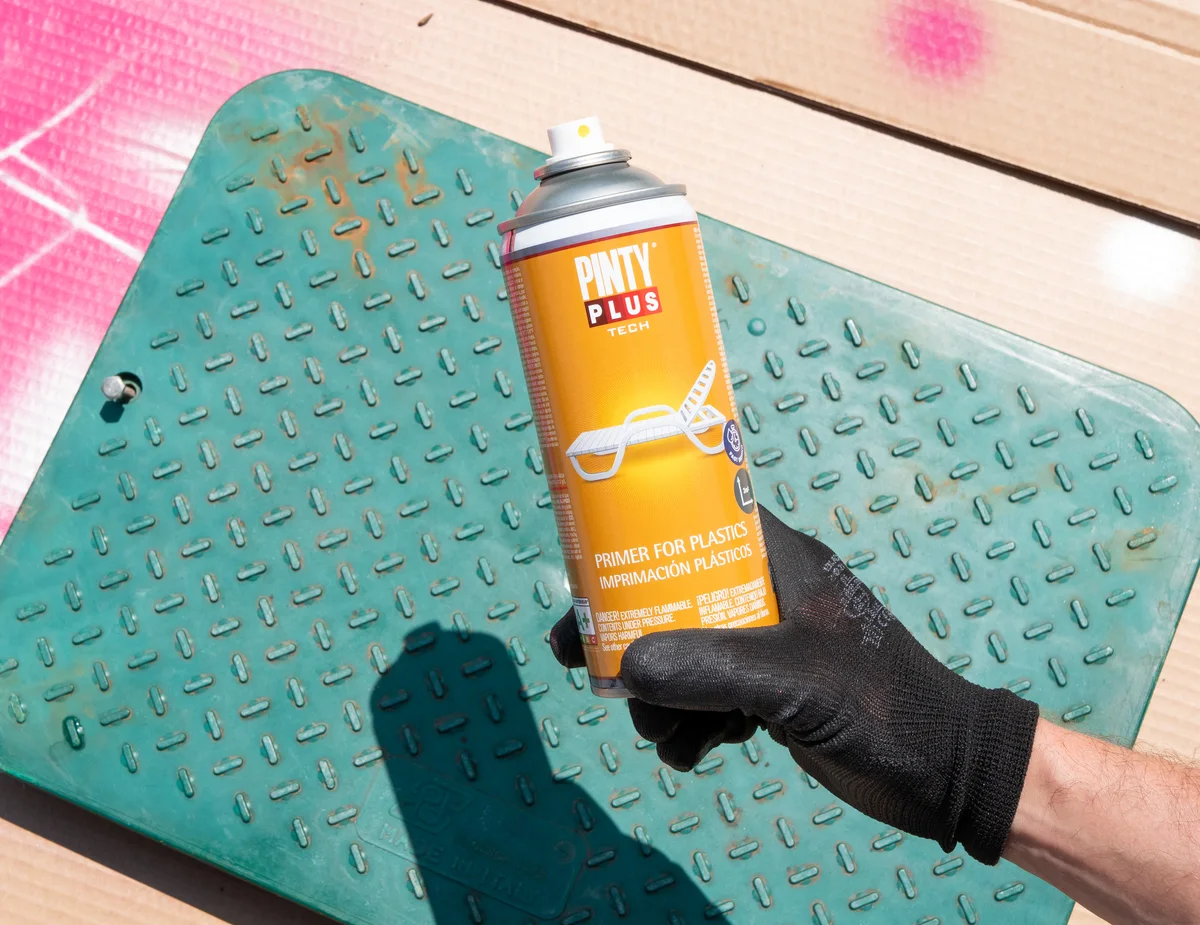
Hold the can 25 to 30 cm from the part and spray thin, uniform passes. Pintyplus says it covers in a single coat and doesn’t sag or drip, so there is no need to pile it on. Pay extra attention to edges and corners, where peeling starts.
5. Wait 15 minutes, then paint
Pintyplus says the primer dries completely in 15 minutes, and you can then paint normally. In cold or humid weather, give it a little longer.
6. Clear the nozzle
Turn the can upside down and press until only gas comes out.
What can you paint over it?
Once primed, the plastic is ready for your chosen spray paint. Two of our own products are listed for plastic: Pintyplus Chalk Finish Spray Paint, which suits plastic chairs, tables and decor items with a soft matte look, and Pintyplus Chrome Effect, for decorative plastic objects kept indoors.
Whatever you use, apply it in thin coats and let each one dry before the next. For more on getting any surface ready, see our guide to surface preparation before spray painting.
Common questions
Can I skip sanding if I use the primer?
On some parts you can, but a light sand where the plastic allows it gives the primer a better start. Cleaning and degreasing are never optional.
How many coats of primer do I need?
One thin, even coat. Pintyplus says it covers in a single coat.
Can I use it on flexible plastic like a bumper?
Yes. Pintyplus makes it for hard, rigid and flexible plastics. Test first on a hidden area.
Does it work outdoors?
Pintyplus rates it for indoor and outdoor use.
Where to buy in Lahore and across Pakistan
Pintyplus Plastic Primer Spray is ₨ 3,650 for a 400 ml can. You can pick it up from our shop at Sohail Centre, LG 8, Dil Muhammad Road, Garhi Shahu, Lahore, Monday to Saturday from 8:30 AM to 10:00 PM, or order online for delivery anywhere in Pakistan.
Not sure which one you need? Send a photo on WhatsApp to 0321 999 3919 and we’ll tell you.
More on primers: Primers & Surface Preparation