To spray an aerosol properly, shake the can for the time on its label, hold it at the right distance (25 to 30 cm for most Pintyplus products), and apply thin, quick passes, first horizontally and then vertically. Keep the can moving, start and stop each pass off the edge of the object, and build two thin coats instead of one heavy one. In Pakistan, timing matters as much as technique: spray in the shade, early or late on summer days, wait out sticky monsoon weather, and keep dust away from wet paint. Here is the full method.
The short version
- Shake: usually one minute after the mixing balls rattle, but check the label
- Distance: 25 to 30 cm for most Pintyplus products
- Passes: thin and quick, horizontal then vertical, can always moving
- Coats: two thin coats, respecting each product’s recoat time
- Conditions: ventilated, shaded, dry, dust-free, surface cool to the touch
How far should you hold the can?
Most Pintyplus products we sell give 25 to 30 cm. A few are different, which is why it pays to read the can:
| Product | Distance | Shaking |
|---|---|---|
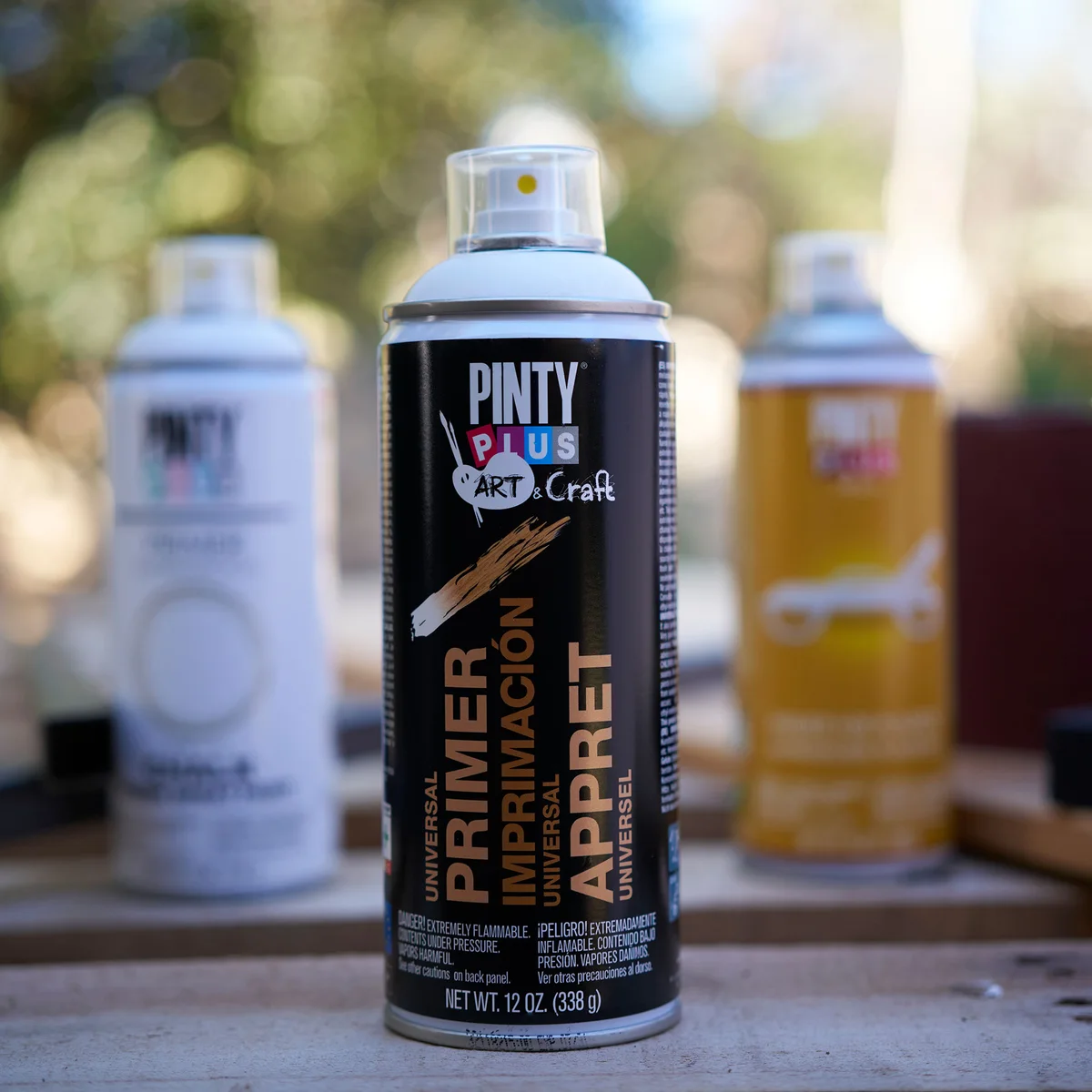
| Universal Primer | 25 to 30 cm | 1 minute after the balls rattle |
| Chalk Finish | 25 to 30 cm | 1 minute after the balls rattle |
| Acrylic Varnish | 25 to 30 cm | About 30 seconds |
| Mirror Effect for Glass | 20 cm | 1 minute |
| Air Dust Remover | About 10 cm | Do not shake |
Too close, and the paint lands too heavily and runs. Too far, and it starts drying in the air, landing as a rough, dusty film.
How do you shake and test the can?
Paint cans contain mixing balls. Shake until you hear them rattle, then keep shaking for the time on the label, usually a full minute. The pigment settles at the bottom when the can stands, and an unshaken can sprays thin, patchy colour. Shake again briefly if you pause for a while.
Before you spray the real object, do a test burst on cardboard. It shows you the spray pattern and whether the nozzle is clear. Pintyplus also advises testing on a sample of the surface first.
What does a good spray pass look like?
Keep the can moving
Press the nozzle only while your arm is already moving, and keep moving at a steady speed. A can that stops over one spot puts down a blob.
Start and finish off the edge
Begin each pass just off one side of the object and release just past the other side. That keeps the ends of each pass from getting too much paint.
Overlap each pass
Overlap each pass slightly with the one before, so there are no stripes.
Horizontal, then vertical
Pintyplus instructions describe thin, quick layers, first horizontally and then vertically. The cross pattern gives even coverage.
Keep the can at the same distance
Move your whole arm parallel to the surface rather than swinging from the wrist, which brings the can closer in the middle of the pass and further away at the ends.
How many coats, and how long between them?
Two thin coats are better than one thick one. Pintyplus says this on almost every product, because thick coats sag and dry unevenly. The first coat can look light and patchy. That is normal.
The time between coats depends on the product, so check the label. Some examples from the products we sell:
- Pintyplus Universal Primer: dries in 1 hour, recoat before 1 hour or after 24 hours
- Chalk Finish: recoat after 1 hour with the same paint, 24 hours with a different paint
- Acrylic Varnish: dries in about 30 minutes
After the last coat, turn the can upside down and spray until only gas comes out, so the nozzle doesn’t clog.
How do you spray in Pakistani heat, humidity and dust?
Pintyplus doesn’t publish temperature or humidity limits for these products, so these are practical rules rather than label figures.
Summer heat
Spray early in the morning or in the evening, in the shade. Never spray metal gates, grills or car parts that have been standing in the sun: the paint flashes off before it can level. Touch the surface first. If it is hot, wait.
Monsoon humidity
Wait for a dry spell. On sticky days paint takes longer to dry, and some finishes can turn cloudy. Give every coat extra time.
Winter
In Lahore and the north, mornings can be cold and foggy. Spray around midday when it is warmer and drier.
Dust and wind
Switch off the ceiling fan, don’t sweep nearby, and don’t spray outdoors on a windy or dusty day. Always work in a ventilated place, and never spray anything connected to the mains.
How do you choose the right can?
Start with the surface and the job, not the colour:
- Wood, MDF, plaster, tile and rigid plastics: Universal Primer first, as a white matte base
- Flexible and hard-to-paint plastics: Pintyplus Plastic Primer
- Steel that must not rust: Zinc Primer or Galvazinc
- Exhausts, heaters and BBQs: High Temperature Spray Paint
- Furniture makeovers: the Chalk range
- Art and craft finishing: the varnishes and Fixative
Good spraying can’t save a badly prepared surface. Our guide to surface preparation before spray painting covers cleaning, sanding and priming.
Common questions
Why is my finish rough and grainy?
Usually the can was too far away, or it was too hot, so the paint dried in the air. Spray from the label distance in the shade.
Why did the paint run?
Too close, too slow, or too heavy a coat. Let it dry, sand the run smooth, and respray thinly.
Can I spray indoors?
Only in a well-ventilated room. Pintyplus says to apply its products in ventilated areas.
The nozzle is blocked. What now?
Always clear it after use by spraying upside down until only gas comes out. That usually prevents blockages.
Where to buy in Lahore and across Pakistan
Pintyplus Universal Primer Spray for Art & Craft is ₨ 3,990 for a 400 ml can. You can pick it up from our shop at Sohail Centre, LG 8, Dil Muhammad Road, Garhi Shahu, Lahore, Monday to Saturday from 8:30 AM to 10:00 PM, or order online for delivery anywhere in Pakistan.
Not sure which one you need? Send a photo on WhatsApp to 0321 999 3919 and we’ll tell you.
More on primers: Primers & Surface Preparation