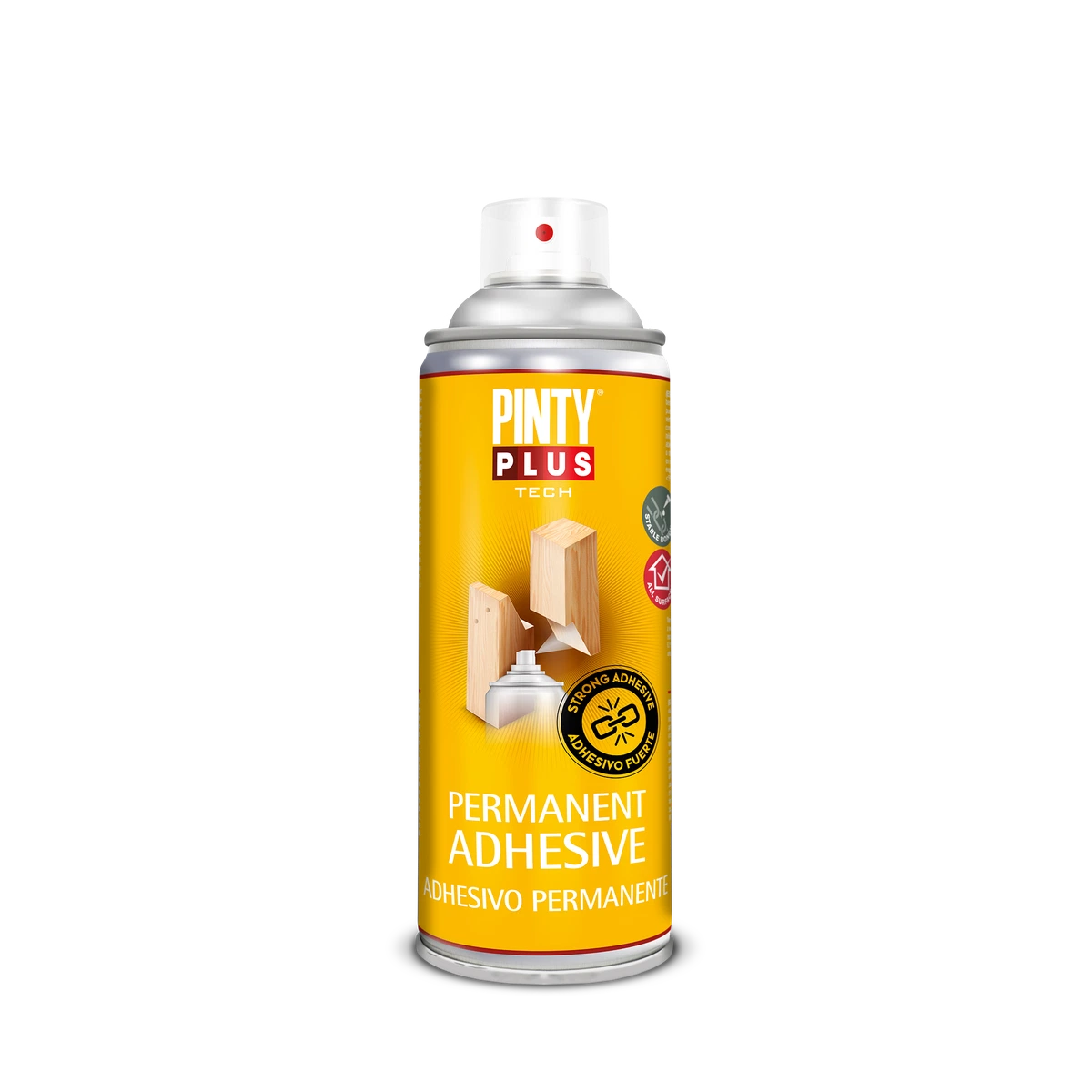
A permanent spray adhesive is the right tool when you need to glue large, flat or flexible materials evenly: foam to wood, fabric to board, leather to a panel, laminate or plastic sheet to a backing, or a printed sign onto a board. Pintyplus Permanent Adhesive is a solvent-based contact adhesive made with modified synthetic rubber. The key to a bond that lasts is using it as a contact adhesive: spray a thin layer on both surfaces, wait 1 to 5 minutes for the solvent to evaporate, then press the parts together firmly. It is not repositionable, so line things up before they touch.
The short version
- Product: Pintyplus Permanent Adhesive Spray, 400 ml
- Bonds: wood, metal, plastics, foam, leather, fabric and ceramics
- Method: thin layer on both surfaces, wait 1 to 5 minutes, then join
- Working window: you can join the parts up to 2 hours after spraying
- Pressure: press firmly and evenly across the whole area
- Test first: on thin, delicate or unusual materials
Which jobs is a spray adhesive good for?
Pintyplus says it joins wood, metal, plastic, rubber foam, leather, fabric and ceramics in a resistant, durable and flexible way, and recommends it for DIY and industry. The spray format suits large, flat and flexible pieces, where a brushed glue would go on unevenly. Typical jobs:
- Foam to plywood or MDF for sofa backs, headboards and seat pads
- Fabric or leather onto boards for wall panels, notice boards and upholstery work
- Rubber or foam strips onto metal or wood
- Laminate or plastic sheet onto a backing board, after a test
- Printed boards and letters for shop signage and display work, after a test
- Models, crafts and school projects that need a strong, flexible bond
Which jobs is it not for?
It is a permanent adhesive, so don’t use it where you want to peel something off later, such as a temporary display or a stencil. Our product page also notes that bond strength depends on the materials, the amount of adhesive and the conditions, and advises testing sensitive materials first.
Test before you commit on:
- Thin paper and card, where a solvent adhesive can soak through or wrinkle the surface
- Foam types you haven’t used before, because some soft foams react to solvents
- Printed sheets and coated boards, where the print or coating may mark
- Very smooth, waxy plastics, which can be hard for any adhesive to grip
Spray a small offcut of the same material, join it, and check it the next day.
Why use a contact method, and how does it work?
Pintyplus is a contact adhesive: you coat both surfaces and let the solvent evaporate before joining. When two dry, tacky adhesive layers meet under pressure, they grab each other straight away and hold. Spraying only one side, or pressing the parts together while the glue is still wet, goes against the instructions, gives a weaker bond and can let glue bleed through thin materials.
The timing is generous. Pintyplus gives 1 to 5 minutes for the solvent to evaporate under normal conditions, and says the parts can be joined within 2 hours. That gives you time to spray several pieces and assemble them in order.
How do you get a permanent bond, step by step?
1. Prepare both surfaces
Both surfaces must be clean, dry and free of dust, oil and grease. Wipe them with a clean cloth. On smooth, hard surfaces, a light sand helps the adhesive grip.
2. Mask around the work
Spray adhesive drifts and is hard to clean off. Cover the table and anything nearby with newspaper or plastic sheet.
3. Shake the can
Shake for one minute.
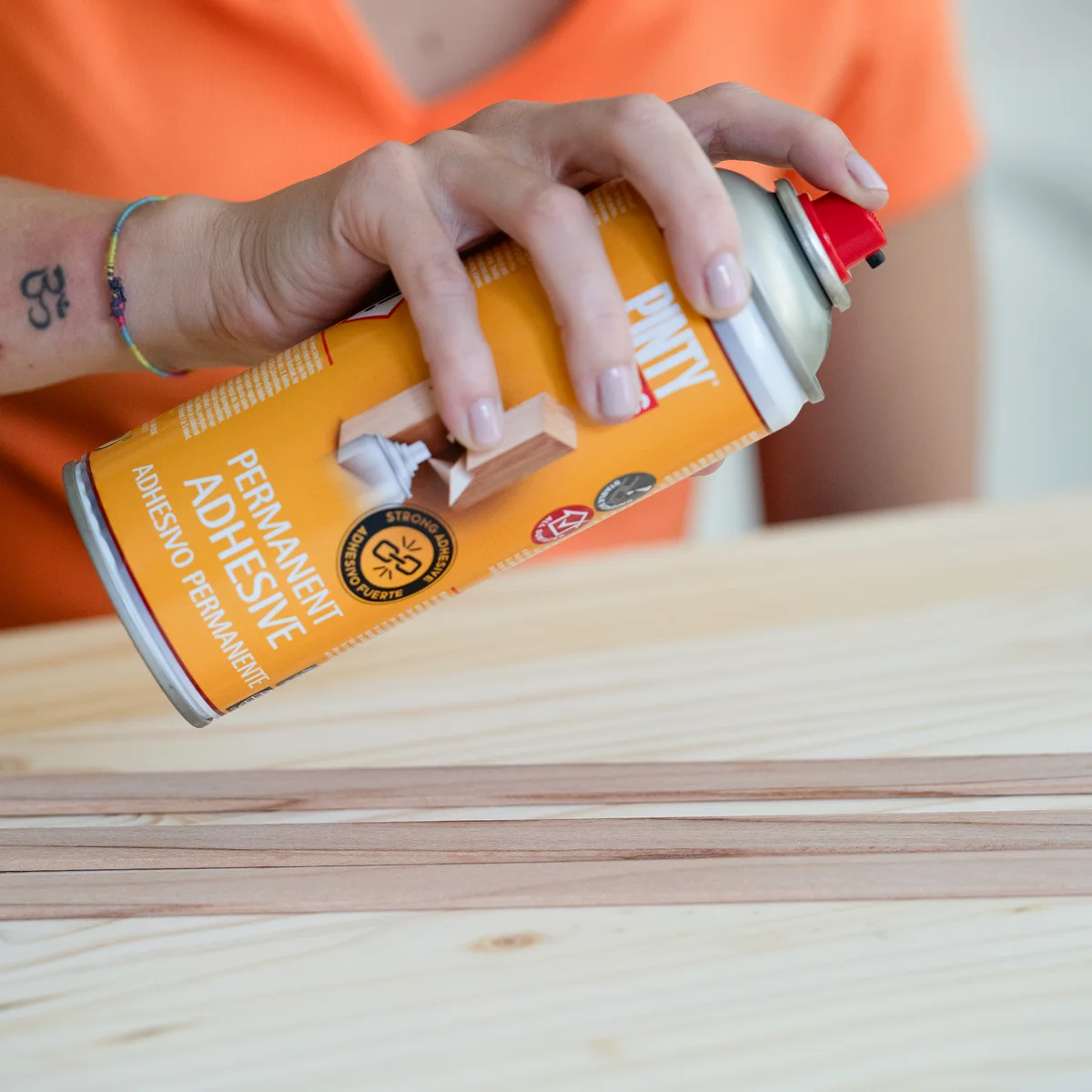
4. Spray a thin, even layer on both surfaces
Coat each surface with a thin, even layer, using sweeping, overlapping passes. Don’t hold the can too close: a heavy, wet coat takes longer to become tacky and can soak into thin materials. More adhesive does not mean a stronger bond.
5. Wait 1 to 5 minutes
Let the solvent evaporate until the surfaces are tacky but not wet. In hot weather this happens faster, in cold or humid weather slower.
6. Line up, join and press
Once the surfaces touch, they grab, so line up an edge first and lower the rest down gradually. Then press firmly and evenly over the whole area. A flat wooden block or the heel of your hand works well for pressing.
7. Clear the nozzle
Turn the can upside down and press until only gas comes out, so the nozzle doesn’t clog with adhesive.
What changes in Pakistani heat?
In a Lahore or Karachi summer, the solvent evaporates faster, so the tacky stage arrives sooner. Spray in the shade, not on materials that have been sitting in direct sun, and join the parts once they are tacky rather than waiting the full 5 minutes by habit. In monsoon humidity, give it longer.
Always work in a well-ventilated place, as Pintyplus recommends. The fumes build up quickly in a closed room or small workshop. Keep the can away from anything connected to the electricity supply.
Common questions
Can I reposition the pieces after they touch?
Not really. It is a permanent contact adhesive. Line up carefully before the surfaces meet.
Can I use it on foam for a sofa?
Yes, Pintyplus lists rubber foam among the materials it bonds. Test a small piece of your foam first, because foams vary.
How long before the bond is strong?
It grabs as soon as you press the tacky surfaces together. Leave the piece undisturbed for a while before putting load on it, especially on large panels.
Does it work on cardboard and paper?
Paper and card are not on the Pintyplus list. Use a light coat and test first, because a solvent adhesive can mark thin paper.
Where to buy in Lahore and across Pakistan
Pintyplus Permanent Adhesive Spray is ₨ 3,995 for a 400 ml can. You can pick it up from our shop at Sohail Centre, LG 8, Dil Muhammad Road, Garhi Shahu, Lahore, Monday to Saturday from 8:30 AM to 10:00 PM, or order online for delivery anywhere in Pakistan.
Not sure which one you need? Send a photo on WhatsApp to 0321 999 3919 and we’ll tell you.