Introduction
When a project is finished and looking its best, the last thing you want is for it to fade, chip, or get damaged. That’s exactly the problem a clear acrylic varnish solves. It’s the go-to protective topcoat for artists, crafters, woodworkers, and DIY enthusiasts the world over — and for good reason.
In this guide, we’ll explain what clear acrylic varnish is, why it’s preferred over other finishes, how to use it, and which applications it’s best suited for.
What Is Clear Acrylic Varnish?
Clear acrylic varnish is a water- or solvent-based protective coating that dries to a transparent film over painted or bare surfaces. It’s available in spray form and brush-on form, with spray being preferred for most applications due to its ease of application and even finish.
Key properties of clear acrylic varnish include:
- Non-yellowing — High-quality formulations stay optically clear over time, not turning yellow as some oil-based varnishes do
- Water resistance — Once cured, it protects against moisture, humidity, and light splashes
- UV protection — Many formulations include UV inhibitors that prevent light-induced colour fading
- Flexibility — Acrylic varnish maintains slight flexibility after curing, reducing cracking on surfaces that expand and contract
- Compatible with acrylic paint — As a water-based system, it plays perfectly with acrylic-painted surfaces
Clear Acrylic Varnish vs. Other Varnishes
Why choose acrylic varnish over polyurethane, lacquer, or oil-based varnish? Here’s a quick comparison:
Acrylic vs. Polyurethane — Polyurethane is harder and more durable but yellows over time and is trickier to apply without brush marks. Acrylic stays clearer longer and is easier to use for most applications.
Acrylic vs. Lacquer — Lacquer dries faster and is highly durable, but it requires good ventilation, is highly flammable, and doesn’t work over acrylic paint. Acrylic varnish is safer and more flexible.
Acrylic vs. Oil-based varnish — Oil varnishes can take days to fully cure, yellow significantly with age, and have a strong smell. Acrylic varnish dries faster, stays clear, and is far more user-friendly.
For most users, clear acrylic varnish offers the best combination of protection, clarity, and ease of use.
Applications: Where Clear Acrylic Varnish Works Best
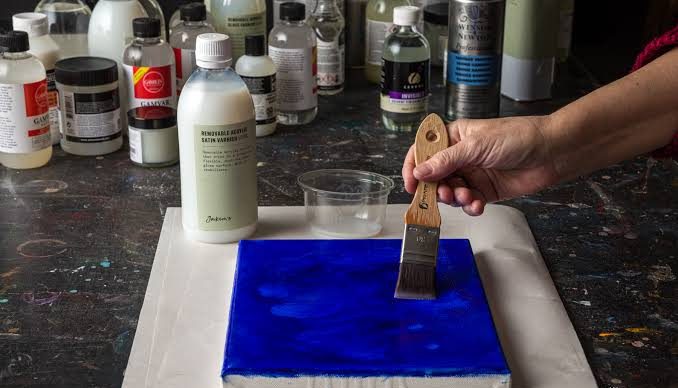
Acrylic paintings and canvas — The most common application. A clear acrylic varnish spray protects the paint surface, unifies the finish across different areas of the painting, and allows for UV protection without altering the colour significantly.
Craft and DIY projects — From painted wooden signs to decoupage boxes, a clear acrylic spray varnish seals the surface and provides a durable topcoat.
Wooden furniture and décor — Clear acrylic varnish gives wood a natural look while protecting against moisture and wear. Ideal for pieces that will be handled or used daily.
Model making and miniatures — Clear varnish is used to protect painted miniatures and scale models. Matte finishes are often preferred here for realism.
Paper crafts — Cardstock, collage, and paper mache benefit from acrylic varnish sealing to prevent moisture damage.
Finishes Available: Gloss, Satin, and Matte
Clear acrylic varnish is available in three finish types:
Gloss — Maximum sheen, vibrant colour, and the hardest protective surface. Best for display pieces, decorative items, and artwork where depth and clarity are priorities.
Satin — A balanced semi-sheen that’s flattering across most applications. Neither as reflective as gloss nor as flat as matte. Most popular for general craft and furniture use.
Matte — Flat, non-reflective finish that maintains the natural look of surfaces. Preferred by artists for canvas paintings and by crafters who want a chalky or vintage feel.
How to Apply Clear Acrylic Varnish Spray
- Ensure the surface is clean, dry, and cured — Don’t varnish over tacky or recently-applied paint.
- Shake the can thoroughly for 60–90 seconds — Proper mixing is critical for a consistent spray.
- Test on scrap material first — Confirm the spray pattern and output before applying to your project.
- Apply from 25–30 cm distance in smooth, overlapping passes.
- Apply 2–3 thin coats — Allow each coat to dry (15–20 minutes) before applying the next.
- Allow 24 hours for full cure before handling heavily.
Final Thoughts
Clear acrylic varnish is one of the most versatile and practical protective coatings available. Whether you’re finishing a painting, sealing a craft project, or protecting a wooden surface, it delivers clarity, durability, and ease of application in one convenient product.
Spray Paint Pakistan stocks clear acrylic varnish spray in gloss, satin, and matte finishes — perfect for artists, crafters, and DIY enthusiasts across the country, with reliable nationwide delivery.